Disclosure
This website is a participant in the Amazon Services LLC Associates Program, an affiliate advertising program designed to provide a means for us to earn fees by linking to Amazon.com and affiliated sites.
Upgrading your figure skates is essential for unlocking superior performance. The right modifications can transform your skating, providing better control, power, and comfort. This guide reveals the most impactful upgrades for serious skaters.
Many skaters struggle with discomfort, poor edge control, or a lack of power on jumps. These common issues are often solved not by buying new skates, but by strategically upgrading key components. Targeted enhancements address specific performance gaps directly.
Your Skates Are Holding You Back: The Common Performance Plateau
Many skaters hit a frustrating wall. You practice consistently, but your jumps lack height, your spins feel sluggish, and deep edges seem unattainable. Often, the culprit isn’t your skill—it’s your equipment. Stock skates are designed for a generic fit and average performance.
They lack the personalized tweaks that translate technique into power. This mismatch creates a performance plateau that feels impossible to break through with practice alone. The solution lies in targeted upgrades, not necessarily a whole new skate.
For a foundational solution, starting with the right skate is key. Our guide on the best figure skates with stainless steel blades is an excellent first step.
Quick Fix: Upgrade Your Blades for Instant Edge Control
If your spins wobble and your landings slip, your blades are the first upgrade. A high-quality blade offers a sharper, more consistent edge and better rocker design. This directly improves stability, grip, and maneuverability.
A great entry-point upgrade is the John Wilson Coronation Ace Figure Skate Blade. It’s a professional favorite for good reason.
- Superior Stainless Steel: Holds a sharp edge longer than standard carbon steel.
- Optimized Rocker Profile: Provides excellent spin control and smooth transitions.
- Cross-Cut Toe Pick: Offers secure traction for take-offs and landings.
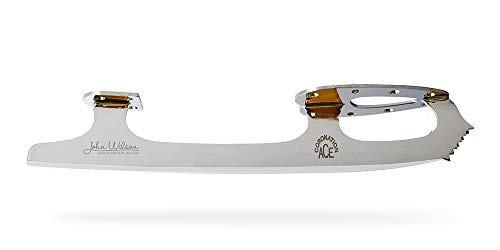
- ROCKER 7FT
- RADIUS OF HOLLOW 7/16″
- Toe Rake Type: Cross Cut
Check current price on Amazon →
When a Simple Change Isn’t Enough
Sometimes, the issue is more fundamental than the blade. Persistent pain, a lack of ankle support, or an improper fit can’t be fixed with a swap. If your boot is broken down or ill-fitting, no blade upgrade will compensate.
This signals a need for professional boot assessment or a complete equipment change. For skaters experiencing this, exploring the most comfortable ice skates for advanced skating is crucial. You can also read our in-depth Riedell Soar ice skates review for a model known for its superior support and customizable fit.
Upgrade #1: Professional Blade Profiling for Custom Performance
Think of blade profiling as a precision tune-up for your skates. Factory blades have a generic rocker and hollow that works for no one perfectly. A professional profile customizes these curves to your weight, skill level, and skating style.
This single upgrade dramatically improves balance, power transfer, and edge control. It is arguably the most impactful performance modification you can make.
Understanding Rocker Radius and Hollow Grind
Blade profiling involves two key adjustments: the rocker and the hollow. The rocker radius is the blade’s longitudinal curve, affecting maneuverability and stability. A flatter rocker is faster and more stable for powerful stroking.
The hollow grind is the concave groove between the edges. A deeper hollow gives sharper, grippier edges for tight turns. A shallower hollow allows for longer, smoother glides with less fatigue.
How to Choose the Right Profile for Your Skating
Selecting a profile requires considering your discipline and goals. A freestyle skater needs a different setup than an ice dancer. Consult a qualified skate technician who can assess your skating.
- For Jumpers & Spinners: A blended or parabolic rocker offers a sweet spot for spins while maintaining stability on landings.
- For Power & Speed: A flatter overall rocker (e.g., 28-foot) increases glide efficiency and cross-cut power.
- For Beginners & Edge Control: A standard 7-8 foot rocker with a moderate hollow provides predictability and good grip.
| Profile Type | Best For | Primary Benefit |
|---|---|---|
| Traditional Single Radius | Beginners, General Skating | Predictable, consistent feel |
| Blended/Parabolic | Freestyle, Jumps & Spins | Optimized spin rocker with stable landing zone |
| Flat/Speed | Advanced Stroking, Power Skaters | Maximum glide efficiency and speed |
Upgrade #2: Strategic Blade Mounting and Alignment
Where your blade sits on your boot is critical for balance and power. Factory mounting is often centered for a generic average. Strategic remounting aligns the blade precisely under your body’s center of gravity.
Proper alignment ensures your weight is distributed optimally over the edge. This upgrade can instantly correct pronation, improve posture, and increase jump height.
Diagnosing Common Mounting Problems
Skate on a clean patch of ice and observe your tracings. Do your blades push snow outward or inward? This indicates a mounting issue. Pronation (ankles rolling inward) often stems from blades mounted too far inward.
Supination (ankles rolling outward) suggests blades mounted too far out. Chronic struggles to find a stable flat edge are a key symptom. A qualified technician can perform a precise balance and alignment assessment.
How to Correct Blade Alignment for Optimal Stance
Correction involves carefully removing and remounting the blade plates. This is a job for an experienced skate technician with the proper tools. The goal is to position the blade so your weight centers directly over it when in a neutral athletic stance.
- For Pronation: The blade is typically shifted slightly outward on the boot’s sole.
- For Supination: The blade is usually shifted slightly inward to bring the ankle upright.
- Fore/Aft Alignment: The blade may also be moved forward or back to center the sweet spot under your foot’s ball.
The result is a naturally balanced stance that requires less muscular correction. This reduces fatigue and allows you to focus on technique, not fighting your equipment. It is a foundational upgrade that makes all others more effective.
Upgrade #3: Advanced Boot Punching and Stretching
Pain should never be part of your training. Pressure points and “hot spots” are not something to skate through. Boot punching and stretching are precise, localized modifications that relieve pain without compromising support.
A professional uses specialized tools to expand the boot’s material in targeted areas. This solves fit issues caused by unique foot anatomy, like bunions, bony ankles, or high insteps.
Identifying Pressure Points That Need Relief
Common problem areas include the ankle bones (malleolus), the fifth metatarsal (outside foot bone), and the navicular (inside arch bone). Discoloration on your skin or socks after skating clearly marks a pressure point.
Persistent numbness or a burning sensation is another key sign. Never ignore these signals, as they can lead to serious foot injuries. Addressing them is a performance upgrade that enhances training consistency.
The Professional Process for Custom Boot Fitting
This is not a DIY task. A skate technician will identify the exact spot and use a ball-and-ring punch or a stretching machine. The boot is carefully expanded millimeter by millimeter while cold.
- Ankle Bone Relief: The leather is gently stretched outward over the bony protrusion.
- Bunion Relief: The forefoot area is expanded to accommodate the joint without squeezing.
- Instep & Tongue Pressure: The tongue area or boot throat can be stretched for a higher volume.
The process preserves the boot’s structural integrity and stiffness. It transforms a stock boot into a custom-fit piece of equipment. For skaters needing a more comprehensive fit solution, exploring our guide on the most comfortable ice skates is a logical next step.
Upgrade #4: High-Performance Insoles and Footbeds
The stock insole in most skates is a flat piece of foam with little function. Upgrading to a performance footbed provides arch support, heel cushioning, and better energy transfer. This stabilizes your foot inside the boot, preventing slippage and wasted energy.
Proper support aligns your entire kinetic chain from foot to knee. This leads to more powerful pushes, stable landings, and reduced overall fatigue during long sessions.
Why Stock Insoles Fail Skaters
Factory insoles offer no contoured arch support, allowing your foot to collapse inward (over-pronate). This misalignment causes ankle instability and reduces the efficiency of your push-off. They also compress quickly, leading to a loose fit and hotspots.
This lack of support forces your muscles to work overtime for stabilization. That energy should be directed into your skating movements, not wasted on correcting your stance.
Choosing Between Custom Orthotics and Heat-Moldable Insoles
You have two excellent upgrade paths. Custom orthotics</strong are made from a precise mold of your foot by a podiatrist. They offer the highest level of correction for significant biomechanical issues.
Heat-moldable over-the-counter insoles are a fantastic and accessible alternative. You heat them in an oven and then stand in them to create a custom impression.
- For Maximum Correction: See a sports podiatrist for custom skate orthotics.
- For Great Support & Value: Choose a heat-moldable insole from brands like Superfeet or Sidas.
- Key Feature to Look For: A deep, supportive heel cup and firm arch that matches your foot type.
This upgrade is one of the most cost-effective ways to transform skate feel and performance. It complements all other modifications by ensuring your foot is the stable foundation.
Upgrade #5: Toe Pick Modification and Customization
Toe picks are not just for stopping. Their design critically affects your jump take-off and toe-assisted moves like toe loops and flips. Stock picks are often a generic compromise.
Strategic filing or replacement can create a more positive grip or a smoother release. This fine-tuning provides confidence on take-offs and cleaner, more consistent landings.
The Role of Toe Picks in Jump Technique
The first two or three picks are your primary contact points during a jump take-off. If they are too dull or poorly angled, your foot can slip, robbing you of height and rotation. If they are too sharp or long, they can catch unexpectedly, causing tripping or awkward releases.
The goal is a predictable, secure bite that allows for a dynamic push. This is especially crucial for multi-revolution jumps where precision is everything.
How to Safely File or Replace Your Toe Picks
Important: Major changes should be done by a technician. Minor tuning can be done carefully at home with a small, fine-grit file.
- For Better Grip: Lightly file the front-facing edge of the first two picks to sharpen their bite. File straight across, not at an angle.
- For Smoother Release: Gently round off the bottom corner of the picks if they are catching on landings.
- For Full Replacement: Consider a blade model with a different pick pattern (e.g., cross-cut vs. straight-cut) that better suits your technique.
Always make tiny adjustments and test on the ice. It’s easier to remove more material than to add it back. This subtle upgrade directly addresses the critical moment of jump initiation, building technical confidence.
Upgrade #6: Strategic Boot Stiffening and Reinforcement
As skaters advance, they generate more force. A boot that breaks down too quickly loses its ability to support jumps and landings. Strategic reinforcement adds life and support to a softening boot.
This process targets high-stress areas before they fully collapse. It is a cost-effective alternative to purchasing new boots prematurely, extending your equipment’s performance window.
Signs Your Boots Are Breaking Down and Need Support
The most obvious sign is excessive forward flex when you bend your knees. Your ankle should remain upright and supported in a deep knee bend. If your ankle collapses inward, support is gone.
Look for deep, permanent creases in the ankle area or above the heel. Feeling your tibia press painfully against the tongue is another red flag. These signs indicate the boot’s structural integrity is compromised.
Methods for Reinforcing Ankle Support and Structure
A skate technician can apply internal or external reinforcements. This is specialized work that uses materials like fiberglass, epoxy resin, or specialized plastics.
- Internal Tongue Pads: Adding stiffening material inside the tongue prevents painful shin bite and adds forward support.
- Ankle Collar Reinforcement: Applying epoxy or plastic layers to the inside or outside of the ankle counter restores lateral stability.
- Sole & Heel Stiffening: Injecting epoxy between the boot sole and the blade plate prevents “rocking” and improves power transfer.
Reinforcement is a proactive measure. It’s best done at the first signs of softening, not after a complete breakdown. For skaters whose boots are beyond repair, our guide to the best figure skates for advancing beginners can help find a suitable new foundation.
Upgrade #7: Custom Lacing Patterns and Hooks
How you lace your skates is the final, adjustable upgrade. A generic criss-cross pattern can create pressure points or inadequate support. Custom lacing strategies solve specific fit and performance issues.
You can relieve pain, improve heel lock, or modify flex points simply by changing your lacing route. This is a free, reversible modification with an immediate impact.
Lacing Techniques to Solve Common Fit Problems
Different lacing patterns address distinct issues. The key is to skip or modify the cross over the problem area. This relieves direct pressure without loosening the entire boot.
For a narrow heel and wide forefoot, you need a pattern that locks the heel down while allowing room across the metatarsals. Parallel lacing sections can achieve this precise control.
Step-by-Step Guide to Performance Lacing
Identify your primary issue and follow these targeted patterns. Always start with a snug, locked fit at the toe box.
- For High Instep/Pain on Top of Foot: Lace normally until the eyelet just before the pain point. Skip the next eyelet on both sides, then cross the lace and continue lacing above it. This creates a pressure-free window.
- For Heel Slippage: Use a “Lock Lace” at the top two eyelets. Instead of crossing, run each lace straight up the same side to the top hook, creating a loop to pull tight.
- To Increase Ankle Flex: Lace loosely or skip an eyelet at the ankle flexion point (usually the 2nd or 3rd hook). This allows for a deeper knee bend without restriction.
Experiment during practice sessions to find your ideal setup. This ultimate low-cost upgrade puts you in complete control of your skate’s feel every time you tie them. For more foundational fit advice, see our review on Riedell Soar skates, which highlights their excellent lacing system.
Best Skate Upgrade Products for Performance Enhancement
Selecting the right components is crucial for effective upgrades. These three products are trusted by skaters and technicians for their quality, reliability, and performance impact. Each addresses a key upgrade area discussed in this guide.
Superfeet Yellow Hockey & Skate Insoles
These are the gold standard for aftermarket skate insoles. The high-density foam and deep heel cup provide exceptional arch support and heel lock. They help stabilize your foot, reduce fatigue, and improve energy transfer for more powerful strides and jumps.

- Arch Support for Hockey: Contoured Superfeet shape stabilizes feet,…
- Orthotic Inserts: Get up to 11% better acceleration on the ice, edge…
- Shoe Inserts for Skates: Venting system holes line up with perforations in…
John Wilson Coronation Ace Figure Skate Blades
A legendary intermediate-to-advanced blade perfect for an upgrade. Made from high-grade stainless steel, they offer excellent edge retention. Their optimized rocker profile provides a superb balance of glide stability and spin control, making them ideal for skaters mastering multi-revolution jumps.
- ROCKER 7FT
- RADIUS OF HOLLOW 7/16″
- Toe Rake Type: Cross Cut
Ice Skate Boot Covers and Toe Guard Kit
Specifically designed for Edea boots, this kit allows for professional-level stiffening. It includes specialized epoxy and materials to reinforce the ankle counter and sole. It effectively extends the life of a softening boot, restoring critical support for advanced jump training.
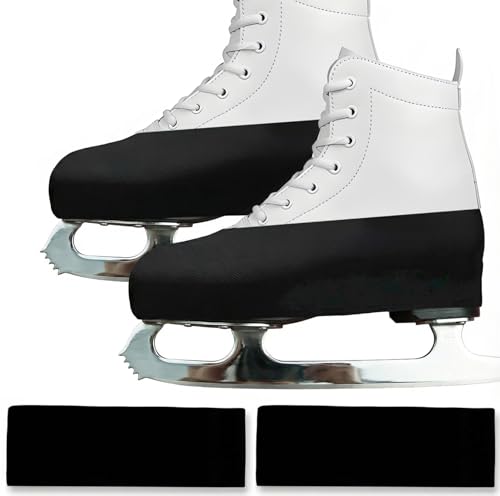
- 【Comprehensive Skate Protection】These skate boot covers provide…
Conclusion: Transforming Your Skating Through Smart Upgrades
These seven figure skate upgrades offer a clear path to better performance. From blade profiling to strategic lacing, each modification solves a specific on-ice challenge. You don’t always need new skates to achieve new results.
The key is to diagnose your primary limitation first. Then, implement upgrades systematically, starting with foundational changes like alignment and insoles. Consult a qualified skate technician for complex modifications.
Begin your upgrade journey by assessing which single change could make the biggest difference today. Invest in your current equipment to unlock your full potential on the ice.
Your next personal best starts with a smarter setup.
Frequently Asked Questions About Figure Skate Upgrades
What is the most important figure skate upgrade for beginners?
For beginners, high-performance insoles are the most impactful first upgrade. They provide essential arch support and heel lock that stock insoles lack. This immediately improves balance and reduces foot fatigue.
Proper support helps establish correct skating posture from the start. It’s a low-cost modification that makes learning more comfortable and effective, preventing bad habits formed from fighting unstable boots.
How often should I get my skate blades professionally sharpened?
For active skaters, a professional sharpening is needed every 20-40 hours of ice time. The exact frequency depends on ice conditions, your weight, and skating intensity. Dull blades will feel slippery and lack grip.
Listen to your skates. If you’re slipping out of edges you normally hold, or if stroking requires more effort, it’s time for a sharpening. Consistent maintenance is more effective than waiting for complete dullness.
Can I do blade profiling and alignment myself at home?
No, blade profiling and precision alignment are not DIY projects. They require specialized, expensive machinery and expert training. Attempting these yourself can permanently ruin your blades and affect your safety on the ice.
Always use a certified skate technician. They have the tools and knowledge to measure your stance, analyze your skating, and apply modifications accurately for optimal performance and injury prevention.
What is the best way to break in new figure skates without pain?
The best method is gradual wear and targeted punching. Wear your new skates at home for short periods to mold the interior. Heat-moldable boots should be professionally heated for a custom fit.
For persistent pressure points, have a technician punch the boot before you develop blisters. Never “skate through” intense pain, as this can cause lasting foot problems and break down the boot incorrectly.
How do I know if I need custom orthotics versus over-the-counter insoles?
Consider custom orthotics if you have a diagnosed biomechanical issue like severe over-pronation, leg length discrepancy, or chronic foot pain. A podiatrist can assess this need.
For most skaters seeking better arch support and heel lock, a quality heat-moldable insole is sufficient. Brands like Superfeet offer excellent support and can be customized with heat for a near-perfect fit.
When is it better to buy new skates instead of upgrading old ones?
Buy new skates when the boot’s structural integrity is compromised. Signs include broken-down ankle support, deep permanent creases, or a sole that separates from the upper. No upgrade can restore a fully broken-down shell.
Also upgrade if your skill level has significantly surpassed your boot’s stiffness rating. A beginner boot cannot be safely reinforced to support triple jumps, for example.
What does “rocker radius” mean on a figure skate blade?
The rocker radius is the curvature of the blade from toe to heel, like a segment of a large circle. It’s measured in feet (e.g., 7-foot, 8-foot). A smaller radius creates a more curved blade for quicker turns and spins.
A larger radius creates a flatter blade for more stability and speed. Profiling changes this radius to match your skating style, balancing maneuverability with glide efficiency.
Are stainless steel blades worth the upgrade from carbon steel?
Yes, stainless steel blades are a worthwhile upgrade for serious skaters. They hold a sharp edge 3-4 times longer than carbon steel, requiring less frequent sharpening. They are also more resistant to rust and corrosion.
The consistent edge quality provides better performance and predictability. While more expensive upfront, they save money and time on maintenance in the long run for skaters on the ice multiple times per week.