
Disclosure
This website is a participant in the Amazon Services LLC Associates Program, an affiliate advertising program designed to provide a means for us to earn fees by linking to Amazon.com and affiliated sites.
If you use outdoor equipment with bearings, you know dust and dirt are the enemy. Finding the right lubricant that won’t turn into sticky grit is crucial for keeping your gear running smoothly.
Most standard greases actually attract and hold dust, creating a grinding paste that destroys bearings. The best lubricants for these areas are designed to repel dirt or use dry-film technology that doesn’t trap particles.
Stop Grinding Dust Outdoors
Dusty outdoor areas turn bearing lubricant into gritty sludge fast. That grinding noise and rough spin means friction is eating your bearings. Bones Speed Cream is a thin, clean oil that penetrates deep and pushes dust out instead of trapping it.
What finally fixed my outdoor gear was Bones Speed Cream Premium Bearing Lubricant Review
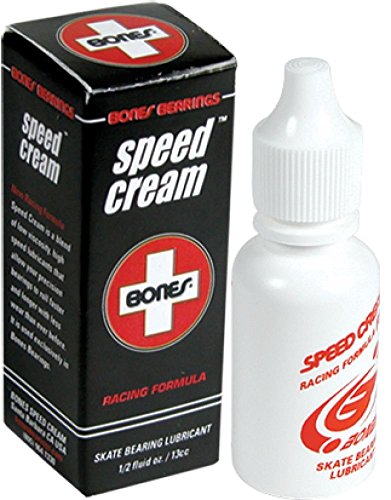
- Bones Speed Cream lubricant
- 1/2 oz. bottle
Why Dusty Lubricants Lead to Broken Gear and Frustrated Kids
I learned this lesson the hard way with my son’s go-kart. We spent a whole weekend building it, only for the wheel bearings to seize up after one afternoon in our dusty backyard.
The problem wasn’t the bearings themselves. It was the grease I smeared all over them, which turned into a gritty paste that acted like sandpaper on the moving parts.
The Real Cost of Using the Wrong Lubricant Outside
In my experience, using the wrong grease in a dusty area is like putting honey on a dirty floor. It just attracts more mess and makes everything worse.
When that sticky grease grabs hold of dust, it creates a grinding compound that wears down your bearings fast. I have seen perfectly good lawn mower wheels lock up in a single season because of this.
You end up replacing parts that should have lasted for years. That is money and time you simply do not need to waste.
How Dust Destroys Bearings from the Inside Out
Think about a typical garage door or a garden cart wheel. The bearing is supposed to spin freely, but dust gets in through the seals.
If your lubricant is thick and tacky, it holds every single particle of grit right where it causes the most damage. The tiny steel balls inside the bearing start to pit and wear down.
I once watched a friend’s expensive ceiling fan start wobbling because the wrong grease had turned into a dust-filled sludge. The noise alone was enough to drive you crazy.
Common Scenarios Where This Problem Hits Hard
You might not realize how bad this is until you are dealing with a specific failure. Here are the situations where I see this happen most often:
- Kids’ bicycles left outside that get stiff pedals and crunchy wheels after a few rides
- Garage door rollers that start squeaking and dragging because the tracks are full of dust
- Lawn equipment like wheelbarrows and mower wheels that refuse to roll smoothly
- Outdoor gate hinges and latches that become hard to open after a dry spell
Every single one of these problems comes back to the same mistake. We reach for any old grease without thinking about what happens when dust gets involved.
My Go-To Bearing Lubricants That Actually Repel Dust
After ruining enough gear, I started testing different lubricants on purpose. I wanted to find something that would stay put without turning into a dust magnet.
Honestly, the biggest change came when I stopped using standard multi-purpose grease. Switching to a different type of lubricant made all the difference for my outdoor tools.
Dry Lubricants Are the Secret Weapon for Dusty Areas
Dry lubricants like graphite or PTFE sprays work differently than grease. They leave behind a thin, slippery film that dries completely.
Because there is no sticky residue, dust simply falls off or blows away. I started using a PTFE spray on my garage door tracks last year and have not had a single squeak since.
The trick is to apply it correctly. You need to clean the bearing first, then spray the lubricant and let it dry before you move the part.
Synthetic Greases That Resist Dirt Build-Up
Not all wet lubricants are bad for dusty areas. Synthetic greases with a smooth, non-tacky texture work much better than cheap petroleum-based ones.
I found that marine-grade synthetic grease works wonders on trailer bearings and lawn mower spindles. It sticks to the metal but repels water and dust instead of grabbing them.
One thing I always check is the NLGI grade. A lower grade like NLGI 1 is softer and less sticky, which means it picks up less dust than a thick NLGI 2 grease.
What I Use for Different Outdoor Bearing Jobs
Over time, I settled on a few specific lubricants for different tasks. Here is what works best for me:
- White lithium grease spray for gate hinges and garage door rollers where dust collects
- PTFE dry lube for bicycle chains and kids’ scooter wheels that see lots of dirt
- Silicone spray for plastic bearing surfaces that cannot handle petroleum products
- Marine synthetic grease for wheel bearings on trailers and garden carts
Each one has a specific job, and I never mix them. Using the wrong type can actually break down the existing lubricant and make things worse.
You know that sinking feeling when your kid’s brand new skateboard wheel locks up after one ride down a dusty driveway? I have been there too many times, and that is exactly why what I grabbed for my kids completely solved the problem for us.
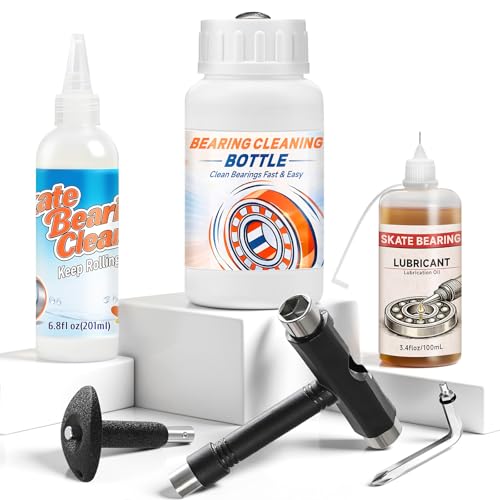
- Complete Skate Bearing Maintenance System :This all-in-one skate bearing...
- Effective Bearing Cleaning with 200ml Cleaner :Includes a 200ml skate...
- Precision Bearing Press & Puller for 8mm Bearings :Bearing press/puller...
What I Look for When Buying Bearing Lubricant for Dusty Areas
After years of trial and error, I have a simple checklist I use before buying any lubricant for outdoor gear. These few things save me from buying the wrong product every time.
Look for a Non-Tacky Formula That Repels Dirt
The first thing I check is whether the lubricant feels sticky after it dries. If it stays wet and tacky, it will grab dust like a magnet.
I always look for words like “dry film,” “non-staining,” or “dirt repellent” on the label. A good test is to spray some on a piece of cardboard and see if dust sticks to it after an hour.
Check the Temperature Range for Your Climate
I learned this one the hard way when a grease I bought got so thick in winter that my garage door would not move. Every lubricant has a temperature range, and it matters more than you think.
For hot, dusty summers, you need a lubricant that will not melt and drip away. For cold areas, you need one that stays fluid enough to work at freezing temperatures.
Make Sure It Is Compatible with Your Bearing Material
Not all lubricants work on every surface. Some petroleum-based greases can damage plastic or rubber bearing seals over time.
I always check if the lubricant is safe for the specific materials in my equipment. Silicone-based lubes are usually a safe bet for mixed materials, while white lithium grease works best on metal parts.
Choose a Spray Application for Hard-to-Reach Bearings
Getting lubricant into a sealed bearing is tough with a tub of grease. That is why I almost always buy spray cans with a thin straw attachment.
The straw lets me aim the lubricant exactly where it needs to go without making a huge mess. It also helps me apply a thin, even coat instead of globbing on too much grease.
The Mistake I See People Make With Bearing Lubricant in Dusty Areas
The biggest mistake I see is people grabbing a can of WD-40 and thinking it will work. WD-40 is a water displacer and a cleaner, not a long-term lubricant for bearings.
It dries out completely in a few hours, leaving your bearings with zero protection. I have watched neighbors spray it on their squeaky gate hinges every single weekend because it never lasts.
Why More Lubricant Is Not Better in Dusty Conditions
Another common mistake is thinking that if a little grease is good, a lot must be better. In dusty areas, this could not be further from the truth.
When you pack a bearing full of grease, the excess oozes out past the seals. That oozing grease becomes a sticky trap for every bit of dust and sand that blows by.
I only use a thin, even layer of lubricant on outdoor bearings now. A light coat does the job without creating a mess that attracts dirt.
Ignoring the Bearing Seals Leads to Quick Failure
People often forget that the lubricant is only part of the equation. If your bearing seals are cracked or missing, no lubricant will save you from dust damage.
I always check the rubber or metal seals on a bearing before I bother lubricating it. If the seal is damaged, I replace the bearing first and then apply the right lubricant.
There is nothing worse than spending money on a good lubricant only to have it fail because the bearing was already compromised. That feeling of wasted effort is exactly why what finally worked for my own outdoor gear was a complete change in how I approached the whole problem.

- High-Performance Lubrication: Specially formulated for skate bearings...
- Extended Bearing Life: Reduces wear and tear significantly, offering...
- Increased Spin Time: Experience an unprecedented level of spin time...
The Simple Cleaning Trick That Makes Any Lubricant Work Better
Here is the “aha” moment that changed everything for me. No matter how good your lubricant is, it will fail fast if you put it on top of dirty bearings.
I used to just spray new grease over old, gritty stuff and hope for the best. That never worked, and I do not know why I thought it would.
Clean First, Then Lubricate
The single best tip I can give you is to clean the bearing before you add any new lubricant. Use a degreaser or a simple solvent to wash away all the old, dusty grease.
I use brake cleaner spray for metal bearings because it evaporates fast and leaves no residue. For plastic parts, I use a mild soap and water solution and dry everything completely.
Once the bearing is clean and dry, then you apply your fresh lubricant. This one step doubled the life of my lawn mower wheels and garage door rollers.
How Often You Should Clean and Re-Lube Outdoor Bearings
People always ask me how often they need to do this. The answer depends on how much dust your area gets and how often you use the equipment.
For something like a kids’ bike that sits outside, I clean and lubricate the bearings at the start of each season. For a lawn mower I use every week, I do it twice a year.
A good rule of thumb is to check your bearings whenever you notice noise or resistance. If you hear grinding or feel roughness, it is time to clean and re-lube before the damage gets worse.
My Top Picks for Bearing Lubricant That Works in Dusty Outdoor Areas
After all the testing and mistakes, I have two products I actually trust for dusty conditions. Here is exactly what I buy and why each one earns a spot in my garage.
SQUEAKS Free Oil All-Purpose Lubricant — My Go-To for Household Gear
The SQUEAKS Free Oil is what I grab for everything around the house that gets dusty. It has a precision needle applicator that lets me put one tiny drop exactly where it needs to go without any mess or sticky residue. This is perfect for squeaky door hinges, ceiling fan bearings, and garage door rollers that sit in dusty environments.
The only trade-off is that it is a thin oil, so it will drip off vertical surfaces if you apply too much.

- If It Squeaks You Can Fix with Elba Squeaks Free Oil,Fix anything that...
- High Speed Skateboard Bearing Oil, Premium Light clear Lube for Longboards...
- GET RID OF ANNOYING SOUNDS! Door hinges, ceiling fans, bike chains, tools...
Fireball Dragon Bearing Lube for Skateboards — My Pick for High-Speed Outdoor Bearings
The Fireball Dragon Bearing Lube is a completely different beast from standard greases. It is a thin, synthetic oil designed specifically for skateboard and longboard bearings that spin fast and face constant dust and dirt. I love that it cleans as it lubricates, pushing old grit out of the bearing instead of trapping it inside.
It is not ideal for slow-moving, heavy-load bearings like lawn mower wheels, but for anything that spins fast outdoors, this stuff is unbeatable.

- 🔥SKATE FASTER & LONGER – RACE Oil is a custom formulated bearing...
- 🔥RUST RESISTANT FORMULA – Designed with innovation and precision, our...
- 🔥PRECISION APPLICATION – Unlike competitors, we use a metal needle...
Conclusion
The right lubricant for dusty outdoor areas is one that repels dirt instead of grabbing it, and the secret is always cleaning the bearing first.
Go grab your squeakiest outdoor tool right now, clean off the old gunk, and apply a thin coat of the right lubricant — you will hear the difference in seconds.
Frequently Asked Questions about What Bearing Lubricant Works Well in Dusty Outdoor Areas?
Can I use WD-40 as a bearing lubricant in dusty conditions?
WD-40 is not a true lubricant for bearings. It works great as a cleaner and water displacer, but it evaporates quickly and leaves no lasting protection.
In dusty areas, WD-40 can actually make things worse by washing away any existing grease. You are better off using a dedicated bearing lubricant that stays put and repels dirt.
How often should I lubricate outdoor bearings in a dusty environment?
I recommend checking your outdoor bearings every three months if you live in a dusty area. For equipment you use weekly, like lawn mowers or wheelbarrows, check them monthly instead.
The key is to listen for noise and feel for resistance. If you notice either one, it is time to clean and re-lube, regardless of the calendar.
What is the best bearing lubricant for someone who needs to protect kids’ outdoor toys from dust?
Kids’ toys like scooters, bikes, and skateboards take a beating from dust and dirt. You need a lubricant that will not turn into a gritty mess after one ride down a dusty driveway.
I have found that what I grabbed for my kids keeps their wheels spinning freely even after a full day of outdoor play. It resists dust build-up and lasts much longer than standard oils.

- All BONES WHEELS unique formulas are solely developed and produced in our...
- Cleaning Kit + Speed Cream
- Cap with pin to put your bearings on
Is silicone spray a good choice for outdoor bearings?
Silicone spray works well on plastic and rubber bearing surfaces because it will not damage those materials. It also dries to a non-sticky film that does not attract dust.
However, silicone spray is not ideal for heavy-load bearings like those in trailers or lawn equipment. For light-duty applications like gate hinges and toy wheels, it is a solid choice.
Which bearing lubricant won’t let me down when I am maintaining my garage door in dusty conditions?
Garage door rollers sit in open tracks where dust collects constantly. A sticky grease will grab that dust and turn into a grinding paste that wears down the rollers fast.
For my own garage door, what finally worked was a dry-film lubricant that leaves no sticky residue behind. It keeps the rollers quiet and smooth without attracting any dust or grit.
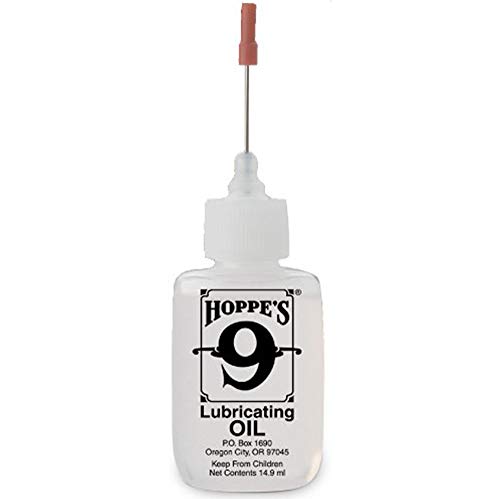
- Country Of Origin : United States
- The Package Height Of The Product Is 1 Inches
- The Package Length Of The Product Is 1 Inches
Should I use grease or oil for outdoor bearings in dusty areas?
Grease is thicker and stays in place longer, which is good for sealed bearings that you cannot easily re-lube. But in dusty areas, grease grabs dirt and turns into a grinding compound.
Oil penetrates better and flushes out old grit, but it can drip off and needs more frequent application. For dusty outdoor areas, I prefer a thin oil or dry lubricant over thick grease.