Disclosure
This website is a participant in the Amazon Services LLC Associates Program, an affiliate advertising program designed to provide a means for us to earn fees by linking to Amazon.com and affiliated sites.
Your figure skate toe picks keep catching because of incorrect posture, blade alignment, or skating technique. This frustrating problem halts your flow and can lead to dangerous falls.
Mastering toe pick control is essential for smooth transitions and confident jumps. This guide provides the expert fixes you need to skate freely.
Diagnosing the Root Causes of Toe Pick Catches
Toe pick catches often stem from a combination of technique and equipment issues. The most common culprits are a forward-leaning posture and improper weight distribution. This forces the front of the blade, including the picks, into the ice.
Other key factors include incorrect blade alignment on the boot or skates that lack proper ankle support. Beginners in overly flexible recreational skates are especially prone to this. For a stable foundation, explore our guide to the best women’s recreational ice skates for proper support.
A Quick Fix for Better Blade Control
Improving your basic posture is the fastest way to reduce catches. Focus on keeping your weight centered over the middle of the blade, not the ball of your foot. Practice gliding on a flat foot, consciously pulling your shoulders back and hips over your heels.
Using a skating trainer aid can build muscle memory for this correct position off the ice. It helps reinforce the proper knee bend and balance needed to keep your picks up.
When Technique Adjustments Aren’t Enough
If posture drills don’t solve the issue, your equipment may be the problem. Skates that are too big or broken down offer zero ankle support, causing your foot to roll forward. Similarly, blades mounted incorrectly will never track properly.
Upgrading to a skate with a stiffer boot and proper blade alignment is crucial. The Jackson Ultima Classic SoftSkate 380 is an excellent entry-level figure skate that provides the necessary support for skill development. For more advanced options, see our reviews of the best figure skates with durable stainless steel blades.
Recommended Tool: DreamCraft Skate Spinner
This off-ice training tool is fantastic for practicing weight transfer and balance, key skills for avoiding toe picks.
- Helps build ankle strength and proper jumping posture.
- Allows for safe practice of rotations and landings.
- Improves overall edge control and confidence on the ice.

- EFFECTIVE TRAINING TOOL FOR MASTERING FIGURE SKATING SPINS: Designed…
- ANTI-SLIP FOOTPAD FOR SAFETY AND COMFORT: Equipped with premium EVA foam…
- DURABLE MATERIAL FOR LONG-LASTING USE: Made with high-strength injection…
Check current price on Amazon →
How to Correct Your Skating Posture and Balance
Fixing your posture is the most effective way to stop catching your toe picks. This requires retraining your muscle memory for a centered, stacked position. Proper alignment keeps your weight over the skate’s sweet spot.
Mastering the “Stacked” Body Position
Imagine a straight line running from your ear through your shoulder, hip, and ankle. This is your power line. Your goal is to maintain this alignment while skating, especially during pushes and landings.
- Head & Shoulders: Keep your head up and shoulders back, not rounded forward. Look where you’re going, not at your feet.
- Core & Hips: Engage your core muscles. Your hips should be directly over your heels, not pushed out behind you.
- Knees & Ankles: Maintain a consistent, soft knee bend. Avoid letting your ankles collapse inward (pronation).
Drills for Better Weight Distribution
Practice these drills during public sessions to build awareness. Start by holding the boards for support if needed.
- Flat-Foot Glides: Push off and glide on two feet. Focus on feeling the entire blade, from toe pick to heel, in contact with the ice.
- One-Foot Glides: Glide on one foot, checking that your standing knee is bent and your free leg is extended behind you, not to the side.
- Swizzle Pump Drills: Perform forward swizzles, concentrating on pushing from the middle of the blade, not the toe pick.
Key Takeaway Summary
Persistent toe pick catches are often a posture issue. Center your weight, stack your joints, and drill glides to retrain your balance. This creates a stable platform for all other skills.
Blade Alignment and Skate Fit Solutions
Even perfect technique fails with poorly fitted skates or misaligned blades. Your equipment must be a precise extension of your body. Ill-fitting boots or incorrect blade mounting will sabotage your balance.
Identifying Improper Blade Mounting
Blades should be centered perfectly under the boot’s sole. A misaligned blade forces you to adjust your posture to compensate, often leading to toe pick contact. Check for these signs:
- Visible Misalignment: Look down at your feet while standing. The blade should not be visibly angled inward or outward relative to the boot.
- Uneven Wear Patterns: Inspect the bottom of your blade holders. Excessive, uneven wear on one side indicates a mounting issue.
- Consistent Leaning: You feel like you’re constantly fighting to stay on an inside or outside edge when trying to skate straight.
Ensuring the Correct Skate Fit and Support
A skate that’s too large or broken down offers zero control. Your heel must be locked in place to prevent forward slippage that drives the toe pick down.
Use this quick fit checklist:
- Heel Lock: Your heel should not lift when you bend your knees or rise onto your toes.
- Toe Space: Your toes should gently brush the front when standing straight, but not be crammed.
- Ankle Support: The boot should firmly support your ankle bones, preventing side-to-side collapse.
Equipment Check Summary
If posture fixes don’t work, scrutinize your gear. A proper fit and precise blade alignment are non-negotiable. For skaters needing an upgrade, our review of Riedell Soar ice skates highlights a model known for excellent out-of-the-box alignment and support.
| Problem | Symptom | Solution |
|---|---|---|
| Boot Too Large | Heel lifts, toes claw for grip | Size down or use a professional fitting |
| Broken-Down Ankle | Excessive forward flex, ankle rolls in | Upgrade to a stiffer boot |
| Wrong Blade Profile | Feels “rocky” or hard to find balance | Consult a pro for blade selection & mounting |
Advanced Techniques for Jump Takeoffs and Landings
For skaters learning jumps, catching a toe pick is a common and painful hurdle. This often happens during the takeoff or landing phase due to rushed technique. Mastering the precise mechanics is key to clean, safe jumps.
Executing a Clean Jump Takeoff
The goal is to use the toe pick as a precise tool, not a crutch. A faulty takeoff digs the pick in too deeply or at the wrong angle. Focus on these elements:
- Spring, Not Stab: Use a quick, upward spring from your knee and ankle. Avoid a heavy, stabbing motion into the ice.
- Check Your Free Leg: On toe-assisted jumps (like toe loops or flips), your free leg should swing through smoothly. A jerky, low swing can drag the picking foot.
- Full Body Commitment: Your upper body must rotate in unison with your takeoff. A hesitant upper body can cause the picking foot to drag.
Securing a Stable Landing Position
Landing problems often stem from fear or poor air position. You may be landing with your weight too far forward, jamming the toe pick.
- Spot Your Landing: See the ice where you will land. This helps prepare your body and improves spatial awareness.
- Absorb the Impact: Land with a deep, flexible knee bend on a clean outside edge. Let your ankle, knee, and hip act as shock absorbers.
- Hold the Landing: Maintain a strong core and check your rotation completely before stepping out of the jump.
Jump Technique Summary
Jumps require precise timing and full-body coordination. Practice off-ice drills to build muscle memory for the springing motion and landing position. This reduces reliance on the toe pick for power.
| Jump Phase | Error | Result |
|---|---|---|
| Takeoff | Leaning forward over picking foot | Pick digs in, blocks rotation |
| In-Air | Not checking rotation position | Off-axis landing |
| Landing | Straight legs & weight on toes | Pick catches, forward fall |
Maintenance and Professional Help for Your Skates
Regular maintenance ensures your skates perform as designed. Dull blades or worn-down components change how the skate interacts with the ice. This can make you more prone to unexpected toe pick contact.
The Role of Proper Blade Sharpening
A correctly sharpened blade has a precise hollow that creates two distinct edges. If these edges become rounded or the blade is too dull, your control diminishes. You may subconsciously lean forward to find grip, engaging the picks.
- Sharpening Frequency: Get blades sharpened every 20-40 hours of use. Softer ice or aggressive skating requires more frequent sharpening.
- Hollow Depth Matters: A deeper hollow (e.g., 1/2″) offers more grip but can “catch” more. A shallower hollow (e.g., 3/4″) provides more glide and can reduce pick catches for some skaters.
- Find a Trusted Technician: Consistent, high-quality sharpening is vital. An uneven sharpening job will ruin your blade’s performance.
When to Seek a Professional Skate Technician
Some issues require an expert’s eye and tools. A certified skate technician can diagnose and fix problems you can’t see.
- Persistent Problems: If catches continue after working on posture and fit, a pro can assess blade alignment and boot integrity.
- Major Adjustments: Tasks like blade remounting, pitch adjustment, or boot punching should always be done by a professional.
- Equipment Upgrades: Consult a tech before purchasing new skates or blades. They can recommend the best profile and stiffness for your skill level.
Maintenance Checklist Summary
Keep a log of your skating hours to track sharpening needs. Listen to your skates—if they feel slippery or unpredictable, they likely need care. For skaters considering new equipment, our guide to the best comfortable ice skates that don’t sacrifice support is an excellent resource.
Off-Ice Drills to Prevent Toe Pick Catches
You can build the correct muscle memory and strength away from the rink. Off-ice training is a safe, controlled way to ingrain proper mechanics. This translates directly to more confident, pick-free skating on the ice.
Balance and Ankle Strengthening Exercises
Weak ankles or poor proprioception cause your foot to roll inward, forcing the toe pick down. Targeted exercises build a stable foundation.
- Single-Leg Balances: Stand on one foot for 30-60 seconds. Progress by closing your eyes or standing on a cushion. This mimics the balance required for glides.
- Heel Raises with Control: Slowly rise onto the balls of your feet, then lower with control. Focus on keeping your ankles straight, not rolling in or out.
- Resistance Band Work: Use a band to perform ankle dorsiflexion and eversion exercises. This strengthens the often-neglected stabilizing muscles.
Practicing Jump Mechanics Safely
Mastering the springing motion off-ice removes the fear of falling on ice. You can focus purely on technique.
- Dryland Jump Drills: Practice waltz jumps or toe loops on a gym floor. Concentrate on a quick, upward spring from your knee and a controlled, soft landing.
- Spinner Use: A figure skating spinner allows you to practice rotation positions and landing balance without blade interference.
- Video Analysis: Record your off-ice jumps. Watch for a forward lean on takeoff or a landing with straight legs—key culprits for picks.
Off-Ice Training Summary
Dedicate 10-15 minutes daily to these exercises. Consistent off-ice work builds the strength and neural pathways for proper on-ice technique. For skaters using recreational skates, improving ankle strength can compensate for softer boot support, as discussed in our Rollerblade Bladerunner Ice Diva review.
Troubleshooting Specific Moves and Transitions
Certain elements are notorious for causing toe pick catches. Identifying the exact moment of error in these moves is crucial. Targeted corrections can quickly improve your flow and confidence.
Fixing Three-Turns and Mohawks
These fundamental turns require precise weight transfer and edge control. Catching a pick usually happens during the change of edge or foot.
- Rushing the Turn: Initiate the turn from your core and hips, not by stabbing with your free foot. The picking foot should lightly touch for balance, not support.
- Flat Edge Before the Turn: Ensure you are firmly on a clean inside or outside edge before attempting the rotation. A flat blade will skid and catch.
- Poor Free Leg Position: Keep your free leg close and controlled during the turn. A wide, swinging leg can hook the ice with the pick.
Navigating Crossovers and Step Sequences
Fast footwork demands agility and low-to-the-ice knee bends. Staying in a deep athletic stance is your best defense.
- Bend Your Knees More: In crossovers, a deep knee bend keeps your weight centered and allows your underpush to be powerful and clean.
- Lift Your Feet: In step sequences, consciously lift each foot slightly off the ice between steps. Avoid shuffling or dragging your blades.
- Practice Slowly: Execute the sequence at half-speed, focusing on clean blade placement and full extension. Speed will come with clean technique.
Move-Specific Fix Summary
For turns, focus on edge quality and controlled rotation. For footwork, prioritize deep knees and active foot lifting. Analyzing your specific sticking points allows for efficient practice. Skaters progressing to more advanced moves may need equipment that supports precise edge work, like the models in our Jackson Ultima Classic 200 & 500 review.
When to Consider Upgrading Your Figure Skates
Sometimes, the problem is that your skates have reached their performance limit. Recreational or beginner skates are designed for basic gliding, not advanced edge work or jumps. An equipment upgrade can be the final solution to persistent catching.
Signs You’ve Outgrown Your Current Skates
Your skills evolve faster than your equipment’s capabilities. Recognize these key indicators that it’s time for a change.
- Excessive Boot Flex: You can easily bend the ankle of the boot forward with your hand. This lack of support forces your ankle forward, driving the pick down.
- Blade Limitations: Your current blades may have a shallow cross-section or wrong profile, making precise edge control difficult and encouraging pick reliance.
- Skill Mismatch: You are consistently attempting single jumps or complex footwork in skates rated for basic forward skating only.
Choosing Skates for Better Toe Pick Control
Upgrading doesn’t just mean more expensive. It means selecting skates engineered for your current skill level and goals.
- Prioritize Ankle Support: Look for a boot with a stiffness rating appropriate for jumps. A proper fitter can assess this.
- Invest in Quality Blades: Separate, high-quality blades (like Coronation Ace or MK Professional) offer superior steel, profiles, and mounting precision.
- Get a Professional Fitting: Never buy figure skates online without expert guidance. The right fit and model are critical investments.
Upgrade Decision Summary
If your skates are broken down or lack support, no amount of technique will fully solve the problem. Upgrading provides the stable platform you need to apply your improved skills. For a detailed look at a popular upgrade option, see our review of 5th Element Grace ice skates, known for their excellent support-to-comfort ratio.
| Skate Type | Best For | Toe Pick Risk If Used For… |
|---|---|---|
| Recreational | Basic gliding, public skating | Jumps, spins, deep edges |
| Beginner Figure | Learning edges, waltz jumps, spins | Advanced single or double jumps |
| Intermediate/Advanced | Single/Double jumps, complex footwork | Properly matched to skill level |
Best Figure Skates for Preventing Toe Pick Catches
Choosing the right skate provides the foundational support and blade quality needed for clean technique. These three models are excellent choices for skaters serious about solving this common problem.
Jackson Ultima Elle Figure Skate – Best for Developing Skaters
The Jackson Elle features a moderately stiff boot and the reliable Mirage blade. This combination offers crucial ankle support for learning edges and jumps without being overly rigid. It’s the ideal step up from recreational skates to prevent ankle roll and forward pitch.

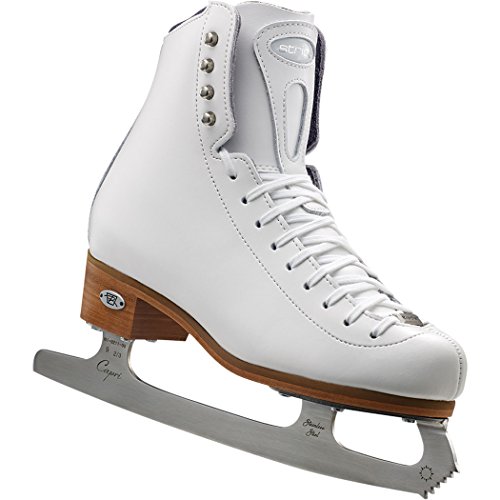
Riedell 23 Stride Ice Skate – Best Value for Proper Support
This boot provides exceptional out-of-the-box support and comfort at an entry-level price. Paired with a sturdy stainless steel blade, it delivers the stability needed to maintain correct posture. It’s a top choice for adults and teens beginning figure skating lessons.
- Open Throat Design
- Flex Notch
- Hand Rolled Collar
Edea Overture Figure Skate – Best for Advanced Beginners
The Edea Overture uses a unique lightweight, thermo-moldable design that promotes a deeper knee bend and proper jumping posture. Its forward pitch and supportive ankle help keep your weight centered over the blade, directly addressing the cause of toe pick catches.

- tOur boots are designed with lightness in mind making them more responsive…
- The unique insole made by with fiberglass and nylon allows more power…
- Our hi-tech soles are made with ultra modern material making them both…
Conclusion: Mastering Your Toe Picks for Confident Skating
Stopping your figure skate toe picks from catching is a solvable challenge. It requires addressing both technique and equipment in a systematic way. Focus on posture, skate fit, and targeted drills.
The key takeaway is to center your weight and ensure your skates provide proper support. Consistent off-ice practice builds the muscle memory for on-ice success.
Apply one fix from this guide during your next practice session. Notice the immediate difference in your control and flow on the ice.
With patience and the right approach, you will transform those frustrating catches into smooth, powerful skating.
Frequently Asked Questions about Figure Skate Toe Picks
What is the purpose of toe picks on figure skates?
Toe picks, or toe rakes, are the serrated teeth at the front of a figure skate blade. Their primary function is to assist with jump takeoffs and certain spins. They provide a momentary point of grip to push off from, not for stopping or general skating.
Beginners often catch them because they lean too far forward. Proper technique uses them as a precise tool only when needed for specific elements.
How do I stop catching my toe pick when I skate forward?
Focus on correcting your posture and weight distribution. Consciously pull your shoulders back and center your weight over the middle of your blade, not the ball of your foot. Practice long, flat-footed glides to build muscle memory for this balanced position.
Ensure your skates fit properly with a locked heel. A forward-sliding heel inside the boot will force your toes and picks downward into the ice.
Are some skate blades more prone to catching than others?
Yes, blade design significantly impacts this. Beginner blades often have a flatter rocker and more prominent toe picks to aid with stability, which can catch more easily. Advanced blades have a more curved rocker and smaller picks for maneuverability.
Additionally, a blade mounted too far forward on the boot will make the toe pick engage sooner. A professional can assess and adjust your blade alignment.
Why do I only catch my toe pick on jumps and landings?
This indicates a technical error in your jump mechanics. On takeoff, you may be leaning into the ice instead of springing upward, causing the pick to dig in too deeply. On landings, catching often means you are landing with straight legs and your weight on your toes.
Practice the springing motion and deep knee-bend landing off-ice. This builds the correct pattern without the fear of falling.
Can dull blades cause more toe pick catches?
Surprisingly, yes. Dull blades lose their sharp edges, reducing your control and grip on the ice. To compensate, skaters often subconsciously adjust their posture, sometimes leaning forward to find purchase. This altered stance can lead to unintentional toe pick contact.
Maintain a regular sharpening schedule (every 20-40 ice hours) with a trusted technician to ensure consistent blade performance.
What is the best off-ice drill to prevent toe pick catches?
The single-leg balance drill is highly effective. Stand on one foot for 30-60 seconds, focusing on keeping your ankle straight and knee softly bent. Progress by closing your eyes or using a balance cushion.
This directly strengthens the ankle stabilizers and improves proprioception, teaching your body to find a centered, stable position without relying on the skate blade for balance.
Should I get my blades sharpened differently to reduce catching?
Discussing hollow depth with your sharpener can help. A shallower hollow (e.g., 3/4″ or 7/8″) provides more glide and less bite, which can feel less “catchy” for some skaters. However, it also offers less grip for edges and jumps.
This is an advanced adjustment. First, master your technique with a standard cut before experimenting with hollow depth changes.
When is it time to see a professional about toe pick problems?
Seek a certified skate technician if problems persist after working on posture and fit. They can perform a comprehensive equipment check for blade alignment, boot breakdown, and mounting issues you cannot see.
A professional coach can also provide a lesson focused solely on posture and basic edges, offering immediate feedback you cannot give yourself.