Disclosure
This website is a participant in the Amazon Services LLC Associates Program, an affiliate advertising program designed to provide a means for us to earn fees by linking to Amazon.com and affiliated sites.
Choosing the right figure skates is crucial for performance and safety. The key differences between recreational and professional figure skates lie in boot construction, blade quality, and intended use. This choice impacts everything from your comfort to your skating potential.
Selecting the wrong type can hinder progress or even cause injury. Our complete guide breaks down the expert specifications to help you make an informed investment. You’ll learn how to match skate features to your skill level and goals.
The Core Problem: Choosing Skates That Match Your Actual Skill Level
Many skaters face a frustrating and costly dilemma. They buy skates designed for a different skill level than their own. This mismatch creates significant problems for performance and safety.
Beginners in stiff professional boots struggle to bend their knees properly. Advanced skaters in soft recreational boots lack the support for jumps and spins. Using the wrong skate type can stall progress and increase injury risk.
Quick Fix: Start with a Trusted Recreational Model
For new and casual skaters, a quality recreational skate is the perfect solution. These models offer a balance of comfort, support, and affordability. They are designed specifically for learning fundamentals without overwhelming the skater.
A great entry point is the Jackson Ultima Classic 200. It’s a popular choice for its reliable construction and beginner-friendly features.
- SoftFlex Boot: Provides comfortable ankle support for new skaters.
- Mirage Blade: A quality stainless steel blade with a slight rocker for maneuverability.
- Heat-Moldable Liner: Offers a better personalized fit for increased comfort.

- REFER TO SIZING CHART IN IMAGES.
- Reinforced vinyl coated uppers gives strength, support and durability…
- Padded felt tongues for comfort and support
Check current price on Amazon →
For more options, our guide to the best figure skates for beginners compares top-rated models to start your journey right.
When a Quick Fix Isn’t Enough: Navigating the Upgrade Path
As your skills advance, recreational skates will no longer provide enough support. You’ll need boots stiff enough to withstand the force of jumps and blades that offer superior control. This is the critical juncture for moving toward professional-grade equipment.
Upgrading is a significant investment. It requires careful research into boot stiffness ratings and blade profiles. Don’t guess—make an informed decision.
Read our in-depth Jackson Ultima 200 vs. 500 review to understand the progression within a trusted brand. For skaters ready for more advanced features, our analysis of the 5th Element Grace ice skates explores a high-performance option.
Boot Construction: The Foundation of Support and Stiffness
The boot is the most critical difference between skate types. It determines the level of support and protection for your ankles and feet. Recreational and professional boots are engineered for completely different physical demands.
This fundamental variance in materials and design directly impacts your skating ability. Choosing the wrong boot stiffness can limit your progress or cause pain. Understanding these construction details is essential for a proper fit.
Recreational Boot Materials and Flexibility
Recreational figure skate boots prioritize comfort and break-in time. They use synthetic materials like vinyl, PVC, and soft thermoplastics. These materials are more forgiving and mold to the foot faster.
The interior features thick, padded liners for immediate comfort. The ankle collar is often lower and more flexible. This design supports basic forward skating, stops, and simple turns without restriction.
- Primary Goal: Comfort and easy break-in for occasional use.
- Typical Construction: Synthetic upper, foam-padded liner, plastic heel counter.
- Best For: Public skating sessions, learning basic edges, and casual gliding.
Professional Boot Structure and Rigidity
Professional boots are built for extreme impact and precise control. They are constructed from multiple layers of hardened leather and composite materials. This creates a stiff, supportive shell that acts as an external ankle brace.
The stiffness prevents the ankle from rolling during high-impact landings from jumps. It also transfers energy directly from the leg to the blade for powerful pushes. The break-in period is longer and more deliberate.
| Feature | Recreational Boot | Professional Boot |
|---|---|---|
| Material | Synthetic (Vinyl, PVC) | Hardened Leather, Composite |
| Ankle Support | Flexible, Padded Collar | High, Rigid, Reinforced Collar |
| Break-in Time | Minimal (1-2 sessions) | Significant (10+ hours of skating) |
| Primary Purpose | Comfort & Basic Maneuvers | Impact Absorption & Precision |
In short, a recreational boot cradles your foot, while a professional boot immobilizes it within a rigid structure. This is the first major factor in choosing between skate types for your specific needs.
Blade Technology: From Basic Gliding to Advanced Edges
The blade is your direct connection to the ice, and its quality defines control. Recreational and professional figure skate blades differ dramatically in material, profile, and sharpening needs. This impacts everything from stability to the ability to execute advanced maneuvers.
Think of blades as the tires on a car. Recreational blades are like all-season tires, while professional blades are high-performance racing slicks. Each is optimized for a specific type of “driving” on the ice.
Recreational Blade Features and Limitations
Recreational blades are typically made from carbon steel, which is softer and requires more frequent sharpening. They are often permanently mounted to the boot, offering a simple, maintenance-friendly setup.
The blade profile is generally flatter, providing more stability for beginners. The toe picks are smaller and less aggressive, designed for basic stops rather than launching jumps.
- Material: Softer carbon steel (less expensive, dulls faster).
- Profile: Flatter rocker for stability, less pronounced curvature.
- Toe Picks: Small, shallow, and less aggressive for safety.
Professional Blade Precision and Performance
Professional blades use high-grade tempered or stainless steel. This hardened steel holds a sharper edge longer, providing consistent, precise grip on the ice. They are always separately mounted, allowing for custom positioning.
The rocker is more pronounced, creating a smaller contact point with the ice. This allows for tighter turns, deeper edges, and faster spins. The toe picks are large, sharp, and strategically placed for powerful jump take-offs.
| Aspect | Recreational Blade | Professional Blade |
|---|---|---|
| Steel Type | Carbon Steel | Tempered/Stainless Steel |
| Rocker Profile | Flatter, more stable | Pronounced, more maneuverable |
| Mounting | Often permanent/fixed | Separate, customizable placement |
| Primary Function | Gliding & Basic Stops | Deep Edges, Spins & Jump Take-offs |
Using a professional blade as a beginner can feel unstable and uncontrollable. Conversely, an advanced skater on a recreational blade will lack the “bite” and control needed for complex footwork. Matching blade technology to skill is non-negotiable.
Cost, Longevity, and Overall Value Analysis
The price tag and lifespan of skates reveal their true value proposition. Recreational and professional figure skates represent different financial investments and durability expectations. Understanding this helps you budget effectively and avoid false economies.
Cheaper skates are not always a better deal for a serious skater. Conversely, expensive professional models are a poor investment for a casual user. The key is aligning cost with your actual skating frequency and goals.
Upfront Cost and What You Get
Recreational skates are a low-barrier entry point, with prices typically ranging from $80 to $250. This cost usually covers a complete, pre-assembled boot-and-blade package. The investment is minimal for trying out the sport.
Professional skates involve a significant upfront investment, often starting at $500 and exceeding $1500. This price usually covers the boot and blade separately. You are paying for specialized materials, handcrafting, and advanced technology.
- Recreational Range: $80 – $250 (complete package).
- Professional Range: $500+ (boot and blade sold separately).
- Hidden Costs: Professional skates require expert mounting and fitting, adding to the initial outlay.
Durability and Maintenance Over Time
Recreational skates are not built to withstand intense, frequent use. The softer materials break down and lose support quickly under high stress. Their lifespan is measured in months for regular skaters, not years.
Professional skates are designed for durability under extreme conditions. A high-quality leather boot can last a competitive skater a season or more of daily training. The blades can be repeatedly sharpened and may outlast several boots.
| Factor | Recreational Skates | Professional Skates |
|---|---|---|
| Expected Lifespan | 1-2 seasons (casual use) | Multiple seasons (intense training) |
| Breakdown Mode | Boot breaks down, loses support | Boot breaks down, blade can be reused |
| Resale Value | Very low to none | Moderate, especially for high-end blades |
| Best Value For | Infrequent skaters & beginners | Serious students & competitive skaters |
For a true beginner, the best value is a well-made recreational skate. For a skater training jumps multiple times a week, a professional skate is the only cost-effective choice. The wrong choice leads to higher long-term costs and frustration.
How to Choose: A Step-by-Step Decision Guide
Selecting the right skates requires honest self-assessment of your current and future goals. This decision guide cuts through the confusion with clear, actionable steps. Follow this process to find skates that match your skill level and ambitions.
Relying on price or brand alone is a common mistake. The correct choice depends on specific, personal factors related to your skating. Let’s break down the decision-making process into simple stages.
Step 1: Assess Your Current Skill Level and Frequency
Be brutally honest about how often you skate and what you can currently do. This is the most critical factor. Your answers will point you clearly toward one category or the other.
Ask yourself these specific questions to gauge your needs accurately.
- Frequency: Do you skate a few times a year, or multiple times per week?
- Maneuvers: Can you comfortably skate forward/backward, or are you working on spins and single jumps?
- Goals: Are you aiming for fun exercise, or structured lessons and competition?
Step 2: Match Skate Features to Your Answers
Now, translate your self-assessment into technical requirements. Use the following matrix to see which skate type aligns with your profile. This creates a direct link between your activity and the needed equipment.
| Your Profile | Points to Recreational Skates | Points to Professional Skates |
|---|---|---|
| Skates < 10 times a year | ✅ | |
| Learning basic edges & stops | ✅ | |
| Taking weekly lessons | ✅ | |
| Practicing single jumps (axel, etc.) | ✅ | |
| Ankle feels wobbly in current skates | ✅ (Need more support) |
Step 3: Get Professionally Fitted
Never buy figure skates based solely on your street shoe size. Skate sizing is different and varies by brand. A professional fitting ensures proper length, width, and arch placement.
This step is non-negotiable for performance and injury prevention. A good fitter will also assess your foot shape and recommend specific brands known for that fit. This transforms a generic purchase into a custom solution.
Common Mistakes and How to Avoid Them
Many skaters make predictable errors when choosing between recreational and professional skates. These mistakes can waste money, hinder progress, and even cause injury. Recognizing these pitfalls is the first step to avoiding them.
The most common errors stem from misconceptions about price, perceived progress, and fit. Let’s examine these critical mistakes and provide clear solutions to guide you toward a better choice.
Mistake 1: Buying Professional Skates “To Grow Into”
This is a widespread and dangerous misconception. Extremely stiff professional boots will not break in properly for a beginner. Your ankles lack the strength to flex the boot, preventing proper knee bend and technique.
You cannot “break in” a boot through sheer force. The result is poor posture, muscle strain, and a higher risk of falls. Skates should fit your current ability, not your future aspirations.
- The Solution: Choose a boot with a stiffness rating appropriate for your current jump level. Upgrade only when your current boots feel too soft and unsupportive during your hardest elements.
Mistake 2: Prioritizing Price Over Purpose
Shoppers often equate a higher price with universally better quality. For a casual skater, a $1000 professional skate is not “better”—it’s inappropriate. You pay for capabilities you cannot and should not use.
Conversely, buying the absolute cheapest recreational skates often means compromising on basic safety and support. The key is finding the right quality tier for your specific use case.
| Mistake | Consequence | Smart Alternative |
|---|---|---|
| Choosing pro skates for casual use | Discomfort, poor technique, wasted money | Invest in a high-quality recreational model from a reputable brand. |
| Choosing cheap skates for serious training | Rapid breakdown, lack of support, injury risk | Budget for a properly fitted intermediate boot that matches your training frequency. |
| Ignoring width and arch fit | Blisters, pain, numbness, and bad habits | Always get professionally measured for length AND width. Consider heat-molding. |
Mistake 3: Ignoring the Signs to Upgrade
Staying in recreational skates too long is also a problem. Clear signals indicate you’ve outgrown them and need more support. Recognizing these signs prevents plateaus and injury.
Listen to your skates and your body. Persistent ankle wobble, boot breakdown after a few months, or an inability to feel secure on edges are all red flags. Upgrading at the right time is just as important as starting correctly.
Making the Transition: When to Move to Professional Skates
Knowing when to upgrade is a pivotal moment in a skater’s journey. The transition from recreational to professional figure skates should be driven by clear, objective milestones. Moving too early or too late can disrupt your development and technique.
This upgrade is a significant commitment in cost and adaptation. It should feel like a necessary step forward, not an arbitrary purchase. Let’s identify the definitive signs that you’re ready for professional-level equipment.
Technical Skill Milestones
Your skating elements provide the clearest roadmap for upgrading. When you consistently practice certain maneuvers, your equipment must keep pace. Recreational skates physically cannot provide the support needed for these skills.
You are likely ready to consider professional skates if you are:
- Consistently landing single jumps (like salchow, toe loop, loop) and beginning work on axels.
- Performing multi-revolution spins with centered control and speed.
- Executing complex edge work and step sequences that require deep, secure knee bends.
Physical Feedback from Your Current Skates
Your body and your gear will send unmistakable signals. Pay close attention to how your skates feel and perform during training sessions. These are practical warnings that your equipment is now the limiting factor.
Upgrade when you experience these specific issues:
- Ankle Roll or Instability: Your ankle collapses inward (pronates) on landings or deep edges.
- Rapid Breakdown: The boot breaks down and becomes too soft within 4-6 months of regular use.
- Lack of Support Sensation: The boot feels like a “slipper” offering no resistance when you try to bend your knee deeply.
The Financial and Time Commitment
Transitioning means accepting new responsibilities. Professional skates require a higher level of care and maintenance. Ensure you are prepared for this shift in both budget and routine.
Before upgrading, confirm you can manage the associated costs and upkeep.
- Budget: You can afford not just the skates, but professional mounting, sharpening, and potential orthotics.
- Skating Frequency: You skate regularly enough (2-3+ times weekly) to justify the investment and properly break in the stiffer boots.
- Maintenance: You are committed to proper care: drying boots after use, keeping blades dry, and regular professional sharpening.
Maintenance and Care: A Critical Ongoing Difference
The care requirements for recreational and professional skates differ as much as their construction. Proper maintenance protects your investment and ensures consistent performance. Neglecting this aspect can ruin even the best skates prematurely.
Recreational skates need basic care for hygiene and safety. Professional skates demand meticulous, technical upkeep to preserve their high-performance characteristics. Understanding these routines is part of being a responsible skater.
Caring for Recreational Skates
Maintenance for recreational skates focuses on preserving basic function and hygiene. The goal is to extend their usable life for casual skating. The routines are simple and can be performed by the skater.
Follow these three essential steps after each skating session:
- Wipe Blades Dry: Use a soft, absorbent cloth to remove all moisture from the blade to prevent rust.
- Air Out Boots: Remove the liners if possible and let the boots air dry away from direct heat sources.
- Use Blade Guards: Only use hard soakers (soft cloth covers) for storage, never walk in hard guards, which blunt the edge.
The Professional Skate Maintenance Regimen
Professional skate care is a precise discipline. It involves specialized tools and often professional services. This regimen maintains the blade’s sharpness and the boot’s structural integrity under high stress.
| Task | Recreational Skates | Professional Skates |
|---|---|---|
| Blade Sharpening | Infrequently, as needed for grip | Regularly, every 20-40 hours of ice time |
| Tool Used | Take to pro shop | Pro shop with figure skating specialist |
| Boot Care | Wipe clean, air dry | Condition leather, use boot trees, protect from nicks |
| Who Does It | Skater / General Pro Shop | Skater & Specialist Technician |
Protecting Your Investment Long-Term
For professional skates, blade care is paramount. Never walk on concrete, tile, or wood without blade guards, as this destroys the edge in seconds. Always transport them in a dedicated skate bag.
Inspect boots regularly for broken-down areas, loose hooks, or separated soles. Catching these issues early can allow for repair. For recreational skaters, simply avoiding moisture and rust will maximize the lifespan of your gear.
Best Figure Skates for Different Skill Levels – Detailed Comparison
Choosing the right model is easier with specific recommendations. We’ve selected three top-rated skates that perfectly represent the spectrum from beginner to advanced. Each model excels in its category for support, value, and performance.
Jackson Ultima Classic 200 – Best for Beginners
The Jackson Ultima Classic 200 is the gold standard for first-time skaters. Its SoftFlex boot provides gentle ankle support without being restrictive. The pre-mounted Mirage blade offers a stable, forgiving profile for learning edges and basic stops.
Ideal for: New skaters, casual public session attendees, and those in introductory learn-to-skate classes.
- REFER TO SIZING CHART IN IMAGES.
- Reinforced vinyl coated uppers gives strength, support and durability…
- Padded felt tongues for comfort and support
Riedell 23 Stride – Best Intermediate Upgrade
The Riedell 23 Stride Star is the perfect bridge between recreational and professional skates. It features a reinforced leather boot with a moderate stiffness rating suitable for single jumps. The pre-mounted Mirage blade provides reliable performance for developing skills.
Ideal for: Skaters mastering waltz jumps, spins, and beginning single jumps who need more support than a recreational boot.
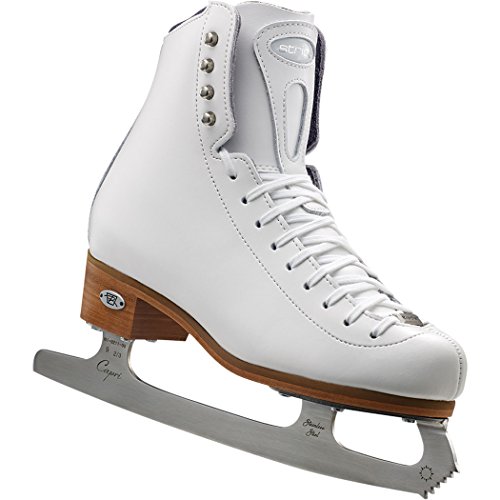
- Open Throat Design
- Flex Notch
- Hand Rolled Collar
Edea Chorus Boot + Coronation Ace Blade – Best Advanced Package
This combination represents a true professional-level setup for serious skaters. The Edea Chorus boot uses innovative lightweight materials with high stiffness for jump landings. Paired with the legendary Coronation Ace blade, it offers superior control for doubles and advanced footwork.
Ideal for: Skaters consistently landing axels and working on double jumps who require maximum support and precise blade response.
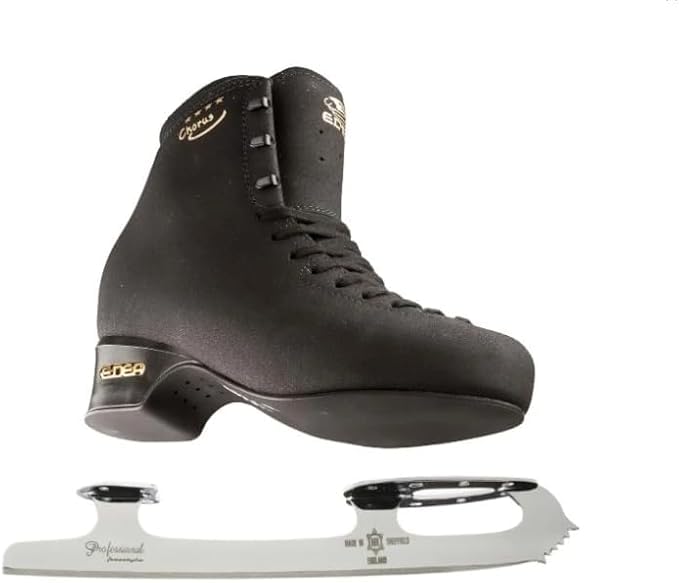
- EDEA Chorus: Traditional leather and modern design for a classic look with…
- LEATHER OUTSIDE – Specially coated leather exterior according to European…
- THERMAL SUPPORT – The lightweight three-layer construction provides greater…
Conclusion: Making the Right Choice in Figure Skates
The difference between recreational and professional figure skates is profound. It impacts your safety, progress, and enjoyment on the ice. Choosing correctly requires honest assessment of your current skill and goals.
Match your equipment to your actual ability, not your aspirations. Invest in quality recreational skates to build a strong foundation. Upgrade to professional models only when your skills demand it.
Consult a professional fitter and your coach for personalized advice. Use the decision guide in this article as your starting point for research.
With the right skates on your feet, you can focus on the joy of gliding, spinning, and jumping with confidence and security.
Frequently Asked Questions about Recreational vs. Professional Figure Skates
What is the main difference between recreational and professional figure skates?
The core difference is in their construction and intended use. Recreational skates have softer, synthetic boots and basic blades for comfort and casual skating. Professional skates feature stiff leather boots and high-performance blades designed to withstand jumps and provide precise edge control.
This fundamental design variance impacts support, durability, and cost. Choosing the wrong type can hinder your progress and affect your safety on the ice.
How do I know if I need professional figure skates?
You likely need professional skates if you are taking weekly lessons and consistently practicing single jumps like axels. Another clear sign is if your current recreational boots feel unsupportive and break down within a few months of regular use.
Your coach’s recommendation is the best indicator. They can assess if your technique is being limited by your equipment’s lack of support and stiffness.
Can I use recreational skates for learning basic jumps?
You can learn very basic jumps like two-foot hops or small waltz jumps in quality recreational skates. However, attempting any significant single jumps (salchow, toe loop) in them is not recommended. The boot lacks the necessary ankle support for safe landings.
This can lead to ankle injuries and instill bad technical habits. Upgrading to a supportive boot is essential before progressing to serious jump training.
Why are professional figure skates so much more expensive?
The higher cost reflects superior materials and craftsmanship. Professional boots use multiple layers of hardened leather and are often hand-lasted for a precise fit. The blades are made from high-grade steel that holds an edge longer and allows for custom mounting.
You are paying for advanced technology, durability under intense stress, and specialized features that directly enable higher-level skating skills.
What is the best way to break in new professional figure skates?
Break in professional skates gradually by wearing them at home for short periods before skating. Initially, skate in them for only 15-20 minutes per session, focusing on simple edges and stroking. Never try to break them in by force or with intense jump training on day one.
A proper break-in period allows the stiff leather to mold to your foot’s unique contours without causing blisters or compromising the boot’s structure.
How often should I sharpen my figure skates?
Sharpening frequency depends on use. Recreational skaters may only need sharpening once or twice a season. Serious skaters training multiple times a week should sharpen blades every 20-40 hours of ice time.
The best indicator is performance loss. If your edges feel slippery or you’re losing grip on turns, it’s time for a professional sharpening by a specialist familiar with figure skates.
Can I put professional blades on recreational boots?
Technically possible, but not advisable. Recreational boots are not constructed to handle the stress and precision of a professional blade. The boot’s sole may not be strong enough for secure mounting, and the soft upper won’t provide the stable platform the blade requires.
This mismatch can be dangerous and will not yield the performance benefits you expect. Boot and blade should be matched in quality and purpose.
What should I look for when buying my first pair of figure skates?
Focus on fit, support, and reputable brands. Your first skates should be snug but not painful, with a comfortably stiff ankle. Look for models from established brands like Jackson or Riedell designed for beginners.
Most importantly, get professionally fitted at a dedicated skate shop. Avoid department store “hockey-style” figure skates, as they often lack proper support for learning.