Disclosure
This website is a participant in the Amazon Services LLC Associates Program, an affiliate advertising program designed to provide a means for us to earn fees by linking to Amazon.com and affiliated sites.
Choosing between stiff and soft figure skate boots depends entirely on your skating skill and goals. The right boot provides crucial ankle support and power transfer. The wrong one can hinder progress or cause injury.
This complete guide cuts through the confusion. We provide expert tips to match your boot’s stiffness to your specific skill level and jumping ability. You’ll make a confident, safe choice for your next pair.
The Core Problem: Boot Stiffness Mismatch Hampers Progress
Many skaters struggle because their boots don’t match their skill. Beginners in overly stiff boots can’t bend their knees or ankles properly. This prevents learning correct posture and basic edges.
Conversely, advanced skaters in soft boots lack critical support for jumps and spins. Their ankles collapse inwards, wasting energy and increasing injury risk. This mismatch stalls skill development at any level.
Quick Fix: Start with the Right Beginner Boot
For new skaters, a softer, supportive recreational boot is ideal. It allows for the necessary ankle flexion to learn fundamentals safely. A great starting point is our guide to the best figure skates for beginners.
A solid, affordable option available on Amazon is the Lake Placid Nitro 8.8 Adjustable Ice Skates. They offer a good blend of support and flexibility for new skaters.
Lake Placid Nitro 8.8 Adjustable Ice Skates
These boots feature a durable synthetic upper with a warm fleece lining. The adjustable sizing accommodates growing feet, making them a practical choice.
- Adjustable fit for extended use
- Recreational-level support for beginners
- Comfortable, insulated interior
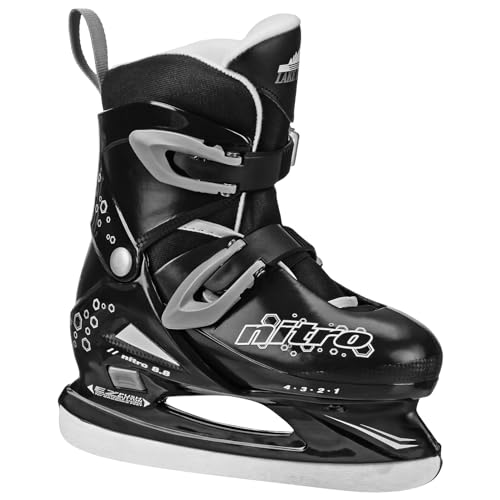
- BOOT Molded Shell with Hinged Cuff
- LINING Washable Comfort Fill Liner
- CLOSURE Locking Quick Fit Buckles for Stability and Easy On and Off
Check current price on Amazon →
When a Quick Fix Isn’t Enough: Leveling Up Requires Specialized Gear
Once you master basic edges and simple jumps, recreational boots become a liability. You need boots engineered for your specific discipline and jump level.
This is where professional fitting and specialized models are essential. For skaters ready to advance, reading detailed reviews is crucial. Consider the supportive construction in the Jackson Ultima Classic 200 & 500 review or the elegant design of the 5th Element Grace ice skates.
Ultimately, the correct stiffness is a professional decision. Consulting a certified skate fitter is the best solution for a perfect, performance-enhancing match.
Boot Stiffness and Skate Ratings
Figure skate stiffness is measured by a rating system. This number indicates the boot’s resistance to flex. Higher numbers mean stiffer boots designed for more advanced skills.
This rating directly correlates to the level of jumps a skater performs. Choosing the correct rating is essential for safety and progression. It ensures your boot acts as a supportive tool, not a hindrance.
Decoding the Stiffness Rating Scale
Manufacturers like Jackson, Riedell, and Edea use their own scales. However, they all follow the same fundamental principle. The scale typically ranges from 20-30 for beginners up to 100+ for elite skaters.
Here is a general breakdown of how ratings align with skill:
| Stiffness Rating Range | Skater Level | Typical Jumps |
|---|---|---|
| 20 – 40 | Beginner / Recreational | Basic edges, swizzles, no jumps |
| 45 – 70 | Advanced Beginner / Intermediate | Waltz jump, single Salchow, single toe loop |
| 75 – 90 | Advanced / Competitive | All single jumps, beginning double jumps |
| 95+ | Elite / Senior Competitive | Double and triple jumps |
How to Test Boot Flexibility Yourself
You can perform a simple hand test to assess stiffness. Hold the boot by the heel and apply pressure to the top. Observe how much the ankle cuff bends forward.
- Soft Boots: Will bend easily with minimal pressure, often over 45 degrees.
- Medium Stiffness: Will offer noticeable resistance, bending about 30-45 degrees.
- Stiff Boots: Will barely flex, moving only 10-20 degrees with significant effort.
Remember, this is a basic check. Always consult a professional fitter for the final decision. They will consider your weight, strength, and technical goals.
Choosing Between Stiff and Soft Boots by Skill Level
Selecting the right boot is a critical decision for your skating journey. The correct choice enhances performance and prevents injury. The wrong one can fundamentally limit your technical development.
Your current skill level—not your future goals—should be the primary deciding factor. Boots are designed to break down over time, supporting you through each stage. Let’s match boot type to your specific phase of learning.
Soft Boots: Ideal for Beginners and Recreational Skaters
Soft figure skate boots offer maximum flexibility for new skaters. This allows you to achieve the deep knee bend and ankle flexion required for basics. They are perfect for mastering edges, stroking, and simple moves.
Who should choose soft boots?
- First-time skaters: Learning balance, forward/backward skating, and stopping.
- Recreational skaters: Enjoying public sessions with no jump aspirations.
- Young children: Whose lighter weight doesn’t require stiff support yet.
These skaters should prioritize comfort and flexibility. A great resource is our list of the best women’s recreational ice skates for gentle support.
Stiff Boots: Essential for Advanced Jumps and Spins
Stiff boots provide the structured support needed for high-impact landings. They transfer power from your leg to the blade efficiently for explosive jumps. The ankle support also prevents painful “breaking down” during multi-rotation spins.
Who needs stiff boots?
- Skaters landing single jumps: Waltz jumps, Salchows, and toe loops demand more support.
- Athletes learning double jumps: The torque and landing force require maximum stiffness.
- Competitive skaters: Who need consistent, reliable support for complex programs.
The Middle Ground: Moderate Stiffness for Intermediate Skaters
Intermediate skaters need a boot that offers a balance. It must provide support for beginning jumps while allowing enough flex for knee action. This “medium-stiff” category is crucial for steady progression.
Look for boots with reinforced ankles but a flexible sole. This design supports jump take-offs and landings. It still permits the fluid knee bend needed for strong edges and connecting steps.
Key Signs You’re in the Wrong Skate Boots
Your body often signals boot problems long before your skills plateau. Recognizing these signs prevents injury and wasted training time. Listen to these physical and performance cues carefully.
Discomfort is common when breaking in new skates. Persistent pain or technical regression, however, indicates a poor fit or stiffness mismatch. Addressing these issues quickly is crucial for your skating health.
Warning Signs Your Boots Are Too Soft
Soft boots fail when your skill exceeds their support capacity. Your ankles will work overtime to stabilize, leading to fatigue and strain. This is a major red flag for advancing skaters.
- Ankle Roll/Pruning: Your ankles consistently collapse inward (pronate) during edges or landings.
- Lack of Jump Height: You can’t get off the ice with power because the boot absorbs your energy.
- Premature Breakdown: The ankle cuff becomes soft and loses shape after only a few months of use.
- Pain on Landing: Sharp pain in your ankles, shins, or knees from inadequate shock absorption.
Warning Signs Your Boots Are Too Stiff
Overly stiff boots rob you of the essential ankle flexion needed for proper technique. This is a common issue for beginners placed in advanced boots. It fundamentally blocks the development of good posture.
- Inability to Bend Knees: You struggle to achieve a deep knee bend, making you stand upright and stiff.
- Foot and Calf Cramps: Constant muscle strain from fighting against the rigid boot structure.
- Bruised Shin Bones: Pain along the front of your shin from pressure against a stiff tongue.
- Slow Break-In: The boots remain painfully rigid and unforgiving even after many hours of wear.
The Goldilocks Test: How Proper Boots Should Feel
Correctly fitted boots of the right stiffness feel like a firm handshake. They should feel snug and supportive, not crushingly tight or sloppy. You should be able to achieve a full knee bend without your heel lifting.
During the break-in period, expect pressure points, not sharp pain. The boot should mold to your foot, not fight against your natural motion. When in doubt, professional guidance is invaluable for this critical assessment.
Expert Tips for Trying On and Testing Skate Boots
Purchasing figure skates is a significant investment in your performance. A proper in-store fitting is always preferable to online guessing. This process ensures you get the correct size, width, and stiffness.
Come prepared with your skating socks and any orthotics you use. Plan to spend at least 30-45 minutes trying on different brands and models. Your patience will pay off in comfort and longevity.
The Step-by-Step Fitting Process
Follow this sequence to evaluate each pair of boots thoroughly. Do not rush through any of these critical steps.
- Initial Feel: Lace the boots snugly while sitting. Your toes should gently brush the front without curling.
- Knee Bend Test: Stand in a skating stance and bend your knees deeply. Your heel should stay firmly planted in the heel pocket.
- Ankle Flex Test: Lean forward, applying pressure to the tongue. The boot should offer resistance but allow forward flex.
- Walk & Edge Test: Walk on the carpet and simulate edge positions. There should be no painful pinching or excessive heel lift.
Critical Questions to Ask Your Fitter
A knowledgeable fitter is your greatest resource. Come armed with these essential questions to guide the decision.
- “Based on my weight, strength, and current jumps, what stiffness rating do you recommend?”
- “How does this brand’s sizing and width compare to others? Should I size down?”
- “What is the expected break-in time, and how should I manage it?”
- “At what point in my skill progression will I likely need to upgrade from this boot?”
What to Expect During the Break-In Period
Even perfectly fitted boots require a break-in period. Expect some initial stiffness and discomfort during the first 10-15 hours of ice time. This is normal as the materials mold to your unique foot shape.
Persistent, sharp pain or numbness is not normal. This indicates a pressure point or poor fit that may not improve. Always follow your fitter’s specific break-in instructions to avoid damaging the boot’s structure.
Stiff vs. Soft Boots: A Direct Comparison for Skaters
Seeing the differences side-by-side clarifies the best choice for your needs. This comparison focuses on performance characteristics, not just comfort. Use this table as a quick-reference guide during your decision process.
Remember, there is no universally “better” option. The superior boot is the one that correctly matches your current technical demands. This alignment is the key to safe and effective progression.
| Feature | Soft Figure Skate Boots | Stiff Figure Skate Boots |
|---|---|---|
| Primary Purpose | Learning fundamentals & recreational skating | Executing advanced jumps, spins, and competitive programs |
| Ankle Support | Flexible, allows full range of ankle motion | High, rigid support to prevent pronation and injury |
| Power Transfer | Absorbs energy; less efficient for explosive moves | Direct, efficient transfer from leg to blade for height |
| Break-In Time & Comfort | Short; comfortable almost immediately | Longer; requires patience through a stiff period |
| Ideal Skater Profile | Beginner, recreational, young child, adult learner | Intermediate+ skater landing singles, competitive athlete |
| Longevity & Durability | May break down quickly with aggressive use | Built to withstand high-impact forces over time |
Making Your Final Decision: A Simple Checklist
Before purchasing, run through this quick checklist. Answering these questions will point you toward the correct stiffness category.
- What is the most advanced jump you can land consistently? (e.g., none, waltz jump, single Salchow, axel).
- How many hours per week do you train on ice? (More hours demand more durable construction).
- Have you experienced ankle pain or instability in your current skates? (This indicates a support issue).
- What does your coach or a certified fitter recommend? (Professional advice is invaluable).
Top Brand Breakdown: Stiffness Profiles and Recommendations
Major skate brands have distinct design philosophies and stiffness scales. Understanding these differences helps you navigate their product lines. A boot from one brand may feel different than another with the same nominal rating.
This overview covers three leading manufacturers. We’ll highlight their approach to support and which skater profiles they often suit best. Always try on multiple brands to find your perfect match.
Jackson Ultima: Structured Support for Technical Skaters
Jackson boots are renowned for their durable, structured feel and traditional break-in. They use a numerical stiffness index, with the “Classic” and “Elite” lines catering to different levels.
- Typical Feel: Firm, supportive heel pocket and ankle. Often requires a dedicated break-in period.
- Best For: Skaters who value maximum stability and direct power transfer. Often favored by jumpers.
- Sample Model: The Jackson Ultima Classic 200 & 500 series is a mainstay for intermediate skaters moving into single jumps.
Riedell: Precision Fit and Customizable Options
Riedell emphasizes a precise, glove-like fit with extensive width and volume options. Their stiffness is also rated numerically, and they offer a wide range of customization.
- Typical Feel: Snug, conforming fit with a focus on heel and arch containment. Often praised for comfort.
- Best For: Skaters with narrow or low-volume feet, and those who prioritize a precise, secure feel.
- Sample Model: The Riedell Soar offers a great blend of support and flexibility for developing skaters.
Edea: Lightweight and Fast-Breaking Innovation
Edea revolutionized boot design with lightweight, thermo-moldable materials. Their boots are known for an upright posture and a significantly shorter break-in time.
- Typical Feel: Lightweight, stiff overall but with a flexible ankle area designed for a deep knee bend.
- Best For: Skaters seeking a modern, lightweight boot who struggle with traditional break-in pain.
- Key Consideration: Their unique design requires proper lacing technique to engage the support system correctly.
Maintenance and Longevity: Maximizing Your Boot’s Life
Proper care extends the functional life of your skate boots dramatically. Maintenance is especially critical for stiff boots, which represent a significant investment. Good habits preserve support and delay costly premature breakdown.
Neglect can cause materials to degrade, lose shape, and soften prematurely. This turns a perfectly good boot into an unsafe piece of equipment. Follow these essential care steps to protect your skates.
Essential Daily and Weekly Care Routine
Consistency is key. Integrate these simple tasks into your post-skating ritual.
- Dry Thoroughly: Always wipe down boots with a dry towel after use. Remove insoles to air dry separately, preventing moisture buildup and odor.
- Unlace Completely: Fully loosen laces after each session. This relieves tension on the eyelets and leather, helping the boot retain its shape.
- Use Boot Guards & Soakers: Wear hard guards for walking and soft soakers for storage. This protects the blade from rust and the boot sole from moisture.
- Store Properly: Keep skates at room temperature in a breathable bag. Never leave them in a hot car or damp environment.
Recognizing When It’s Time to Replace Your Boots
All boots eventually lose their supportive properties. Skating in broken-down boots is a leading cause of injury. Watch for these non-negotiable signs of retirement.
- Visible Creasing: Deep, permanent creases across the ankle cuff indicate structural failure.
- Loss of Support: Your ankles begin to roll inward during moves that were previously stable.
- Excessive “Breakdown”: The boot feels soft and folds over easily when you press on the ankle.
- Pain Returns: You experience new or increased pain in ankles, shins, or knees that wasn’t present before.
Professional Services: When to Seek Help
Some maintenance tasks require a professional skate technician. Don’t attempt complex repairs yourself, as you can compromise the boot’s integrity.
Seek a pro for punching out painful pressure points, repairing torn eyelets, or replacing worn soles and hooks. A good tech can often extend a boot’s life by several months with timely intervention.
Best Figure Skate Boots by Skill Level – Detailed Comparison
Based on stiffness, support, and value, these three models stand out for specific skater profiles. Each offers a distinct balance of features to match different stages of development. Choosing the right one accelerates your progress safely.
Jackson Ultima Mystique – Best for Beginners
The Jackson Mystique is the gold standard for first-time skaters. Its flexible yet supportive construction allows for proper knee bend and ankle flexion. This boot is ideal for mastering basic edges and stroking without overwhelming stiffness. It provides a perfect foundation for skill development.

- JS1490 for Women; JS1491 for Girls; JS1494 for Toddler (Girls); JS1592 for…
- Leather upper polyurethane coated and Stylized PVC outsole for easy care…
- Softer topline for added comfort
Riedell 23 Stride – Best for Intermediate Skaters
The Riedell 233 Stride offers enhanced stiffness for single jumps. It features a reinforced ankle and sole for secure landings while maintaining good flexibility for deep edges. This boot is the ideal upgrade for skaters consistently landing waltz jumps and moving toward axels.
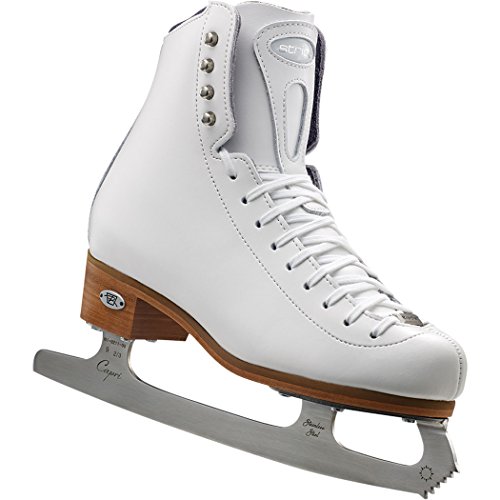
- Open Throat Design
- Flex Notch
- Hand Rolled Collar
Edea Chorus – Best for Advanced Beginners/Intermediate
The Edea Chorus introduces lightweight, modern boot technology. Its unique design provides upright support with flexible ankle articulation, reducing break-in time. This model is perfect for skaters transitioning to more advanced footwork and single jumps who want a responsive feel.

- Type of Skating: Mid Level for ICE FreeStyle
- Training Level: Double Jumps (Even a good option for lower level Skaters…
- Training Hours: 10 to 12 Plus Hours per week
Conclusion: Choosing the Right Figure Skate Boot Stiffness
Selecting between stiff and soft figure skate boots is a foundational decision. The correct choice directly supports your skill development and safety on the ice. It prevents injury and ensures efficient power transfer for every move.
Remember, your current ability—not future goals—should guide your purchase. Always prioritize a professional fitting over online guesswork. This investment in the right gear pays dividends in your skating progress.
Use the guidelines and comparisons in this article to inform your discussion with a certified fitter. Then, step onto the ice with confidence, supported by boots that match your journey.
Your perfect pair is out there, ready to help you reach new heights.
Frequently Asked Questions about Stiff and Soft Figure Skate Boots
What is the main difference between stiff and soft figure skate boots?
Stiff boots provide maximum ankle support and power transfer for jumps and spins. They resist flex to protect your ankles during high-impact landings. Soft boots offer greater flexibility for learning proper knee bend and edges.
The core difference lies in their intended use. Stiff boots are for advanced technical elements, while soft boots are for foundational skill development. Choosing wrong can significantly hinder your progress or cause injury.
How do I know if my skate boots are too stiff for me?
You’ll struggle to achieve a deep knee bend and may experience foot or calf cramps. The boots will feel unyielding and may cause pain along your shin bones. Breaking them in will seem impossible even after many hours.
If you’re a beginner and cannot flex your ankles at all, the boots are too stiff. This rigidity prevents you from learning correct skating posture. Consult a fitter; you likely need a boot with a lower stiffness rating.
How do I know if my skate boots are too soft?
Your ankles will collapse inward (pronate) during edges or upon landing jumps. The boot’s ankle cuff will feel loose and offer little resistance when you press on it. You may also feel a lack of power when pushing off.
If the boot breaks down and becomes very soft within a few months of use, it’s too soft for your skill level. Advanced skaters in soft boots waste energy and risk sprains from inadequate support.
Can a beginner start with stiff figure skates?
No, beginners should not start with stiff figure skates. Stiff boots restrict the ankle flexion necessary to learn a proper deep knee bend and basic edges. This can ingrain bad posture and make fundamental skills much harder to master.
Starting too stiff is called “over-booting” and is a common mistake. It’s safer and more effective to begin in a softer recreational boot. Upgrade to stiffer boots only when your skills demand it.
What is the best way to break in stiff new skate boots?
Break in new boots gradually by wearing them at home for short periods. Lace them snugly, bend your knees, and flex your ankles while sitting. Never use extreme methods like baking them in an oven unless they are specifically thermo-moldable by the manufacturer.
The first 10-15 hours on ice are crucial. Expect some discomfort but not sharp pain. Full break-in can take 20-30 hours of skating. Always follow the specific instructions from your fitter or the boot manufacturer.
How often should I replace my figure skate boots?
Replace your boots when they lose supportive structure, not just when they look worn. For a skater training several hours weekly, boots typically last 6-18 months. The timeline depends entirely on your skill level, weight, and training intensity.
Visible deep creasing across the ankle and a feeling of instability are clear replacement signals. Skating in broken-down boots is a leading cause of overuse injuries in the sport.
Are expensive skate boots always stiffer?
Not always. Price often reflects material quality, craftsmanship, and advanced features like lightweight composites. However, within a brand’s line, higher-priced models are generally designed for higher-level skaters, which usually means increased stiffness and durability.
A beginner’s boot from a premium brand may be expensive but still appropriately soft. Focus on the manufacturer’s stated stiffness rating for your jump level, not just the price tag.
Should I choose boots based on what my coach wears?
No, you should not copy your coach’s boot choice. Your coach’s boots are selected for their weight, strength, and elite skill level, which likely differ greatly from yours. Their perfect boot could be completely wrong for your current development stage.
Always choose boots based on a professional fitting and your own technical assessment. Use advice from your coach and fitter to find the boot that supports *your* specific needs and goals.