Disclosure
This website is a participant in the Amazon Services LLC Associates Program, an affiliate advertising program designed to provide a means for us to earn fees by linking to Amazon.com and affiliated sites.
Yes, you can inline skate on the road—but it’s not as simple as strapping on skates and rolling. Roads offer smooth pavement, but hazards like traffic and debris demand caution.
Many assume skating belongs only on sidewalks or rinks. However, roads provide long, uninterrupted paths perfect for speed and endurance. But without preparation, accidents happen.
Best Inline Skates for Road Skating
Rollerblade Twister XT
The Rollerblade Twister XT is a top-tier urban skate with a durable aluminum frame and 80mm 85A wheels for road stability. Its breathable microfiber liner and adjustable cuff ensure comfort and ankle support for long rides on rough pavement.

- THIS SKATE IS FOR – Urban, fitness, commuting and recreational skating. The…
- SKATE LINER PLUS PROVIDES A TRUE PREMIUM FIT FOR SKATING with its new…
- SECURE CLOSURE SYSTEM – Locking cuff buckles, micro-adjustable 45° buckles…
Powerslide Next 90
Built for speed and control, the Powerslide Next 90 features a carbon-reinforced shell and 90mm wheels for smooth rolling on roads. The Trinity mounting system reduces vibration, while the adjustable frame accommodates different skating styles.
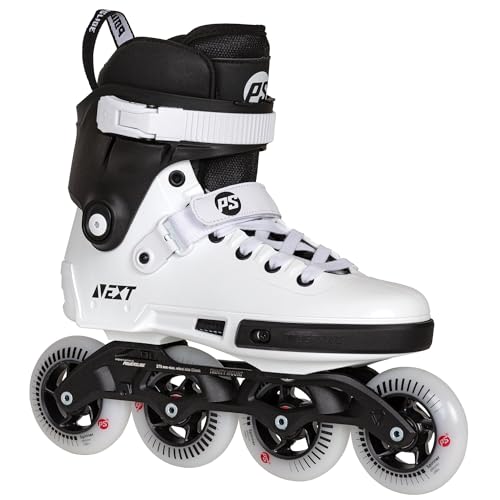
- Agile Urban Skating: Speedy, Enjoyable, and Adaptable
- Packed with Innovations: Feature-Rich Inline Skate
- Trusted TRINITY 3-Point Mounting
K2 FIT 84 BOA
Ideal for beginners and fitness skaters, the K2 FIT 84 BOA combines an easy-to-use BOA lace system with 84mm wheels for a balanced ride. The soft boot and shock-absorbing frame make it perfect for rough road surfaces.
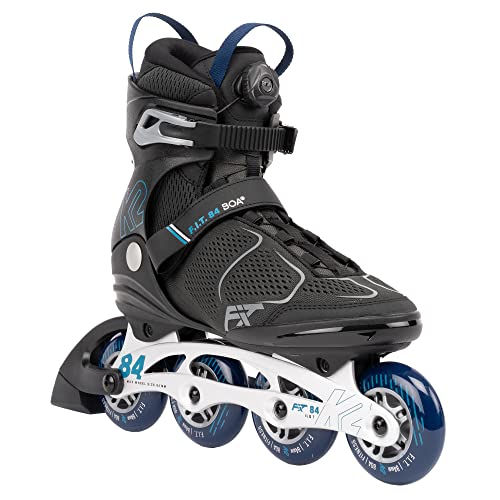
- BOA System – Tightens or loosens the boot with a twist of a knob
- Stability Plus Cuff – Provides the right amount of support, flexibility…
- Stamped Aluminum Frame – Responsive, stiff and durable stamped aluminum for…
Is Road Skating Safe? Key Risks and How to Mitigate Them
Inline skating on roads presents unique challenges that demand careful preparation. Unlike smooth rinks or bike paths, roads expose skaters to traffic, uneven surfaces, and unpredictable hazards. Understanding these risks is crucial for safe skating.
Primary Road Skating Hazards
Traffic dangers pose the greatest threat. Cars may not see skaters, especially at intersections or during turns. Always assume drivers don’t notice you – wear bright colors and use hand signals when stopping or turning.
Road surface quality dramatically affects control. Watch for:
- Potholes: Can catch wheels and cause falls
- Gravel patches: Reduce traction suddenly
- Manhole covers: Become slippery when wet
- Road seams: Can trap wheels if crossed at sharp angles
Essential Safety Gear for Road Skating
Standard protective equipment becomes even more critical on roads:
Helmets should be CPSC-certified with full head coverage. The S1 Lifer model offers superior impact protection with its multi-density foam lining – crucial for potential collisions with vehicles or pavement.
Wrist guards with sturdy splints prevent the most common skating injury – broken wrists from fall impacts. Look for models with dual splints like the Triple 8 Wristsavers that protect both flexion and extension motions.
Road Selection Strategies
Not all roads are equally skatable. Ideal routes have:
- Wide shoulders or bike lanes (minimum 4 feet width)
- Smooth, recently paved surfaces
- Light traffic (under 1,000 vehicles per day)
- Good visibility with few blind curves
Residential streets often provide the best balance of smooth pavement and low traffic. Avoid major arterials during rush hour – a 30 mph car hitting a skater has 90% fatality risk according to NHTSA data.
By understanding these risks and preparing properly, road skating can be an exhilarating way to explore your city while staying safe. Always scout new routes walking first to identify potential trouble spots.
Mastering Road Skating Techniques: Essential Skills for Urban Environments
Road skating requires specialized techniques that differ significantly from rink or trail skating. Developing these skills will transform your ability to handle urban obstacles while maintaining control and efficiency.
The Proper Road Skating Stance
Your skating posture dramatically affects stability and reaction time. The optimal road stance includes:
- Lowered center of gravity: Bend knees at 110-120 degree angle for better shock absorption
- Forward lean: Maintain 15-20 degree torso angle to counterbalance speed
- Feet positioning: Keep skates shoulder-width apart with one slightly forward (scissor stance)
This stance prepares you for sudden stops and helps maintain control when encountering rough pavement. Practice holding this position for extended periods to build endurance.
Advanced Braking Techniques for Roads
Standard heel brakes become less effective on steep declines or wet surfaces. Master these alternative stopping methods:
Power Slide:
- Shift weight to your dominant foot
- Rotate trailing foot 90 degrees perpendicular to direction of travel
- Apply gradual pressure to slide the wheels sideways
- Keep knees bent to maintain balance
This technique requires practice but offers superior stopping power on hills. Start practicing on gentle slopes before attempting steeper grades.
Navigating Urban Obstacles
City skating presents unique challenges that require specific techniques:
Curb Hops: Approach at 45 degree angle, lift toes while pushing down with heels to pop the front wheels up first. The Rollerblade Metroblade with its reinforced toe box is ideal for this maneuver.
Gravel Patches: Maintain speed and keep weight centered – slowing down increases chances of getting stuck. Wider wheel setups (4x90mm) provide better float over loose surfaces.
Wet Surfaces: Shorten your stride and avoid sharp turns. Softer wheels (78A-82A) offer better wet traction than hard racing wheels.
Professional urban skaters recommend spending 15 minutes of each session practicing emergency maneuvers in a controlled environment before hitting busy streets. This builds muscle memory for real-world situations.
Optimizing Your Skating Setup for Road Conditions
The right equipment configuration can make the difference between an enjoyable ride and a dangerous struggle. Road skating demands specific gear adjustments that account for vibration absorption, durability, and speed control.
Wheel Selection and Configuration
| Road Condition | Recommended Wheel | Durometer | Ideal Size |
|---|---|---|---|
| Smooth asphalt | Hydrogen wheels | 85A | 90-100mm |
| Rough pavement | Mushroom/blunt profile | 80-83A | 84-90mm |
| Wet conditions | Grippy urethane | 78-80A | 80-84mm |
The Matter G13 compound offers exceptional durability (lasting 2-3x longer than standard wheels) while maintaining grip on rough surfaces. For urban skating, a rockered setup (slightly raised middle wheels) improves maneuverability around obstacles.
Bearing Considerations for Road Use
Road vibrations can destroy cheap bearings quickly. Look for:
- ABEC-7 or higher for sustained speeds
- Rust-proof seals (Teflon-coated preferred)
- Ceramic hybrids for wet conditions
The Bones Swiss Ceramic bearings maintain performance in all weather conditions while resisting road grit contamination. Clean and lubricate bearings every 100-150 road miles using speed cream rather than thick grease.
Frame and Boot Adjustments
Aluminum frames (like those on Powerslide Next skates) provide better vibration damping than carbon fiber on rough roads. For maximum comfort:
- Add shock-absorbing insoles (1/8″ gel works best)
- Use waxed laces for even pressure distribution
- Install aftermarket shock absorbers if your skates allow
Common mistakes include using marathon racing setups for urban skating (too stiff) or neglecting to rotate wheels after every 3-4 sessions. Check wheel wear patterns – uneven wear indicates frame alignment issues needing adjustment.
Professional road skaters recommend carrying a multi-tool for on-the-go adjustments. Temperature changes can affect wheel hardness and bearing performance, so test your setup at different times of day.
Road Skating Laws and Etiquette: Navigating Legal and Social Considerations
Understanding the legal framework and unwritten rules of road skating ensures both your safety and positive community relations. These guidelines vary significantly by location and require careful research before skating.
Legal Status of Road Skating by Jurisdiction
Road skating laws fall into three general categories worldwide:
- Explicitly permitted: Some European cities like Paris and Berlin classify skaters as pedestrians with full road rights
- Tolerated but unregulated: Most U.S. states treat skaters as “unusual vehicles” without specific prohibitions
- Explicitly prohibited: Certain Asian cities like Singapore ban skating on all roadways
Always check local municipal codes – some cities require reflective gear after dark or prohibit skating in business districts. The International Inline Skating Association maintains an updated global law database.
Essential Right-of-Way Protocols
When sharing roads with vehicles, follow these critical rules:
- Yield to all traffic at intersections – assume drivers don’t see you
- Never skate against traffic – this reduces visibility and increases collision risk
- Use proper hand signals – extend left arm straight for left turns, bent upward for right turns
In bike lane areas, position yourself to the right but avoid hugging the curb where debris collects. Maintain at least 3 feet from parked cars to avoid “dooring” accidents.
Group Skating Etiquette
When skating with others:
| Formation | Best Use | Spacing |
|---|---|---|
| Single file | Narrow roads | 3-4 skate lengths |
| Double paceline | Wide bike lanes | 2 feet between pairs |
The lead skater should call out hazards (“Car back!” or “Gravel left!”) using standardized terms. Never stop suddenly in a group – gradually move to the side while signaling.
Professional skating groups recommend carrying ID and emergency contact information in a visible location (like a Road ID bracelet). Many jurisdictions require this for organized skate events exceeding 20 participants.
Advanced Road Skating Maintenance: Maximizing Performance and Longevity
Proper equipment maintenance becomes exponentially more important for road skating due to increased wear from rough surfaces and environmental factors. Developing a comprehensive maintenance routine can triple your gear’s lifespan while improving safety.
Road-Specific Wear Patterns and Solutions
| Component | Road Wear Indicators | Preventative Measures | Replacement Threshold |
|---|---|---|---|
| Wheels | Conical deformation >3mm | Weekly rotation (flip and swap positions) | When diameter loses 10mm from new |
| Bearings | Rust spots or gritty feel | Monthly ultrasonic cleaning | After 500 road miles |
| Frame Bolts | Visible thread wear | Threadlocker application | Annually or when stripped |
The Bones Bearings Cleaning Unit provides professional-grade maintenance for road skaters, removing embedded asphalt particles that standard cleaning misses. For wheels, invest in a digital caliper to precisely measure wear patterns.
Environmental Protection Strategies
Road skating exposes equipment to harsh conditions requiring specialized protection:
- Salt corrosion: Apply marine-grade grease to axle threads in winter regions
- UV damage: Use 303 Aerospace Protectant on plastic components
- Water intrusion: Install bearing spacers with O-ring seals for wet conditions
Professional urban skaters recommend carrying a mini maintenance kit containing:
- Multi-tool with 4mm-6mm hex keys
- Compact bearing cleaner (like Bones Speed Cream)
- Spare axle bolts
- Quick-dry towel
Cost-Benefit Analysis: Repair vs. Replace
High-quality road skating components follow predictable wear curves:
Premium wheels ($100+ set): Last 800-1,200 road miles with proper rotation – cost per mile drops below $0.10 after 500 miles
Budget wheels ($40 set): Often need replacement after 300 miles – false economy for frequent road skaters
Future trends include self-lubricating bearings and smart wheels with embedded wear sensors. Currently, the UnderCover Smart Hub system provides real-time wheel condition monitoring via Bluetooth.
Remember: A well-maintained $300 skate setup outperforms a neglected $600 setup on roads. Dedicate 15 minutes post-session to inspection and cleaning for optimal performance.
Road Skating Training Regimens: Building Endurance and Technical Proficiency
Developing road-specific skating skills requires targeted training approaches that differ from recreational or speed skating programs. A structured progression system ensures safe adaptation to urban environments while building necessary physical capabilities.
Phased Training Progression
Road skating demands mastery of three core competency areas:
- Fundamental Skills (Weeks 1-4):
- 30-minute daily balance drills on uneven surfaces
- Emergency stop practice from increasing speeds
- Low-speed obstacle navigation (cones at 5ft spacing)
- Conditioning Phase (Weeks 5-8):
- Interval training: 2 minutes hard skating/1 minute recovery
- Hill repeats on 5-7% grade inclines
- 90-minute endurance sessions at 60% max heart rate
- Advanced Application (Weeks 9+):
- Urban obstacle courses with real-world elements
- Group drafting formations at 18-22mph
- Night skating with reduced visibility
Specialized Strength Training
Road skating engages muscle groups differently than flat-surface skating:
| Muscle Group | Road-Specific Function | Recommended Exercises |
|---|---|---|
| Tibialis Anterior | Shock absorption on rough terrain | Toe raises with resistance bands |
| Obliques | Stability during lateral movements | Russian twists with medicine ball |
| Forearms | Vibration control | Wrist rollers with 5lb weight |
The SKLZ Slide Board replicates road skating motions for off-skate training. Professional coaches recommend 2-3 weekly strength sessions focusing on eccentric movements to handle downhill braking forces.
Environmental Adaptation Techniques
Seasoned road skaters develop specific responses to changing conditions:
- Crosswinds: Adopt staggered stance with upwind skate forward
- Wet leaves: Shorten stride length by 30% and keep weight centered
- Rail tracks: Approach at 90° angle with knees deeply bent
Advanced skaters should practice “blind drills” (with supervision) to develop terrain awareness through vibration feedback alone. This builds crucial emergency response capabilities when visual cues are compromised.
Training logs should track surface types, weather conditions, and equipment performance to identify patterns in technique breakdowns. Many elite skaters review GoPro footage to analyze form deterioration during long sessions.
Comprehensive Road Skating Performance Optimization
Reaching peak performance in road skating requires a systems approach that integrates equipment, technique, and physiological factors. This final optimization phase separates casual skaters from truly proficient urban riders.
Advanced Equipment Tuning Matrix
| Performance Goal | Frame Adjustment | Wheel Configuration | Bearing Selection |
|---|---|---|---|
| Maximum Speed | 195mm 3-point mount | 3x110mm + 1x100mm (banana rocker) | ABEC-9 ceramic hybrids |
| Urban Agility | 165mm Trinity mount | 4x80mm flat setup | ABEC-7 with grease lubrication |
| Mixed Terrain | 180mm modular frame | 4x90mm offset core | Swiss stainless steel |
The Powerslide Katana frame exemplifies this tunability with its adjustable mounting positions that alter wheelbase and stability characteristics. Professional skaters often carry multiple wheel sets for different urban conditions.
Biomechanical Efficiency Analysis
Advanced skaters should assess three key movement patterns:
- Stride Analysis:
- Optimal knee flexion: 110° at push-off
- Ankle dorsiflexion: Maintain 15° throughout stroke
- Arm swing: 45° forward, 30° backward
- Vibration Damping:
- Micro-adjustments occur every 0.3 seconds on rough pavement
- Elite skaters show 40% better vibration absorption than novices
Motion capture studies reveal that top road skaters maintain 85% of their smooth surface speed on rough asphalt through optimized technique.
Long-Term Risk Management
Comprehensive safety protocols should address:
- Impact Accumulation: Limit consecutive skating days to prevent microtrauma
- Environmental Hazards: Real-time air quality monitoring in urban areas
- Equipment Failure: Monthly destructive testing of old components
The ShockStop Suspension Frame reduces joint impact forces by up to 30% on rough roads. Pair this with compression gear that provides muscle oscillation control during long descents.
Final optimization requires keeping a detailed performance journal tracking:
- Surface conditions (using the PIARC road roughness index)
- Equipment configurations
- Physiological markers (morning heart rate variability)
- Technique adjustments
This systems approach yields continuous improvement even after decades of skating, with elite athletes typically needing 3-5 years to reach their peak road performance potential.
Conclusion
Road skating offers an exhilarating way to explore urban environments, but requires specialized knowledge and preparation. We’ve covered essential safety protocols, equipment optimization, legal considerations, and advanced techniques to transform your street skating experience.
Remember that success on roads comes from respecting their unique challenges. Proper wheel selection, defensive skating strategies, and regular maintenance form the foundation of safe, enjoyable urban skating. The right training approach builds both technical skills and physical endurance for varied terrain.
As you embark on road skating adventures, start gradually and prioritize safety over speed. Master fundamental braking techniques before attempting steep hills. Build your route knowledge methodically, beginning with quiet residential streets.
Now equipped with comprehensive road skating knowledge, it’s time to gear up and hit the pavement. Join local skating communities to share experiences, and always skate with awareness. The city becomes your playground when you master these skills – ride smart, ride safe, and enjoy the journey.
Frequently Asked Questions About Inline Skating on Roads
What’s the minimum safety gear needed for road skating?
Essential protection includes a CPSC-certified helmet, wrist guards with dual splints, knee pads with hard caps, and elbow pads. Road skating demands more protection than rink skating due to higher speeds and pavement hazards. Consider padded shorts for falls and high-visibility clothing for traffic areas.
Professional skaters recommend investing in slide gloves for emergency stops. The Triple 8 Saver Series offers complete protection specifically designed for urban skating conditions, with reinforced impact zones and breathable materials.
How do I choose wheels for different road surfaces?
For rough asphalt, use 80-84mm wheels with 80A-84A durometer for better shock absorption. Smooth roads allow harder wheels (85A-88A) in 90-100mm sizes. Wet conditions require softer wheels (78A-80A) with specialized tread patterns like the MPC Black Magic.
Wheel profile matters too – mushroom-shaped wheels grip better on uneven surfaces while bullet-shaped wheels roll faster on smooth pavement. Rotate wheels every 3-4 sessions to prevent uneven wear patterns.
What’s the proper technique for stopping on steep hills?
Master the plow stop first: form a V with your skates, bend knees deeply, and apply gradual pressure to inner edges. For emergency stops, learn the power slide – turn one skate perpendicular while keeping 70% weight on the other.
Practice on gentle slopes before attempting steeper grades. The Powerslide Next skates with their Trinity mount system provide exceptional stability for downhill braking maneuvers. Always scout hills beforehand for obstacles.
How often should I maintain my road skates?
Perform basic maintenance after every 5-6 outings: clean bearings with citrus solvent, check bolt tightness, and inspect wheels for wear. Deep clean every month – disassemble frames, replace worn parts, and lubricate all moving components.
Road conditions accelerate wear – expect to replace wheels every 300-500 miles and bearings every 800-1,000 miles. Carry a skate multi-tool for on-the-go adjustments during long sessions.
Is road skating legal in my area?
Laws vary significantly by location. Most US states classify skaters as pedestrians, allowing road use unless specifically prohibited. European cities often permit skating in bike lanes. Always check local ordinances – some areas require lights or reflective gear at night.
The International Inline Skating Association maintains updated global regulations. When in doubt, skate defensively and yield to all traffic. Avoid business districts where skating is commonly restricted.
How can I improve endurance for long road skates?
Build stamina gradually with interval training: alternate 2 minutes of hard skating with 1 minute recovery. Focus on proper stride technique to conserve energy – push laterally rather than backward, and maintain a 110° knee bend.
Hydration is crucial – use a waist pack with water bottle. The Salomon Hydro Pack fits snugly without restricting movement. For distances over 10 miles, bring energy gels and take brief rest breaks every 45 minutes.
What should I do if I encounter aggressive drivers?
Stay calm and move to the far right. Avoid eye contact but make yourself visible by extending your arm. If threatened, skate to a populated area or business. Consider carrying a personal alarm and always skate with a phone.
Report dangerous drivers to authorities when safe. Many cities have bike lane complaint systems that also cover skaters. The Garmin Varia radar tail light alerts you to approaching vehicles from behind.
How do I transition from rink to road skating safely?
Start with quiet residential streets to adapt to pavement variations. Practice emergency stops at increasing speeds. The first 10 hours on roads should focus on control rather than distance or speed.
Invest in urban-specific skates like the Rollerblade Twister Edge with their abrasion-resistant cuffs. Join local skate groups for guided road sessions – most cities have beginner-friendly weekly skates.