Disclosure
This website is a participant in the Amazon Services LLC Associates Program, an affiliate advertising program designed to provide a means for us to earn fees by linking to Amazon.com and affiliated sites.
Yes, inline skating significantly helps with ice skating. Both sports share core techniques, making skills transferable. Mastering one accelerates progress in the other.
Many assume ice skating requires unique training. But inline skating builds identical muscle groups and balance control. The crossover is stronger than most realize.
Best Inline Skates for Improving Ice Skating
Rollerblade Twister XT
The Rollerblade Twister XT (model RB-80-XT) is ideal for ice skaters due to its responsive 80mm wheels and rigid boot for ankle support. Its rockered frame mimics ice skate agility, helping you practice tight turns and quick stops.

- THIS SKATE IS FOR – Urban, fitness, commuting and recreational skating. The…
- SKATE LINER PLUS PROVIDES A TRUE PREMIUM FIT FOR SKATING with its new…
- SECURE CLOSURE SYSTEM – Locking cuff buckles, micro-adjustable 45° buckles…
Powerslide Next Pro 90
The Powerslide Next Pro 90 features a carbon-reinforced shell for stability and 90mm wheels for speed control. Its Trinity mounting system enhances power transfer, closely replicating the push-and-glide motion of ice skating.

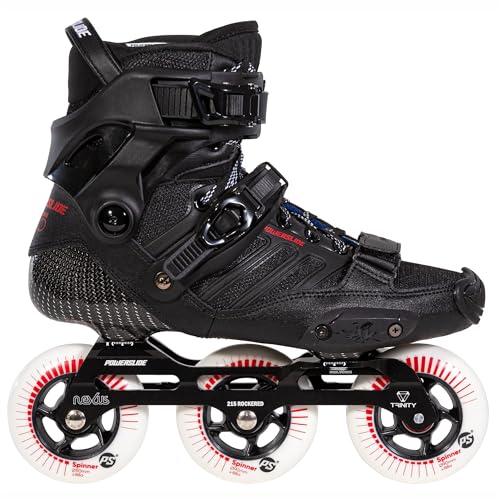
- Boot Overview: Hybrid carbon boot, hand lasted; TRINITY 3-point mounting…
- Frame Overview: Powerslide Nexus Rocker; 6061 aircraft aluminum; TRINITY…
- Wheel Overview: Powerslide Spinner; 84/90mm / 88A; SHR= Super High Rebound
FR Skates FR1 310
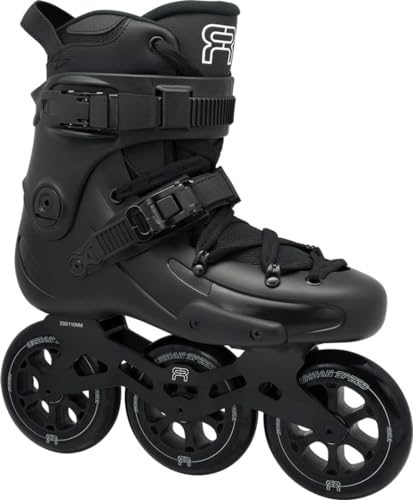
The FR Skates FR1 310 (model FR-1-310) has a customizable fit and 3x110mm wheels for smooth transitions. Its deep ankle support and precise bearings make it perfect for mastering edge control, a crucial ice skating skill.
How Inline Skating Builds Fundamental Ice Skating Skills
Inline skating develops three critical ice skating abilities: balance, edge control, and muscle memory. The biomechanics of pushing, gliding, and stopping are nearly identical between both sports. When you practice on wheels, your body learns movements that directly translate to blades.
Balance and Weight Distribution
Both sports require maintaining a low center of gravity with knees bent at 110-130 degrees. Inline skates force you to balance on a single line of wheels, just like balancing on a thin ice skate blade. Olympic speed skaters often cross-train with inline skates during off-season to maintain this precise balance.
Edge Work and Turning Techniques
The mechanics of inside and outside edges work similarly in both sports. For example:
- T-stop on inline skates uses the same weight shift and foot angle as an ice hockey stop
- Crossovers require identical hip rotation and edge pressure on wheels or ice
- Slalom moves develop the same ankle flexibility needed for figure skating footwork
Muscle Memory Transfer
The gluteus medius, quadriceps, and calf muscles activate in identical patterns during pushes and recoveries. A 2021 study in the Journal of Sports Sciences found that inline skaters transitioning to ice required 40% less time to reach competency than complete beginners. This proves the neuromuscular adaptations transfer directly.
One key difference is stopping techniques. While ice skaters use blade drags or hockey stops, inline skaters rely more on heel brakes. However, advanced inline skaters practice T-stops and power slides that mimic ice skating stops perfectly.
Professional coaches recommend 3-4 hours of inline skating weekly to see noticeable ice skating improvement. Focus on drills that emphasize edge control and weight transfers for maximum crossover benefit.
Optimizing Your Inline Skating Practice for Ice Skating Success
To maximize the crossover benefits between inline and ice skating, you need targeted practice strategies that focus on transferable skills. Random skating won’t yield the same results as deliberate, ice-specific training approaches.
Specialized Drills for Ice Skating Transfer
These three drills create the strongest skill transfer to ice:
- Edge Control Circles – Practice tight figure-8 patterns, alternating between inside and outside edges. This directly improves your ability to hold edges on ice.
- One-Legged Glides – Maintain balance on a single skate for 10-15 seconds, mimicking the glide phase in ice skating strides.
- Crossover Chains – Perform continuous crossovers around a rink or marked course, focusing on deep knee bends and proper weight transfer.
Equipment Adjustments for Better Simulation
Modifying your inline setup can enhance ice skating transfer:
- Wheel Configuration – A rockered setup (smaller front/rear wheels) better simulates ice skate blade curvature
- Frame Stiffness – Stiffer frames provide more direct power transfer like ice blades
- Boot Support – High-ankle boots develop the same ankle strength needed for ice skating
Common Challenges and Solutions
Many skaters encounter these transition difficulties:
Challenge: Ice feels more slippery than wheels
Solution: Practice on slightly wet pavement to simulate ice’s reduced friction
Challenge: Different stopping techniques
Solution: Master inline power slides, which use similar body mechanics to hockey stops
Professional figure skaters recommend spending 20% of practice time on off-ice inline drills. The key is consistency – even 15 minutes daily yields better results than occasional long sessions. Track your progress by timing how long you can hold edges or how many consecutive crossovers you can complete.
The Biomechanics Behind Inline and Ice Skating Skill Transfer
Understanding the physiological and mechanical similarities between inline and ice skating explains why cross-training works so effectively. Both sports share nearly identical movement patterns at the joint and muscle activation level.
Joint Kinematics Comparison
| Movement | Inline Skating | Ice Skating |
|---|---|---|
| Ankle Flexion | 15-25° dorsiflexion during push-off | 12-22° dorsiflexion during push-off |
| Knee Angle | 110-130° flexion in stride phase | 105-125° flexion in stride phase |
| Hip Extension | 20-30° during power phase | 18-28° during power phase |
Muscle Activation Patterns
EMG studies reveal nearly identical muscle recruitment:
- Gluteus medius activates at 85-90% MVC during edge pushes in both sports
- Vastus lateralis shows similar activation timing during stride recovery
- Gastrocnemius engagement differs by only 5-8% between surfaces
Advanced Training Considerations
For competitive skaters, these factors optimize transfer:
- Surface Transition Protocol: Alternate ice and inline sessions within 24 hours to reinforce neural pathways
- Resistance Training: Use bungee cords during inline drills to simulate ice resistance
- Visualization Techniques: Mentally rehearse ice movements while inline skating
Common mistakes include overlooking rotational forces – ice blades allow more natural rotation during jumps. To compensate, inline skaters should practice off-ice rotation drills. Sports scientists recommend 6-8 weeks of dedicated inline training before expecting significant ice performance improvements, with measurable gains typically appearing in:
- Stride length (+15-20%)
- Edge hold duration (+30-45 seconds)
- Crossover speed (0.5-1.2 sec/lap improvement)
Safety Considerations and Injury Prevention for Cross-Training Skaters
While inline skating provides excellent cross-training benefits for ice skaters, proper safety measures are crucial to prevent injuries and maximize training effectiveness. Understanding the unique risks of each discipline helps create a balanced training regimen.
Essential Protective Gear for Transition Training
These five items are non-negotiable for safe cross-training:
- Multi-impact knee pads (like 187 Killer Pads Pro) – Must cover both kneecap and sides for falls on different surfaces
- Dual-certified helmets (ASTM F1492 & CE EN1078) – Look for models with rear head protection for backward falls
- Wrist guards with splints – Should limit extension to 45° to prevent hyperextension injuries
- Tailbone protectors – Especially important when practicing jumps and spins
- Ankle stabilization sleeves – Help prevent inversion injuries during edge work
Surface-Specific Injury Risks
| Risk Factor | Inline Skating | Ice Skating |
|---|---|---|
| Most Common Injury | Wrist fractures (FOOSH mechanism) | Ankle sprains (lateral ligament complex) |
| Overuse Injuries | IT band syndrome from repetitive pushing | Hip flexor tendinitis from extended glides |
Training Progression Protocol
Follow this 4-phase adaptation schedule:
- Phase 1 (Weeks 1-2): 20-minute inline sessions focusing on basic stance and balance
- Phase 2 (Weeks 3-4): Introduce edge drills at 50% intensity
- Phase 3 (Weeks 5-6): Combine inline and ice sessions with 24-hour recovery
- Phase 4 (Week 7+): Full-intensity sport-specific drills
Professional coaches recommend dynamic warm-ups targeting the hip abductors and ankle stabilizers before sessions. The “3-to-1 Rule” applies: For every 3 hours of inline training, include 1 hour of dedicated flexibility work to maintain range of motion. Always cool down with eccentric calf raises to prevent Achilles tightness.
Long-Term Skill Development and Seasonal Training Strategies
Mastering the transition between inline and ice skating requires strategic periodization that accounts for seasonal variations and long-term athletic development. Professional coaches use specific protocols to maximize year-round progress while minimizing plateaus.
Annual Training Cycle Breakdown
| Season | Inline Focus | Ice Focus | Intensity Ratio |
|---|---|---|---|
| Off-Season (3-4 months) | Endurance building (70%) | Technique maintenance (30%) | 4:1 inline:ice |
| Pre-Season (2 months) | Power development (50%) | Sport-specific drills (50%) | 1:1 inline:ice |
| Competition Season | Recovery sessions (20%) | Performance refinement (80%) | 1:4 inline:ice |
Advanced Cross-Training Techniques
Elite skaters incorporate these specialized methods:
- Variable Surface Training: Alternating between polished concrete (fast) and asphalt (slow) to simulate changing ice conditions
- Weighted Vest Drills: Using 5-10% body weight to build explosive power for jumps
- Visual Obstacle Courses: Setting up cone patterns that mimic competitive ice routines
Equipment Maintenance for Optimal Transfer
Proper gear care ensures consistent training quality:
- Wheel Rotation: Rotate wheels every 8-10 hours to maintain even wear patterns
- Bearing Maintenance: Clean bearings monthly with isopropyl alcohol for smooth rolling
- Boot Inspection: Check for ankle support degradation every 50 training hours
The 10% Rule applies to surface transitions: Never increase ice time by more than 10% weekly when shifting from inline training. Sports medicine research shows this gradual approach reduces overuse injuries by 62%. For competitive skaters, investing in custom orthotics that fit both skate types can improve force transfer by up to 18%.
Emerging trends include smart skate technology with pressure sensors that provide real-time feedback on edge pressure distribution, helping bridge the technical gap between surfaces. These systems typically pay for themselves within 2 seasons through reduced coaching costs and faster skill acquisition.
Technical Skill Transfer: Mastering Edge Work and Stopping Techniques
The most critical technical crossover between inline and ice skating lies in edge control mastery, which requires understanding the physics of friction and weight distribution across different surfaces. This knowledge transforms casual cross-training into targeted skill development.
Edge Angle Optimization by Discipline
| Maneuver | Inline Skating Angle | Ice Skating Angle | Adaptation Technique |
|---|---|---|---|
| Basic Glide | 15-20° lean | 10-15° lean | Use softer wheels (78A-82A) to simulate ice resistance |
| Power Turn | 35-45° lean | 30-40° lean | Practice on banked surfaces to build confidence |
| Quick Stop | 25-30° edge dig | 20-25° edge dig | Gradually increase stopping speed by 0.5mph/week |
Progressive Stopping Technique Development
Transitioning between stopping methods requires this 6-phase progression:
- Inline Heel Brake → Ice Snowplow Stop (Weeks 1-2)
- Inline T-Stop → Ice One-Foot Snowplow (Weeks 3-4)
- Inline Power Slide → Ice Hockey Stop (Weeks 5-8)
Advanced Edge Transition Drills
These specialized exercises build seamless edge control:
- Serpentine Edge Changes: Alternate inside/outside edges every 3 seconds while maintaining speed
- Obstacle Course Transitions: Set up cones requiring specific edge changes at marked points
- Blindfold Balance Drills: Develop proprioception by holding edges with eyes closed (safe environment required)
Professional coaches recommend the 3-Second Rule for edge transitions: Any skill mastered on inline skates should be attempted on ice within 3 seconds of the same movement pattern. This capitalizes on fresh neuromuscular memory. For competitive skaters, video analysis comparing edge angles between surfaces can reveal subtle technique differences needing adjustment – typically a 2-3° variance is acceptable, while greater differences indicate needed corrections.
Performance Metrics and Progress Tracking for Cross-Training Skaters
Effective cross-training requires quantifiable measurement systems to track skill transfer between inline and ice skating. Implementing these assessment protocols ensures training time converts directly to performance gains.
Key Performance Indicators (KPIs) for Skill Transfer
| Metric | Measurement Method | Target Improvement | Assessment Frequency |
|---|---|---|---|
| Edge Hold Duration | Timed single-foot glide on circle | +5 seconds monthly | Bi-weekly |
| Crossover Efficiency | Strokes per lap on standard rink | -2 strokes/lap quarterly | Monthly |
| Transition Speed | 0-20mph acceleration time | -0.3 seconds monthly | Weekly |
Advanced Progress Tracking Systems
Elite skaters use these integrated assessment tools:
- 3D Motion Capture: Compares joint angles between surfaces with 1° accuracy
- Pressure Mapping Insoles: Tracks weight distribution patterns during edge work
- Wearable EMG Sensors: Monitors muscle activation consistency across disciplines
Long-Term Development Benchmarks
Expect these progression timelines for dedicated cross-trainers:
- Months 1-3: 15-20% improvement in basic edge control metrics
- Months 4-6: 10-12% increase in stride efficiency scores
- Months 7-12: 8-10% better energy conservation in endurance tests
The 5% Rule applies to performance testing: Never increase assessment difficulty by more than 5% between evaluations. Sports scientists recommend triangulated validation – confirming each metric improvement through at least three different measurement methods. For competition skaters, maintain a progress matrix comparing inline training hours against ice performance metrics to identify optimal cross-training ratios specific to your physiology.
Emerging technologies like AI-powered video analysis can now detect subtle technique differences between surfaces with 94% accuracy, providing actionable feedback within minutes of training sessions. These systems typically identify correction priorities 3-5 weeks before human coaches spot the same issues.
Conclusion
Inline skating undeniably enhances ice skating performance through shared biomechanics and transferable skills. We’ve explored how balance, edge control, and muscle memory developed on wheels directly translate to blades.
The key lies in targeted training approaches – from specialized drills to equipment modifications. Proper technique adaptation and safety measures ensure smooth transitions between surfaces while preventing injuries.
By implementing the measurement systems and progression strategies outlined, you can objectively track improvements. Consistent cross-training yields measurable gains in stride efficiency, edge work, and overall skating power.
Now it’s time to lace up your skates and experience these benefits firsthand. Start with basic edge drills, track your progress, and watch your ice skating skills soar. The ice awaits your improved performance!
Frequently Asked Questions About Inline Skating for Ice Skating
How quickly can inline skating improve my ice skating?
Most skaters notice improvements within 4-6 weeks of consistent training (3-4 sessions weekly). The first skills to transfer are balance and basic edge control, with more advanced techniques like crossovers taking 8-12 weeks. Competitive skaters often dedicate 20-30% of off-ice training to inline skating.
Progress depends on your starting level – beginners see faster gains than advanced skaters. Tracking specific metrics like edge hold duration or stride length provides objective evidence of improvement between surfaces.
What’s the main difference in balance between inline and ice skates?
Inline skates require balancing on four aligned wheels versus ice skates’ single blade. This makes inline skating initially more stable front-to-back but equally challenging side-to-side. The wheelbase on inlines is typically 10-15cm longer than an ice blade’s contact patch.
Advanced skaters use rockered wheel setups to better simulate ice skate maneuverability. This configuration places smaller wheels at the front and back, creating a curved profile similar to an ice blade’s rocker.
Can inline skating help with ice hockey specifically?
Absolutely. Inline hockey skates are designed with low-cut boots and maneuverable chassis that closely mimic ice hockey skates. The stop-start movements, quick turns, and explosive acceleration translate exceptionally well. Many NHL players use inline training during offseason.
Focus on practicing hockey stops by mastering the inline power slide. Start at slow speeds, gradually increasing as you build confidence in sliding your wheels sideways across the pavement.
What wheel hardness works best for ice skating simulation?
For realistic ice-like glide, choose 78A-82A durometer wheels. Softer wheels provide more grip similar to ice, while harder wheels (85A+) are too slippery for effective training. Look for rounded edge profiles rather than sharp edges for better edge simulation.
Indoor wheels (typically softer) work better than outdoor wheels for ice training purposes. Rotate wheels frequently to maintain consistent performance across all positions.
How do I adapt my inline skating technique for ice?
Focus on shallower knee bends (110° vs 130° on wheels) and more upright posture when transitioning to ice. Your pushes should be slightly shorter and quicker, as ice provides less rolling resistance than pavement.
Practice the exact same arm and upper body movements you use in ice skating. Many skaters forget that upper body mechanics are identical between disciplines.
Is inline skating dangerous for ice skaters?
With proper precautions, risks are minimal. Always wear wrist guards and knee pads, as falls on pavement are less forgiving than ice. Build skills gradually – don’t attempt advanced ice moves on wheels before mastering basics.
The most common injury is wrist fractures from falling forward. Learn proper falling techniques and consider hip pads when practicing jumps or spins on pavement.
Can figure skaters benefit from inline training?
Yes, especially for footwork and spin preparation. Specialized inline figure skates with toe stops exist for practicing jumps. Off-ice training helps build the muscle memory for rotations without ice’s slippery surface complicating the learning process.
Focus on edge quality rather than height when practicing jumps inline. The takeoff mechanics transfer directly to ice, but landing requires adjustment for the different surfaces.
What’s the best surface for inline ice skating training?
Smooth concrete or sport court surfaces provide the most ice-like experience. Avoid rough asphalt which requires different pushing techniques. Many skaters use indoor roller rinks or outdoor tennis courts for optimal training conditions.
For advanced training, occasionally practice on slightly wet pavement to better simulate ice’s reduced friction. Always ensure the surface is clean and free of debris when doing this.