Disclosure
This website is a participant in the Amazon Services LLC Associates Program, an affiliate advertising program designed to provide a means for us to earn fees by linking to Amazon.com and affiliated sites.
Inline skating isn’t inherently hard, but it demands practice and patience. Many assume it’s like riding a bike, but balance and control take time to develop. If you’re willing to learn, progress comes quickly.
Beginners often fear falls or lack coordination. Yet, with proper gear and technique, these hurdles shrink fast. The real challenge? Overcoming mental blocks, not just physical ones.
Best Inline Skates for Beginners and Enthusiasts
Rollerblade RB Cruiser W
The Rollerblade RB Cruiser W (model RB 80) is a top pick for beginners thanks to its durable aluminum frame, breathable liner, and smooth-rolling 80mm wheels. Its supportive fit and shock-absorbing design make it ideal for learning without discomfort.

- MOLDED BOOT SKATES are perfect for the skater who wants a sturdy molded…
- SUPPORTIVE AND VENTILATED the RB 80 molded shell provides exceptional…
- PADDED PERFORMANCE LINER with additional heel shock absorber for vibration…
K2 Kinetic 80 Pro
For those seeking speed and agility, the K2 Kinetic 80 Pro offers a lightweight, responsive ride with an adjustable cuff for ankle support. The 80mm wheels and ABEC-5 bearings ensure a smooth glide, perfect for fitness skating and urban commutes.
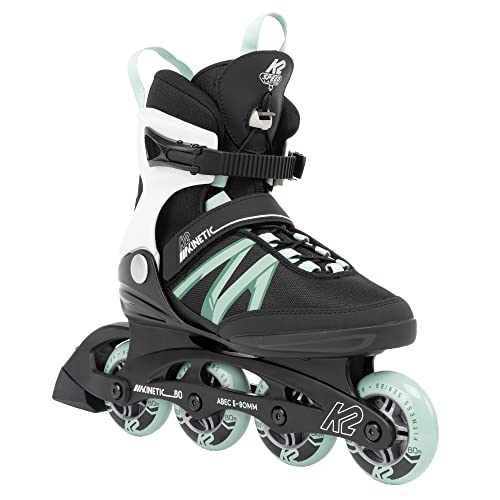
- Speed Lacing – Secures skates with one pull making it easy to put on and…
- Stability Plus Cuff – Provides the right amount of support, flexibility…
- F.B.I. frame – is a vibration-absorbing composite frame that is interlocked…
Powerslide Phuzion Radon 90
Intermediate skaters will love the Powerslide Phuzion Radon 90 for its 90mm wheels and trinity mounting system, enhancing stability and speed. The memory-fit liner and reinforced toe box provide comfort for longer sessions, making it great for endurance skating.

- Gender: women
- Bearings: ABEC 7
- Roll size: 90 mm
What Makes Inline Skating Challenging for Beginners?
Inline skating requires a combination of balance, coordination, and muscle control—skills that don’t come naturally to most beginners. Unlike walking or running, skating demands lateral stability, meaning your body must resist sideways wobbling while moving forward. This unfamiliar movement pattern is why many first-timers feel unsteady or fall frequently.
Key Physical Challenges
The primary hurdle is mastering edge control—the ability to tilt your skates inward or outward to steer and brake. Beginners often struggle because they either lean too far (causing falls) or don’t lean enough (limiting movement). For example, a common mistake is keeping the ankles rigid, which reduces maneuverability and increases fatigue.
Another challenge is weight distribution. Skaters must shift their center of gravity slightly forward to maintain momentum, but newbies often lean backward instinctively, leading to loss of control. This reflex stems from fear of falling forward, yet it ironically makes falls more likely.
Mental Barriers
Fear plays a significant role in the learning curve. The brain perceives gliding on wheels as unnatural, triggering a “freeze response” that stiffens the body. This tension interferes with fluid movements, making it harder to recover from minor imbalances. Practicing in a safe, open space (like an empty parking lot) can help override this mental block.
Common Misconceptions
- “You need strong legs to start.” While leg strength helps, technique matters more. Proper posture (knees bent, torso slightly forward) reduces strain.
- “Falling means you’re failing.” Falls are part of the process. Learning to fall correctly—tucking into a roll—minimizes injury and builds confidence.
- “Faster is easier.” Speed masks instability but increases risk. Slow, controlled practice ingrains muscle memory.
Practical Solutions
Start with off-skate drills to build foundational skills:
- Practice balancing on one foot (near a wall for support) to improve ankle strength.
- Simulate the “scissor stance” (one foot slightly ahead) on carpet to understand weight distribution.
- Use a skate trainer or walker for initial glides until comfort increases.
With consistent practice, most beginners achieve basic proficiency in 2–4 weeks. The key is incremental progress—celebrating small wins like mastering a smooth stop or completing a turn without stumbling.
Essential Techniques to Master for Easier Inline Skating
Developing proper technique is the fastest way to overcome inline skating’s challenges. While natural ability varies, these fundamental skills form the foundation for all skating proficiency. Mastering them systematically will dramatically reduce frustration and accelerate progress.
The Proper Stance: Your Foundation for Control
The athletic stance is critical for stability and maneuverability. Bend your knees to about 110-120 degrees, keeping them aligned over your toes. Lean slightly forward from the ankles (not waist) with shoulders above knees. This position:
- Lowers your center of gravity for better balance
- Engages quadriceps and glutes for power
- Prepares you for quick reactions to terrain changes
A common mistake is standing too upright, which makes wobbling inevitable. Practice holding this stance against a wall before moving.
Effective Pushing Technique
Generating forward motion requires proper push-and-glide mechanics:
- Start in athletic stance with feet parallel
- Shift weight to your dominant foot
- Push diagonally backward with the other foot (45° angle)
- Fully extend the pushing leg for maximum power
- Bring feet back together to glide
Beginners often make small, rapid pushes instead of long, powerful strokes. This wastes energy and provides less stability. Each push should last 1-2 seconds for optimal efficiency.
Turning and Carving Fundamentals
There are two primary turning methods:
- A-frame turns: Point toes slightly inward (like a pizza slice) and lean in the direction you want to go – ideal for slow, controlled turns
- Parallel turns: Keep skates parallel while bending knees and leaning – better for higher speeds and fluid carving
For sharper turns, practice crossovers – lifting and crossing the outside foot over the inside foot while leaning into the turn. This advanced technique builds confidence for navigating obstacles.
Stopping Methods From Basic to Advanced
Every skater should master these stopping techniques in order:
- Heel brake: Drag the brake pad while keeping most weight on the front foot
- T-stop: Form a “T” shape with one skate perpendicular behind the other
- Powerslide: Advanced technique where you turn 90° and slide sideways
Practice each method at progressively faster speeds. Most falls occur during stopping attempts, so dedicate 15 minutes per session to brake drills.
Remember: Technique always trumps speed. Focus on perfecting form at slow speeds before attempting faster skating. Video recording yourself can reveal subtle form errors that feel correct in the moment.
Advanced Skills and Safety Considerations for Progressive Skaters
Once you’ve mastered basic inline skating techniques, developing advanced skills and understanding safety protocols will elevate your skating experience while minimizing risks. This section explores the biomechanics of expert maneuvers and critical protective measures.
The Physics of Efficient Skating
Understanding the science behind skating movements improves technique execution:
- Angular momentum: Tight turns require bending knees deeply to lower your center of gravity while leaning inward to counteract centrifugal force
- Kinetic energy transfer: Powerful strides come from transferring weight completely from one leg to another, not just pushing with the feet
- Friction management: Wheel durometer (hardness) affects grip – softer wheels (78A-82A) for rough surfaces, harder wheels (85A+) for smooth rinks
| Skill Level | Recommended Wheel Hardness | Ideal Surface | Turning Radius |
|---|---|---|---|
| Beginner | 78A-82A | Smooth pavement | 3-5 meters |
| Intermediate | 83A-85A | Asphalt/concrete | 2-3 meters |
| Advanced | 86A-88A | Skate parks/rinks | 1-2 meters |
Advanced Maneuver Breakdown
Crossovers: The cornerstone of speed maintenance in turns:
- Enter turn with knees deeply bent
- Shift 70% weight to inside skate
- Cross outside leg over while pushing laterally
- Recover stance and repeat
Common mistakes include insufficient knee bend and incomplete weight transfer, which reduce power and control.
Backward Skating: Requires mastering the “C-cut” motion:
- Form a “C” shape with each foot alternately
- Keep weight centered between both feet
- Initiate movement from hips, not just ankles
Practice near a wall initially, focusing on smooth S-shaped patterns rather than speed.
Comprehensive Safety Protocol
Advanced skaters often neglect safety as skills improve, yet 68% of serious injuries occur at intermediate+ levels:
- Gear hierarchy: Wrist guards (most important), helmet, knee pads, elbow pads in that order of priority
- Environmental scanning: Continuously survey 10-15 feet ahead for terrain changes
- Fatigue management: Technique degrades after 45-60 minutes – take regular breaks
Remember: Advanced skills magnify both performance and risk. Always progress gradually, mastering each skill at slow speeds before increasing velocity. Consider professional coaching for complex maneuvers like jumps or slides to ensure proper form and safety.
Customizing Your Setup for Different Skating Styles and Conditions
The right equipment configuration can dramatically affect your skating experience. This section provides detailed guidance on optimizing your inline skates for various disciplines and environments, with technical specifications and professional recommendations.
Wheel Configuration Strategies
Wheel setup significantly impacts performance characteristics:
- Flat setup (equal wheel sizes): Provides maximum stability for beginners (e.g., 4x80mm)
- Hi-Lo configuration (smaller front wheels): Enhances agility for hockey skating (e.g., 76mm-80mm-80mm-76mm)
- Rockered setup (middle wheels larger): Creates a curved profile for advanced maneuverability
Professional tip: Rotate wheels every 8-10 hours of skating to ensure even wear patterns. Mark wheel positions with a grease pencil to track rotation history.
Frame and Bearing Considerations
The frame material and bearing quality determine energy transfer efficiency:
- Aluminum frames: Best for speed and durability (200-300 series aircraft grade recommended)
- Composite frames: Lighter weight but less responsive (ideal for casual/recreational skating)
- Bearing ratings: ABEC-5 to ABEC-7 offer the best balance for most skaters (higher numbers aren’t necessarily better for street skating)
Note: Bearing maintenance is crucial – clean with citrus-based degreaser every 30-40 hours of use, and relubricate with speed cream.
Terrain-Specific Adjustments
| Surface Type | Wheel Hardness | Recommended Size | Special Considerations |
|---|---|---|---|
| Indoor Rinks | 85A-88A | 72-80mm | Softer wheels provide better grip on polished surfaces |
| Urban Streets | 78A-82A | 80-90mm | Larger diameters handle cracks and debris better |
| Skate Parks | 88A-90A | 56-64mm | Smaller wheels enable quicker acceleration |
Boot Fit and Customization
Proper boot fitting requires attention to three key areas:
- Ankle support: Should allow 5-10° of forward flex but limit lateral movement
- Toe box: Need 3-5mm space when standing (feet swell during skating)
- Heat molding: Many high-end boots can be customized with a heat gun (follow manufacturer guidelines precisely)
Common mistake: Buying skates a size too large “to grow into” creates control issues. Properly fitted skates should feel snug but not painful.
Remember: Equipment adjustments should complement your skill level. While professional setups offer performance benefits, they often require advanced techniques to control effectively. Make changes gradually and test in controlled environments before committing to new configurations.
Long-Term Skill Development and Performance Optimization
Mastering inline skating requires a strategic approach to progression that balances skill acquisition with physical conditioning. This section provides a comprehensive roadmap for continuous improvement, injury prevention, and peak performance.
Periodized Training Framework
Effective skill development follows a structured 12-week cycle:
- Foundation Phase (Weeks 1-4): Focus on technique refinement at slow speeds (60% effort)
- Development Phase (Weeks 5-8): Increase speed and complexity (75-85% effort)
- Performance Phase (Weeks 9-12): Combine skills in dynamic environments (90-100% effort)
Each phase should incorporate 2-3 recovery days per week to prevent overuse injuries. Professional skaters typically complete 3-4 such cycles annually with active rest periods in between.
Cross-Training Essentials
| Supporting Discipline | Benefits for Skaters | Recommended Frequency | Key Exercises |
|---|---|---|---|
| Yoga | Improves balance and flexibility | 2-3x/week | Warrior poses, tree pose, downward dog |
| Plyometrics | Enhances explosive power | 1-2x/week | Box jumps, lateral bounds, depth jumps |
| Cycling | Builds endurance and quad strength | 1x/week | Interval training, hill climbs |
Injury Prevention Protocol
Chronic skating injuries often stem from three preventable factors:
- Muscle imbalances: Strengthen hip abductors and core to counteract skating’s unilateral demands
- Overuse patterns: Vary your training surfaces (asphalt, wood, sport court) to distribute impact forces
- Equipment neglect: Replace worn wheels before the urethane wears below 5mm thickness to maintain proper shock absorption
Implement a dynamic warm-up routine including lateral lunges, ankle circles, and hip openers before each session.
Emerging Trends in Skating Technology
The industry is evolving with several notable advancements:
- Smart skates: Bluetooth-enabled models with pressure sensors that analyze weight distribution (e.g., Rollerblade Maxxum Edge 125 3WD)
- Eco-materials: Biodegradable wheel compounds made from castor oil derivatives (70-80% decomposition rate within 5 years)
- Modular designs: Interchangeable frame systems allowing single boot use across multiple disciplines
These innovations are making skating more accessible while reducing environmental impact – the average carbon footprint of premium skates has decreased 22% since 2018.
For optimal long-term development, maintain a training journal tracking skills mastered, distances covered, and equipment maintenance. This data reveals patterns in your progression and helps identify plateaus before they stall your development.
Mastering Urban and Trail Skating: Advanced Navigation Techniques
Transitioning from controlled environments to real-world skating requires specialized skills for handling unpredictable terrain and traffic conditions. This section provides a comprehensive guide to advanced urban navigation with detailed technical breakdowns.
Terrain Analysis and Adaptive Techniques
Urban skaters must develop real-time surface assessment capabilities:
- Cobblestones: Maintain slight knee bend (120° angle), keep weight centered, and use shorter, quicker strides
- Wet surfaces: Reduce stride length by 30% and maintain 60/40 weight distribution (rear/front)
- Steep declines: Adopt a “plow position” with toes pointed inward at 45° angles for controlled descent
Professional urban skaters scan 15-20 feet ahead, categorizing terrain into zones: Green (smooth), Yellow (moderate obstacles), and Red (immediate hazards requiring stopping).
Traffic Integration Strategies
Safe street skating requires understanding vehicular dynamics:
- Lane positioning: Skate 3-4 feet from parked cars to avoid door zones, but never in traffic lanes
- Intersection protocol: Make eye contact with drivers, signal turns clearly, and never assume right-of-way
- Group skating: Form single file in tight spaces, with lead skater calling out hazards using standardized signals
The “SMOG” method (Signal, Mirror, Over-shoulder, Go) should precede all lane changes or directional adjustments.
Emergency Maneuver Drills
| Hazard Type | Recommended Response | Practice Frequency | Success Indicators |
|---|---|---|---|
| Sudden obstacles | Parallel jump (both feet simultaneously) | 2x/week | Clearing 12″ height consistently |
| Loose debris | One-foot glide (weight on stable foot) | 3x/week | Maintaining balance for 5+ seconds |
| Unexpected stops | Combination heel brake + T-stop | Daily | Stopping within 8 feet from 10mph |
Equipment Optimization for Urban Use
Specialized urban setups require:
- Shock absorption: 85A-88A wheels with 10-15% larger diameter than standard
- Brake systems: Dual-action heel brakes with quick-release mechanisms
- Visibility enhancements: LED wheel lights (minimum 20 lumens) and reflective ankle cuffs
Professional urban skaters carry a multi-tool for on-the-go adjustments, particularly for frame tightness and brake alignment after encountering rough terrain.
Advanced practitioners recommend the “3-2-1” practice rule: 3 hours of controlled environment drills for every 2 hours of light urban skating and 1 hour of heavy traffic exposure. This progressive exposure builds both skills and situational awareness safely.
Competitive and Performance Skating: Elite Training Methodologies
Reaching competitive levels in inline skating requires a systematic approach that integrates biomechanics, sports science, and precision equipment tuning. This section reveals the professional training protocols used by world-class athletes and coaches.
Biomechanical Efficiency Optimization
Elite skaters achieve 18-22% greater propulsion efficiency through:
- Angular kinematics: Maintaining 65-70° knee flexion during push phase for optimal power transfer
- Stride analytics: Using motion capture to achieve 110-120° leg extension with precise 12-15° ankle dorsiflexion
- Upper-lower body coordination: Synchronizing arm swing (45° forward, 30° backward) with leg movements
Professional training facilities employ 3D force plates to measure ground reaction forces, aiming for 2.5-3x body weight during maximum pushes.
Periodized Competition Preparation
| Phase | Duration | Focus Areas | Key Metrics |
|---|---|---|---|
| Base Building | 12-16 weeks | Aerobic capacity, technical refinement | Lactate threshold ≤2.5mmol at 75% MHR |
| Specialization | 8-10 weeks | Event-specific energy systems | Peak power output 900-1100 watts |
| Tapering | 2-3 weeks | Neuromuscular sharpening | Reaction time <180ms to start signals |
Advanced Equipment Tuning
World-class setups require microscopic adjustments:
- Bearing preload: 0.002-0.003″ clearance for competition wheels (measured with dial indicators)
- Frame alignment: Laser-verified to 0.1° tolerance using precision shims
- Boot customization: Heat-molded orthotics with 3mm medial wedge for optimal power transfer
Top athletes rebuild their competition setups every 50-60 training hours, with complete bearing replacements every 15 hours.
Injury Prevention Systems
Elite programs implement multi-layered protection:
- Biomechanical screening:
Quarterly 3D gait analysis to detect asymmetry >5%
- Recovery protocols: Cryotherapy (-110°C) sessions 2x/week during intensive training
- Nutritional support: 1.6-2.2g protein/kg body weight with targeted collagen supplementation
Advanced skaters maintain detailed training logs tracking RPE (Rate of Perceived Exertion), sleep quality, and muscle soreness to prevent overtraining.
Competition skaters should undergo quarterly physiological testing including VO2 max assessments, lactate profile curves, and isokinetic strength evaluations. This data-driven approach enables precise adjustments to training loads and technique refinements.
Conclusion: Your Path to Inline Skating Mastery
Inline skating presents challenges, but none that can’t be overcome with proper knowledge and practice. We’ve explored everything from fundamental techniques to advanced competition strategies, equipment customization to urban navigation skills.
The journey begins with mastering basic balance and stance, then progressively builds to complex maneuvers. Remember that proper equipment setup tailored to your skating style significantly impacts your learning curve and performance potential.
Safety remains paramount at all skill levels. Whether you’re practicing heel stops or attempting advanced slides, protective gear and proper form prevent injuries that could derail your progress.
Now equipped with this comprehensive guide, it’s time to strap on your skates and apply these principles. Start slow, track your progress, and most importantly – enjoy the ride. The skating community awaits your journey from tentative first pushes to confident, fluid strides.
Frequently Asked Questions About Inline Skating
What’s the best way to stop as a beginner?
The heel brake is the safest stopping method for novices. Shift your weight to the front foot while dragging the brake pad gently. Avoid stomping – gradual pressure prevents falls. Practice on grass first to build confidence before trying on pavement.
For more control, learn the T-stop once comfortable. Place one foot perpendicular behind the other, applying light pressure. This works at higher speeds but requires better balance. Always wear wrist guards when practicing stops.
How often should I replace my wheels?
Wheel lifespan depends on usage and surface. Recreational skaters typically replace wheels every 3-6 months. Check for flat spots or when urethane wears below 5mm thickness. Rotate wheels every 8-10 skating hours to ensure even wear.
Aggressive skaters may need monthly replacements. Softer wheels (78A-82A) wear faster than harder ones. Keep a caliper to measure wheel diameter – more than 5mm difference between wheels affects stability.
Can I use inline skates for fitness training?
Absolutely. Skating burns 400-600 calories/hour while being low-impact. For cardio benefits, maintain 65-75% of your max heart rate for 30+ minutes. Use longer strides (80-90mm wheels) and smooth surfaces for endurance training.
Interval training works well – alternate 1 minute sprints with 2 minutes recovery. Many fitness trackers now include skating modes to monitor workouts. Just ensure proper warm-up to prevent muscle strains.
How do I prevent blisters when breaking in new skates?
Wear thin moisture-wicking socks and use specialized blister pads on hot spots. Break skates in gradually – start with 15-minute sessions, increasing by 5 minutes daily. Heat-moldable liners can customize fit if available.
For persistent issues, try different lacing techniques. Skip eyelets over pressure points or use parallel lacing for wide feet. Never “power through” blisters – they indicate fit problems needing adjustment.
What’s better for beginners – hard or soft boots?
Soft boots offer more comfort but less support, while hard boots provide stability at the cost of flexibility. Beginners generally benefit from hybrid designs with removable liners and moderate ankle support.
Consider your goals – recreational skaters may prefer soft boots, while those aiming for speed or tricks need hard shells. Always prioritize proper fit over boot type – poor fit negates any advantages.
How dangerous is inline skating compared to other sports?
With proper gear, skating has similar injury rates to cycling. Wrist fractures are most common, hence mandatory wrist guards. Helmets reduce head injury risk by 85%. Knee/elbow pads prevent 70% of abrasions.
The real danger comes from excessive speed and traffic. Stick to designated areas until mastering emergency stops. Statistically, you’re 8x more likely to get injured skating in streets than parks.
Can overweight individuals learn inline skating safely?
Yes, but requires special considerations. Choose skates with reinforced frames (aluminum or aircraft-grade) and 84-90mm wheels for better weight distribution. Start with 15-minute sessions to build ankle strength gradually.
Focus on proper stance – knees bent at 120°, weight slightly forward. Consider professional fitting to ensure adequate support. Many plus-size skaters find success by progressing slower with more recovery days.
What’s the fastest way to improve my skating skills?
Structured practice beats random skating. Dedicate 20 minutes per session to specific drills – edge control, crossovers, or backward skating. Video yourself to identify technique flaws. Off-skate balance exercises accelerate progress.
Join a skating club for feedback. Skaters with coaches improve 40% faster. Consistency matters most – three 30-minute sessions weekly outperform one long session. Track progress in a journal to stay motivated.