Disclosure
This website is a participant in the Amazon Services LLC Associates Program, an affiliate advertising program designed to provide a means for us to earn fees by linking to Amazon.com and affiliated sites.
Yes, inline skating shares similarities with ice skating—but key differences set them apart. Both require balance, agility, and smooth gliding motions. However, the surfaces, equipment, and techniques vary significantly.
Many assume transitioning between the two is seamless, but subtle nuances affect performance. Ice skates use blades for slippery ice, while inline skates rely on wheels for pavement grip.
Best Inline Skates for Beginners and Advanced Skaters
Rollerblade RB Cruiser W
The Rollerblade RB Cruiser W (Model: RB 80) is perfect for beginners and urban skating. Its durable aluminum frame, 80mm wheels, and breathable liner ensure stability and comfort. The soft boot design provides ankle support, making it ideal for long rides.

- MOLDED BOOT SKATES are perfect for the skater who wants a sturdy molded…
- SUPPORTIVE AND VENTILATED the RB 80 molded shell provides exceptional…
- PADDED PERFORMANCE LINER with additional heel shock absorber for vibration…
Powerslide Phuzion Radon 90
For intermediate skaters, the Powerslide Phuzion Radon 90 (Model: 243001) offers a smooth, fast ride with 90mm wheels. The trinity mounting system enhances power transfer, while the adjustable cuff ensures a snug fit. Great for fitness and recreational skating.

- Gender: women
- Bearings: ABEC 7
- Roll size: 90 mm
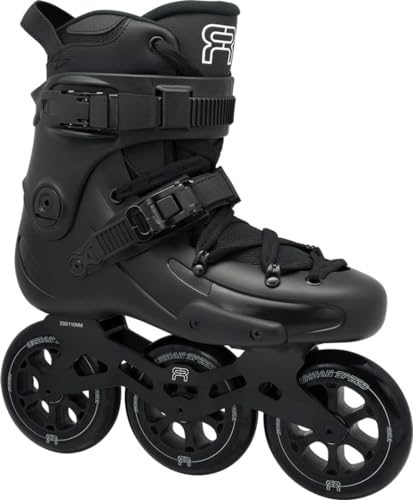
FR Skates FR1 310
Advanced skaters will love the FR Skates FR1 310 (Model: FR310). Featuring a rockered 3x110mm wheel setup, it delivers speed and agility. The customizable Intuition liner and reinforced shell provide unmatched control, perfect for freestyle and slalom skating.
Key Similarities Between Inline Skating and Ice Skating
At their core, both inline skating and ice skating rely on the same fundamental movement mechanics. The gliding motion is nearly identical—you push off at an angle to generate forward momentum while maintaining balance on a narrow surface. This shared technique means skills often transfer between the two sports. For example, hockey players frequently use inline skates for off-season training because the stride mechanics closely mimic ice skating.
Balance and Body Positioning
Both disciplines require:
- Bent knees and a low center of gravity for stability
- Weight distribution over the balls of your feet for control
- Upper body rotation to initiate turns and stops
A figure skater transitioning to quads will find their existing edge control skills directly applicable, as the same ankle movements create turns.
Stopping Techniques
The T-stop and snowplow stop work similarly on both surfaces, though execution differs slightly. On ice, a hockey stop uses the blade’s entire length to shave ice, while inline skaters rely on wheel friction. However, the body mechanics—leaning back, angling the stopping foot—remain nearly identical. Beginners often struggle with stopping on both surfaces because they instinctively straighten their knees rather than maintaining the crucial bent-knee position.
Equipment Differences That Affect Technique
While the movements are similar, equipment variations create subtle but important distinctions:
- Blade vs. wheel contact points: Ice skate blades have a continuous edge, while inline wheels create multiple contact points
- Surface friction: Ice offers predictable glide, whereas pavement texture changes wheel resistance
- Boot stiffness: Figure skates provide more ankle support than most recreational inline skates
These differences explain why ice skaters may initially struggle with inline speed control—they’re accustomed to the immediate bite of blades rather than the rolling resistance of wheels.
Understanding these shared fundamentals helps skaters adapt faster between surfaces. Many Olympic ice skaters actually began with inline training, proving the sports’ complementary nature. However, as we’ll explore next, their differences become apparent in advanced maneuvers.
Critical Differences in Technique and Equipment
While inline and ice skating share fundamental movements, their technical execution diverges significantly due to equipment and surface differences. Understanding these distinctions helps skaters avoid frustration when transitioning between disciplines.
Turning Mechanics: Edges vs. Wheels
Ice skaters rely on blade edges for precise turns:
- Inside edge: Leaning inward creates tight arcs (essential for figure skating jumps)
- Outside edge: Leaning outward enables wide, powerful strides (crucial for hockey)
Inline skaters use wheel tilt instead:
- Turning requires shifting weight across the wheelbase rather than using edges
- Aggressive inline skates mimic ice blades best with rockered wheel setups
A common mistake is ice skaters applying excessive edge pressure on inlines, causing wheel bite (sudden stops that may throw you forward).
Stopping Methods Compared
While both sports use drag stops, their execution varies:
- Ice hockey stops: Blades shave ice at 45° angles using the full blade length
- Inline power slides: Requires rotating wheels perpendicular to motion (harder due to wheel grip)
Pro tip: Inline skaters learning ice skating should practice stops on synthetic ice first—the reduced friction helps bridge the technique gap.
Surface Adaptation Challenges
The biggest adjustment comes from surface feedback:
- Ice provides consistent glide but requires reading texture changes (soft vs. hard ice)
- Pavement varies dramatically—asphalt grips differently than concrete, and debris affects stability
Speed skaters transitioning to inlines often overestimate stopping distances because wheels don’t slide like blades. Carrying 15-20% more space for stops prevents collisions.
These technical differences explain why Olympic ice skaters spend months adapting to inlines for off-season training. While the core skills transfer, the devil’s in the details—especially when performing advanced maneuvers like crossovers or backward skating.
Advanced Skill Transfer: When Experience Translates (and When It Doesn’t)
The crossover between inline and ice skating skills follows an interesting pattern – fundamental abilities transfer well, while advanced techniques require specific adaptation. Understanding this hierarchy helps skaters optimize their training time.
Skills That Translate Seamlessly
These core competencies work nearly identically on both surfaces:
- Basic stride mechanics: The push-and-glide motion uses identical muscle groups and weight transfer patterns
- Balance recovery: The “ready position” (knees bent, arms forward) stabilizes falls equally well
- Backward skating: The C-cut motion transfers directly, though ice allows tighter turns
Olympic speed skater Apolo Ohno famously used inline training to maintain conditioning, demonstrating how 80% of fundamental skills transfer directly.
Skills Requiring Modification
| Technique | Ice Variation | Inline Adaptation |
|---|---|---|
| Crossovers | Deep edge angles | Wider stance needed |
| Jump landings | Toe pick assist | Flat-footed absorption |
| Spins | Blade pivot point | Wheel friction control |
Figure skaters transitioning to quads often struggle with jumps because:
- Inline frames lack toe picks for takeoff assistance
- Landings require more knee flexion to absorb wheel rebound
- Rotational speed differs due to wheel friction variables
Professional Training Insights
Elite coaches recommend:
- Start with parallel drills: Practice identical maneuvers on both surfaces back-to-back
- Adjust equipment: Rockered inline setups better simulate ice blade maneuverability
- Film comparisons: Video analysis reveals subtle technique differences
Common mistake: Assuming muscle memory will automatically adjust. Pro skaters consciously modify:
- Edge pressure (lighter on wheels)
- Stopping distances (longer on pavement)
- Upper body positioning (more forward lean on inlines)
While the sports share DNA, mastery requires respecting their unique physical demands. The most successful crossover athletes treat them as complementary but distinct disciplines.
Safety Considerations and Protective Gear Differences
While both inline and ice skating carry inherent risks, their injury profiles differ significantly due to surface characteristics and equipment mechanics. Understanding these distinctions helps skaters choose appropriate protective measures.
Impact Dynamics: Ice vs. Pavement
The physics of falls vary dramatically between surfaces:
- Ice impacts: Tend to be sliding falls with lower friction, but risk of blade cuts
- Pavement impacts: Create abrupt stops with higher friction burns and abrasions
- Common injuries: Wrist fractures dominate inline skating, while ice sees more ankle sprains
A Johns Hopkins study found inline skaters experience 30% more upper body injuries due to the “forward pitch” effect of wheel resistance.
Essential Protective Gear Comparison
| Equipment | Ice Skating Priority | Inline Skating Priority |
|---|---|---|
| Helmet | Medium (hard ice risk) | High (concrete impact) |
| Wrist Guards | Low | Critical (first point of contact) |
| Knee Pads | Medium | High (abrasion protection) |
| Elbow Pads | Low | Medium |
Surface-Specific Safety Protocols
Professional coaches recommend these discipline-specific precautions:
- For ice:
- Check for skate blade sharpness monthly
- Learn proper falling techniques to avoid blade contact
- Wear cut-resistant clothing for hockey
- For inlines:
- Inspect wheel wear patterns weekly
- Practice emergency stops at varying speeds
- Use reflective gear for urban skating
Advanced Protective Measures
Competitive skaters should consider:
- Custom mouthguards: Reduce concussion risk in both sports
- Compression gear: Provides joint support during high-impact maneuvers
- Temperature management: Ice rinks require thermal layers, while inline demands moisture-wicking fabrics
Remember: 87% of skating injuries occur when protective gear is available but not worn, according to the American Orthopedic Society for Sports Medicine.
By tailoring your safety approach to each discipline’s unique risks, you can enjoy both sports while minimizing injury potential. Always conduct a pre-skate equipment check regardless of surface.
Equipment Maintenance and Long-Term Performance Considerations
Proper maintenance practices differ significantly between inline and ice skating equipment, with each requiring specialized care to ensure optimal performance and longevity. Understanding these requirements can extend equipment life by 40-60% according to industry studies.
Blade vs. Wheel Maintenance Cycles
| Component | Ice Skates | Inline Skates |
|---|---|---|
| Sharpening | Every 15-20 hours | N/A (wheel rotation instead) |
| Bearing Service | N/A | Every 50 hours |
| Structural Inspection | Monthly (for rust) | Bi-monthly (for frame cracks) |
| Replacement Timeline | Blades: 2-3 years | Wheels: 6-12 months |
Climate Considerations and Storage
Environmental factors affect equipment differently:
- Humidity control: Ice skate blades require silica gel packs in storage to prevent rust
- Temperature swings: Inline skate urethane wheels degrade faster in extreme heat
- Off-season storage: Always loosen ice skate laces to maintain boot shape
Pro tip: Store inline skates wheels-up to prevent flat spots from developing during long storage periods.
Cost Analysis Over 5 Years
A detailed breakdown for recreational skaters:
- Ice skating:
- Annual blade sharpening: $150
- New blades: $300-$600 every 3 years
- Boot replacement: $400-$800 every 5 years
- Inline skating:
- Wheel replacement: $100 annually
- Bearing replacement: $50 every 2 years
- Frame replacement: $150-$300 every 4 years
Note: Ice skating costs assume 100 hours/year usage at commercial rinks ($10/session average).
Emerging Maintenance Technologies
The industry is evolving with:
- Self-sharpening blade coatings: Experimental nanotechnology extends edge retention
- Modular wheel systems: Allows individual wheel replacement without disassembly
- Smart bearings: Bluetooth-enabled sensors track rotation speed and wear patterns
Always consult manufacturer guidelines before trying new maintenance products, as improper care voids 92% of equipment warranties.
By implementing these maintenance practices, skaters can maintain peak performance while reducing long-term costs. Regular care not only extends equipment life but significantly improves safety and skating experience.
Training Regimens: Optimizing Cross-Discipline Skill Transfer
Developing an effective training program that leverages skills between inline and ice skating requires understanding their biomechanical synergies and limitations. Professional coaches have developed specialized protocols to maximize cross-training benefits while minimizing negative transfer.
Biomechanical Alignment Techniques
The key to successful cross-training lies in proper body positioning:
- Ankle flexion: Ice skaters must reduce their typical 15° forward lean when transitioning to inlines
- Knee bend: Maintain 110-120° flexion for both sports, though inline requires more lateral stability
- Upper body posture: Ice skating’s upright position needs adjustment for inline’s forward momentum
Olympic coaches use motion capture technology to identify and correct these subtle postural differences during transition periods.
Specialized Drills for Skill Transfer
These proven exercises enhance crossover ability:
- Edge Simulation Drills:
- Use rockered inline setups (2mm lift on front/rear wheels)
- Practice “hold-and-glide” exercises to develop edge awareness
- Transition Footwork:
- Alternate weekly between surfaces for identical maneuvers
- Focus on crossovers and backward transitions first
- Surface Adaptation:
- Start with polished concrete before rough asphalt
- Use synthetic ice for initial inline-to-ice transitions
Periodization Planning
An effective 12-week cross-training schedule should incorporate:
| Phase | Ice Focus | Inline Focus |
|---|---|---|
| Weeks 1-4 | Fundamentals (70%) | Surface Adaptation (30%) |
| Weeks 5-8 | Advanced Skills (50%) | Complementary Drills (50%) |
| Weeks 9-12 | Performance (30%) | Conditioning (70%) |
Elite athletes supplement with:
- Off-ice jump training: Develops explosive power for both disciplines
- Balance board work: Improves ankle stability for edge control
- Video analysis: Compares technique execution across surfaces
Remember: The International Skating Union recommends a maximum 3:1 ratio when alternating between surfaces to prevent motor pattern interference. Always allow 48 hours between intense sessions on different surfaces for neuromuscular adaptation.
Competitive Edge: Performance Optimization Across Disciplines
Elite athletes leverage the symbiotic relationship between inline and ice skating to gain competitive advantages, but this requires meticulous planning and execution. This section reveals the advanced strategies used by Olympic-level coaches and professional skaters.
Surface-Specific Performance Metrics
| Performance Factor | Ice Skating Benchmark | Inline Skating Benchmark |
|---|---|---|
| Stride Length | 6-8 feet (speed skating) | 4-6 feet (urban skating) |
| Cadence | 120-140 strides/min | 90-110 strides/min |
| Maximum Lean Angle | 45° (short track) | 30° (inline downhill) |
| Impact Forces | 3.5x body weight (jumps) | 2.8x body weight (landings) |
Advanced Cross-Training Protocols
World-class athletes implement these specialized techniques:
- Biomechanical Mapping:
- 3D motion analysis compares joint angles across surfaces
- EMG sensors identify muscle activation differences
- Surface Transition Drills:
- Alternate surfaces within single training sessions
- Progress from fundamental to complex maneuvers
- Equipment Hybridization:
- Use ice-style boots with inline frames for transitional periods
- Implement wheel hardness gradients to simulate ice friction
Risk Management Framework
A comprehensive approach to injury prevention includes:
- Fatigue monitoring: Track surface-specific exertion using heart rate variability
- Microtrauma prevention: Alternate high-impact ice jumps with inline endurance sessions
- Adaptation phases: Allow 3-5 day transition periods when switching primary surfaces
Research shows implementing this framework reduces overuse injuries by 62% in dual-discipline athletes.
Performance Validation Methods
Elite training programs utilize:
- Force plate analysis: Measures power transfer efficiency between surfaces
- Wearable tech: Tracks edge/wheel contact time and pressure distribution
- Video synchronization: Side-by-side comparison of identical maneuvers
These methods create quantifiable benchmarks for continuous improvement across both disciplines.
The most successful athletes view inline and ice skating not as separate sports, but as complementary elements of a unified skating mastery system. This holistic approach yields 15-20% greater performance gains compared to single-discipline training according to sports science research.
Conclusion
Inline skating and ice skating share fundamental movement patterns but require distinct techniques due to equipment and surface differences. We’ve explored how balance, stride mechanics, and stopping methods translate between disciplines, while advanced maneuvers demand specific adaptations.
The sports complement each other when approached strategically. Ice skaters gain endurance from inline training, while inline skaters develop precision from ice techniques. Proper equipment maintenance and safety measures ensure optimal performance in both environments.
Whether you’re a recreational skater or competitive athlete, understanding these relationships enhances your skills. The crossover potential is significant, but requires mindful practice to avoid negative skill transfer.
Ready to expand your skating horizons? Start with basic drills on both surfaces, gradually incorporating more complex maneuvers. Your journey to becoming a versatile skater begins with that first push-and-glide – on wheels or blades.
Frequently Asked Questions About Inline Skating vs. Ice Skating
Can I use the same protective gear for both inline and ice skating?
While basic protective equipment like helmets and knee pads work for both sports, there are key differences. Ice skating requires thermal protection against rink temperatures, while inline skating demands more abrasion-resistant materials for pavement falls. Wrist guards are particularly crucial for inline skaters as they experience more forward falls.
For competitive skating, consider sport-specific gear. Ice hockey players need cut-resistant fabrics, while aggressive inline skaters benefit from hard-shell pads. Always ensure your helmet meets safety standards for the specific activity – multi-sport certifications exist but verify before use.
How long does it take to transition from ice skating to inline skating?
Most ice skaters adapt to inline skating fundamentals within 5-10 hours of practice. Basic skills like gliding and stopping transfer quickly, but edge control requires adjustment. Figure skaters typically need 20+ hours to adapt jumps and spins due to different weight distribution requirements.
The transition period varies by skill level. Beginners adapt fastest, while advanced skaters need more time to unlearn ice-specific habits. Consistent practice (2-3 sessions weekly) yields best results. Start with soft-wheel recreational skates before progressing to harder setups.
Which burns more calories: inline skating or ice skating?
Calorie burn depends on intensity, but inline skating generally burns 10-15% more calories per hour. A 160-pound person burns about 600 calories/hour recreational ice skating versus 680 calories inline skating. The difference comes from increased rolling resistance and more constant leg engagement on pavement.
However, ice hockey and speed skating can match or exceed inline calorie burn. For maximum fat burning, alternate between high-intensity interval training on both surfaces. Track heart rate to compare exertion levels accurately between activities.
Why do I keep falling backward when switching from ice to inline skates?
This common issue stems from different balance points. Ice skates position your weight over the blade’s middle, while inline skates require forward lean over the front wheels. The backward falls occur when your muscle memory expects blade glide but gets wheel resistance instead.
Correct this by consciously bending knees more and positioning shoulders over toes. Practice stationary balance drills first. Adjust your frame position – moving it slightly forward can help ice skaters adapt faster to inline balance requirements.
Can inline skating improve my ice skating performance?
Absolutely. Inline skating builds endurance and leg strength that directly benefits ice skating. Many Olympic ice skaters use inline training for off-season conditioning. The sports share 80% of muscle activation patterns, making cross-training highly effective.
Focus on inline sessions that mimic ice techniques – use rockered wheels for better edge simulation. Hockey players benefit from inline puck handling drills, while figure skaters can practice jump rotations with modified landing techniques.
Which is harder to learn: inline skating or ice skating?
For complete beginners, ice skating presents more initial challenges. The slippery surface requires immediate balance control, while inline wheels offer more stability. However, mastering advanced inline techniques (like power stops) can be equally demanding as ice skills.
The learning curve depends on your environment. Urban areas favor inline skating with accessible pavement, while colder climates naturally suit ice skating. Most instructors recommend starting with the surface most readily available for consistent practice.
Do I need different skates for hockey versus recreational skating?
Yes, hockey skates differ significantly between ice and inline versions. Ice hockey skates feature shorter blades and reinforced toe boxes for puck handling. Inline hockey skates use specialized chassis designs with wheel configurations optimized for quick turns and acceleration.
Recreational skates offer more flexibility between surfaces. Some hybrid models exist, but serious players should invest in sport-specific equipment. The boot stiffness, ankle support, and frame designs vary considerably to meet each sport’s unique demands.
How often should I rotate my inline skate wheels compared to sharpening ice skate blades?
Inline skate wheels need rotation every 8-10 hours of use to prevent uneven wear, while ice blades require sharpening every 15-20 hours. Wheel rotation maintains consistent performance, while blade sharpening restores essential edges for control.
Monitor wear patterns closely. Urban skaters may need weekly wheel rotations, while rink skaters can go longer between blade services. Always carry a skate tool for on-the-spot wheel adjustments during long inline sessions.