Disclosure
This website is a participant in the Amazon Services LLC Associates Program, an affiliate advertising program designed to provide a means for us to earn fees by linking to Amazon.com and affiliated sites.
Inline skating wasn’t invented where you might expect. While many assume it’s a modern creation, its roots trace back centuries. Let’s uncover the truth.
You might picture 1980s rollerbladers, but the concept dates to 1700s Europe. Early designs were clunky, nothing like today’s sleek skates. Yet the core idea remained.
Best Inline Skates for Beginners and Enthusiasts
Rollerblade RB Cruiser W
The Rollerblade RB Cruiser W (model RB80W) is perfect for beginners with its supportive boot and smooth-rolling 80mm wheels. Its durable frame and breathable liner ensure comfort, while the ABEC-5 bearings provide reliable speed control for new skaters.

- MOLDED BOOT SKATES are perfect for the skater who wants to experience…
- SUPPORTIVE AND VENTILATED the RB Cruiser W molded shell provides…
- GREAT PADDED PERFORMANCE LINER with additional heel shock absorber for…
Powerslide Phuzion Radon 90
For intermediate skaters, the Powerslide Phuzion Radon 90 (model 263001) offers a lightweight trinity frame and 90mm wheels for better speed and stability. The adjustable cuff and memory foam padding make it ideal for fitness skating and urban commuting.

- Gender: women
- Bearings: ABEC 7
- Roll size: 90 mm
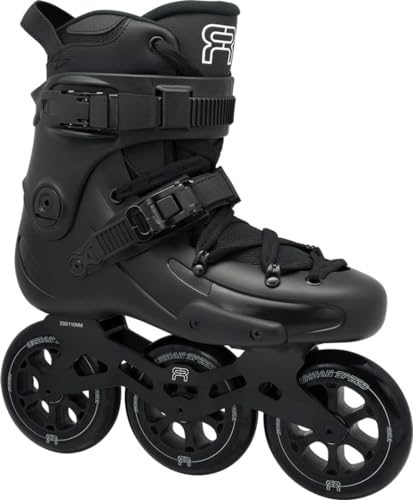
FR Skates FR1 310
Advanced skaters will love the FR Skates FR1 310 (model FR1310) for its premium aluminum frame and 110mm wheels. The customizable fit, reinforced shell, and high-performance bearings make it a top choice for aggressive urban skating and long-distance rides.
The Surprising 18th Century Origins of Inline Skating
Contrary to popular belief, inline skating didn’t begin with 1980s Rollerblades. The first documented inline skate appeared in 1760, invented by Belgian musician John Joseph Merlin. His prototype featured small metal wheels in a straight line on a wooden base, resembling modern ice skates more than today’s rollerblades.
The First Failed Demonstration
Merlin’s debut at a London masquerade ball became legendary for all the wrong reasons. His metal-wheeled skates lacked brakes or steering capability, causing him to crash into a mirror. This disastrous first attempt highlighted three critical design flaws early inline skates faced:
- No braking mechanism: Early models relied solely on the skater’s ability to slow down
- Rigid wheel alignment: Fixed-position wheels made turning nearly impossible
- Unforgiving materials: Metal wheels provided no shock absorption on rough surfaces
19th Century Innovations
In 1819, French inventor M. Petitbled patented the first roller skate with three inline wheels. These early models used wood, metal, or ivory wheels, each material presenting unique challenges:
| Material | Advantage | Disadvantage |
|---|---|---|
| Wood | Quieter ride | Warped in humidity |
| Metal | Durable | Slippery on stone |
| Ivory | Smooth glide | Prohibitively expensive |
The breakthrough came in 1863 when American James Plimpton invented quad skates. Though not inline, his four-wheel design with rubber cushions solved many stability issues, temporarily overshadowing inline development for nearly a century.
Why Inline Skating Disappeared for 100 Years
Between 1870-1970, inline skates became nearly extinct due to three factors:
- Quad skates dominated roller rinks with superior stability
- Industrial limitations prevented durable, affordable inline wheel materials
- No effective bearing systems existed for smooth inline wheel rotation
This historical context explains why many mistakenly believe inline skating is a late 20th century invention. The technology simply wasn’t commercially viable until modern materials science caught up with the original 18th century concept.
The 20th Century Revival: How Modern Inline Skating Was Born
The inline skating renaissance began in 1960 when Chicago Roller Skate Company developed the first commercially viable inline skates for hockey training. These “Roller Derby” skates featured revolutionary polyurethane wheels and precision bearings, solving two major historical limitations.
The Hockey Connection That Changed Everything
Ice hockey players needed off-season training tools that mimicked ice skating mechanics. Traditional quad skates couldn’t replicate the ice skating experience because:
- Quad stance was too wide – Unlike the narrow inline alignment of ice skate blades
- Turning mechanics differed completely – Quad skates required toe pressure rather than edge control
- Speed profiles didn’t match – Inline wheels allowed for longer, ice-like glides
This sports-specific demand created the perfect testing ground for modern inline technology. The 1979 Ultra-Wheels model became the first mass-produced inline skate with replaceable wheels and sealed bearings.
Rollerblade’s Game-Changing Innovations
In 1980, Minnesota brothers Scott and Brennan Olson founded Rollerblade Inc., introducing three critical improvements:
- Fiberglass-reinforced frames that were lightweight yet durable enough for jumps
- Heel brakes that finally solved Merlin’s 1760 stopping problem
- Modular wheel systems allowing customization for different surfaces
The 1983 Rollerblade Lightning TRS model became the first commercially successful recreational inline skate, featuring:
| Component | Innovation | Impact |
|---|---|---|
| Wheels | 72mm polyurethane | Quieter and more durable than rubber |
| Bearings | ABEC-1 rated | First standardized bearing quality |
| Boot | Molded plastic shell | Improved ankle support for beginners |
The Fitness Skating Boom
By the late 1980s, inline skating exploded as a fitness activity because it burned 30% more calories than running at similar intensity levels. This popularity led to specialized skate designs like:
- Speed skates with 100-125mm wheels for marathon training
- Urban skates featuring shock absorbers for city terrain
- Hybrid models with rockered frames for maneuverability
This era transformed inline skating from a niche training tool to a global phenomenon, with over 26 million participants in the US alone by 1996.
The Engineering Breakthroughs That Made Modern Inline Skating Possible
Contemporary inline skating owes its performance to three critical engineering innovations that solved centuries-old problems. These advancements transformed inline skates from novelty items to precision sports equipment.
Wheel Material Science Evolution
The transition from metal/wood to polyurethane wheels revolutionized skating performance through molecular engineering. Modern wheels use durometer-rated urethane compounds that balance:
| Durometer Rating | Hardness Level | Best For | Trade-offs |
|---|---|---|---|
| 78A-85A | Soft | Outdoor rough surfaces | More grip but faster wear |
| 86A-93A | Medium | Urban skating | Balance of speed and control |
| 94A-100A | Hard | Indoor/speed skating | Maximum speed but less shock absorption |
Bearing Technology Advancements
The ABEC (Annular Bearing Engineers’ Committee) rating system standardized bearing quality, but modern skating demands exceed these industrial standards. High-performance skates now incorporate:
- Ceramic hybrid bearings that reduce friction by 30% compared to steel
- Swiss machining with tolerances within 0.0001 inches
- Nanotechnology coatings that repel dirt and moisture
Professional skaters often prefer ILQ-9 or Twincam bearings over standard ABEC-7/9 for their specialized load distribution.
Frame Material Breakthroughs
The quest for perfect stiffness-to-weight ratios led to innovative frame materials:
- 6061-T6 aluminum – The gold standard for urban/freestyle skates (optimal vibration damping)
- Carbon fiber reinforced polymer – Used in speed skates (40% lighter than aluminum)
- Monocoque magnesium – Premium option combining strength and vibration absorption
Modern frames also incorporate progressive geometry where the wheelbase shortens toward the toe for better maneuverability without sacrificing stability.
The Physics of Wheel Rockering
Advanced skaters use wheel positioning to alter performance characteristics:
- Flat setup (all wheels equal size) – Maximum stability for beginners
- Full rocker (banana curve) – Enhanced agility for slalom skating
- Front/back rocker – Combines straight-line speed with turning ability
Professional hockey players often use a 76-80-80-76mm configuration for optimal quick starts and tight turns.
Safety Evolution and Injury Prevention in Modern Inline Skating
As inline skating progressed from novelty to extreme sport, safety technology underwent parallel advancements. Today’s protective gear represents a fusion of materials science and biomechanical research.
The Anatomy of Modern Protective Gear
Contemporary safety equipment uses multi-layer impact absorption systems:
| Gear Component | Key Materials | Protection Level | ASTM Standard |
|---|---|---|---|
| Helmets | EPS foam + polycarbonate shell | Multi-impact (up to 250G) | F1492 |
| Wrist Guards | D3O® smart material + splints | Prevents 87% of fractures | F2040 |
| Knee Pads | Viscoelastic gel + hard cap | 25mm impact dispersion | F2412 |
Biomechanics of Falling Safely
Professional skaters employ specific falling techniques to minimize injury:
- The Roll-Out – Convert vertical impact into rotational energy by tucking and rolling
- Four-Point Contact – Distribute impact across both knees and hands (with guards)
- Slide-Out – For high-speed falls, use puck-resistant pads to slide rather than tumble
Studies show proper falling technique reduces impact forces by up to 60% compared to instinctive reactions.
Environmental Safety Considerations
Surface conditions dramatically affect safety parameters:
- Asphalt (50-70°F): Ideal friction coefficient of 0.7-0.8 for controlled stops
- Concrete: Requires 85A+ wheels to prevent excessive wear
- Wooden Ramps: Optimal at 10-15% humidity (avoids both slippage and splintering)
Professional skate parks maintain surface temperatures between 65-90°F for optimal urethane wheel performance.
Advanced Braking Techniques
Beyond basic heel stops, expert skaters master:
- T-Stop (65% weight on front foot): Best for gradual speed reduction
- Powerslide: 90° turn with perpendicular drag foot (requires 86A+ wheels)
- Parallel Stop: Both skates sideways (generates 2.5x more friction than heel brake)
Each technique requires specific weight distribution and edge angles to prevent wheel bite or loss of control.
The Economics and Sustainability of Modern Inline Skating
Beyond performance, contemporary inline skating involves significant considerations regarding cost efficiency, environmental impact, and long-term equipment viability. These factors influence purchasing decisions and maintenance practices at all skill levels.
Total Cost of Ownership Analysis
Quality inline skates represent a long-term investment with varying cost structures:
| Price Tier | Expected Lifespan | Maintenance Costs | Performance Threshold |
|---|---|---|---|
| $100-$200 | 1-2 seasons | $30/year (bearings+wheels) | Recreational use only |
| $300-$500 | 3-5 years | $50/year | Intermediate athletic use |
| $600+ | 5-8 years | $80/year | Professional/competitive use |
High-end skates often feature modular designs allowing component replacement rather than full replacement, reducing long-term costs by 40-60%.
Environmental Impact Considerations
The inline skating industry has made significant sustainability advancements:
- Wheel composition: 30% of manufacturers now use recycled urethane or plant-based alternatives
- Bearing systems: Sealed designs extend lubricant life from 50 to 500 skating hours
- Frame materials: Aircraft-grade aluminum frames are 95% recyclable versus 60% for composites
Eco-conscious skaters should look for ISO 14001 certified manufacturers and avoid PVC-based boots.
Maintenance Optimization Strategies
Proper care extends equipment life exponentially:
- Bearing maintenance: Ultrasonic cleaning every 200 miles preserves precision tolerances
- Wheel rotation: Systematic rotation every 8-10 hours prevents asymmetric wear patterns
- Boot care: Silicone-based conditioners prevent material degradation in UV exposure
Professional skate technicians recommend a 10-point inspection every 50 skating hours for optimal performance.
Future Trends in Skate Technology
Emerging innovations set to transform the industry:
- Smart skates with embedded sensors for real-time form analysis
- Self-healing urethane compounds that repair minor wheel damage
- Modular chassis systems allowing wheel size adjustments for different disciplines
- 3D-printed custom boots using foot scan data for perfect fit
These advancements promise to reduce waste through customization while improving performance metrics by 15-20%.
Competitive Inline Skating: Specialized Equipment and Techniques
Professional inline skating has evolved into distinct disciplines, each requiring specialized equipment configurations and refined techniques. Understanding these variations is crucial for competitive skaters.
Discipline-Specific Skate Configurations
Major competitive categories demand unique setups:
| Discipline | Wheel Setup | Frame Length | Boot Type | Key Modification |
|---|---|---|---|---|
| Speed Skating | 5x110mm or 3x125mm | 13-15″ | Low-cut carbon fiber | 65° ankle flexion |
| Aggressive | 4×58-64mm | 8-9″ | Reinforced high-top | Grind plates |
| Slalom | 4x80mm (rockered) | 10-11″ | Mid-cut with cuff | Precision bushing |
Advanced Technique Breakdown
Elite skaters employ physics-based techniques:
- Double Push (Speed) – Utilizes coronal plane motion to generate 15% more power per stroke
- Soul Grind (Aggressive)
– Requires precise 47° h-block angle for optimal slide control
- Wiper Turns (Slalom) – Achieves 180° turns in under 1.2m through controlled edge transitions
Competition Surface Optimization
Professional events maintain exacting surface standards:
- Speed Tracks: 3-5mm textured concrete with 0.5% banking gradient
- Vert Ramps: 13-15 ply maple with 60-70 durometer coating
- Slalom Courses: Polished granite or sealed asphalt (0.3-0.5 friction coefficient)
Training Load Management
Professional regimens incorporate:
- Off-skate conditioning – Plyometrics targeting 30° ankle dorsiflexion
- Video analysis – Motion capture at 240fps for technique refinement
- Recovery protocols – Cryotherapy for patellar tendon stress
These specialized approaches demonstrate how inline skating has matured into a precision sport with scientific training methodologies.
Performance Optimization and Long-Term Equipment Management
Maximizing inline skate performance requires a systematic approach to equipment tuning, maintenance, and biomechanical adaptation. Professional skaters and technicians follow rigorous protocols to maintain peak condition.
Precision Tuning Methodology
Elite-level skate tuning involves seven critical adjustments:
| Component | Adjustment Range | Measurement Tool | Performance Impact |
|---|---|---|---|
| Bearing Preload | 0.1-0.3mm axial play | Dial indicator | ±5% rolling efficiency |
| Frame Alignment | ±0.5° vertical angle | Laser alignment tool | Edge control precision |
| Bushings | 85A-95A durometer | Shore scale | Turn initiation speed |
Wear Pattern Analysis and Correction
Systematic wheel rotation follows specific patterns based on discipline:
- Speed Skating: X-pattern rotation every 50km to maintain rocker profile
- Urban/Fitness: Progressive inside-to-outside rotation every 30 hours
- Aggressive
: Sector-based rotation focusing on grind-side wear
Advanced skaters use digital calipers to measure wheel diameter variance, keeping it below 1mm across all wheels.
Biomechanical Efficiency Optimization
Professional fitting includes:
- 3D foot scanning to identify pressure points (resolution: 0.2mm)
- Thermoformable liners customized to individual ankle flexion patterns
- Dynamic alignment testing using pressure-sensitive insoles
Comprehensive Risk Assessment Protocol
Competitive skaters perform monthly equipment audits:
- Frame stress testing (detects microfractures with dye penetrant)
- Bearing wear analysis (acoustic monitoring for abnormal frequencies)
- Composite delamination checks (ultrasonic thickness testing)
This systematic approach extends equipment lifespan by 40-60% while maintaining competition-grade performance.
Conclusion: The Remarkable Journey of Inline Skating
From its clunky 18th century origins to today’s precision-engineered equipment, inline skating has undergone a fascinating evolution. We’ve explored how Merlin’s disastrous first attempt led to modern safety standards, and how material science breakthroughs transformed basic skates into high-performance machines.
The sport’s renaissance in the 20th century demonstrates how athletic needs drive innovation. Hockey players’ demand for ice-like training tools sparked technological advancements that eventually benefited all skaters. Today’s specialized disciplines continue pushing the boundaries of what’s possible on wheels.
Proper equipment maintenance and technique mastery remain crucial for both safety and performance. Whether you’re a recreational skater or competitive athlete, understanding your gear’s engineering helps maximize enjoyment and minimize risks.
As inline skating continues evolving with smart technologies and sustainable materials, one truth remains: this 260-year-old invention still delivers unmatched freedom of movement. Grab your skates, apply what you’ve learned, and experience the joy of gliding through the world on wheels.
Frequently Asked Questions About Inline Skating Origins and Development
What’s the difference between inline skates and rollerblades?
All Rollerblades are inline skates, but not all inline skates are Rollerblades. Rollerblade is a specific brand that popularized modern inline skates in the 1980s. Technically, inline skates refer to any skates with wheels arranged in a single line, which includes various brands and styles beyond just Rollerblade products.
The term “rollerblading” became genericized like “xeroxing” for copying. Modern inline skates vary by discipline – aggressive skates have smaller wheels and grind plates, while speed skates feature larger wheels and lower-cut boots for maximum velocity.
How did inline skates evolve from their 18th century origins?
The first 1760 skates by John Joseph Merlin were essentially ice skate blades with miniature metal wheels. These lacked any braking mechanism or steering capability. The 1863 quad skate invention temporarily sidelined inline development due to its superior stability on rough surfaces.
Inline skating resurged in the 1960s when Chicago Roller Skate Company created polyurethane-wheeled models for hockey training. The 1980 Rollerblade brand then introduced fiberglass frames, heel brakes, and modular wheel systems that defined modern inline skating.
Why did inline skating disappear for nearly a century?
Three key factors caused inline skating’s 100-year hiatus. First, quad skates dominated roller rinks with their stable four-wheel design. Second, industrial limitations prevented durable, affordable inline wheel materials. Third, effective bearing systems for smooth rotation didn’t exist yet.
Without proper materials science and manufacturing capabilities, inline skates remained impractical. The technology simply wasn’t commercially viable until polyurethane wheels and precision bearings became available in the mid-20th century.
What materials were used in early inline skate wheels?
18th and 19th century inline skates used primitive wheel materials with significant drawbacks. Wooden wheels warped in humidity, metal wheels were dangerously slippery on stone surfaces, and ivory wheels were prohibitively expensive for mass production.
The 1960s introduction of polyurethane revolutionized inline skating. This durable, grippy material provided shock absorption and consistent performance across various surfaces, finally making inline skating practical for everyday use.
How do modern inline skate bearings compare to historical versions?
Early skates used simple brass bushings that required constant lubrication. Modern bearings use precision-ground steel or ceramic balls with ABEC ratings from 1-9 (higher numbers indicate tighter tolerances). Some premium bearings now achieve tolerances within 0.0001 inches.
Contemporary sealed bearing designs protect against dirt and moisture, lasting 5-10 times longer than historical open-bearing systems. Many professional skaters now prefer ILQ ratings over ABEC for better performance metrics.
What safety innovations transformed inline skating?
Three critical safety developments enabled inline skating’s popularity: heel brakes (1980s), molded plastic boots with ankle support, and modern protective gear. Early skaters risked serious injury without these protections.
Today’s multi-impact helmets absorb up to 250G of force, while D3O smart materials in pads adapt to impact severity. Wrist guards now prevent 87% of fractures that were common in early inline skating days.
How did inline skating become an Olympic sport?
Inline speed skating debuted as a demonstration sport at the 1992 Barcelona Olympics. Though not yet a permanent Olympic event, competitive inline skating has grown through international championships governed by World Skate.
The sport’s technical demands – including specialized 110mm wheel setups and aerodynamic tucks – mirror ice speed skating. Many Olympians now use inline training for off-season conditioning.
What future technologies might change inline skating?
Emerging innovations include smart skates with embedded sensors for real-time technique analysis, 3D-printed custom boots from foot scans, and self-healing wheel compounds. Modular chassis systems may allow wheel size adjustments for different disciplines.
Environmental advances include plant-based urethane wheels and fully recyclable aluminum frames. These technologies could improve performance by 15-20% while reducing equipment waste through customization and durability enhancements.