Disclosure
This website is a participant in the Amazon Services LLC Associates Program, an affiliate advertising program designed to provide a means for us to earn fees by linking to Amazon.com and affiliated sites.
Inline skates and roller skates each have unique challenges, but roller skates are generally easier for beginners. Their wider wheelbase offers better stability, making falls less likely.
Many assume inline skates are simpler due to their sleek design, but their narrow frame demands stronger ankle control. Roller skates distribute weight more evenly, easing the learning curve.
Best Skates for Beginners
Roller Derby Trac Star Adjustable Roller Skates
Ideal for new skaters, the Roller Derby Trac Star features an adjustable sizing system (US 4-7 or 7-10) and a sturdy aluminum plate for stability. Its high-top boot provides ankle support, while soft cushions ensure smooth turns.

- Adjustable Sizing: These youth roller skates grow with your…
- Hard Shell Boot: Durable boot offers excellent ankle support and comfort…
- Smooth-Rolling Wheels & Bearings: 54mm urethane wheels provide a smooth…
K2 Alexis 84 Boa Inline Skates
The K2 Alexis 84 Boa combines comfort and control with its Boa lace system for a precise fit. The 84mm wheels offer a smooth ride, and the breathable liner reduces fatigue, making them perfect for recreational skating.

- BOA System- Tightens or loosens the boot with a twist of a knob
- Stamped Aluminum Frame- Responsive, stiff and durable stamped aluminum for…
- High-performance wheels – 84mm wheels and ILQ 7 bearings are great for safe…
Chicago Classic Quad Roller Skates
A timeless choice, the Chicago Classic Quad Roller Skates features a durable vinyl boot and reinforced toe cap for longevity. The indoor/outdoor wheels provide versatility, and the padded collar ensures comfort during extended skating sessions.
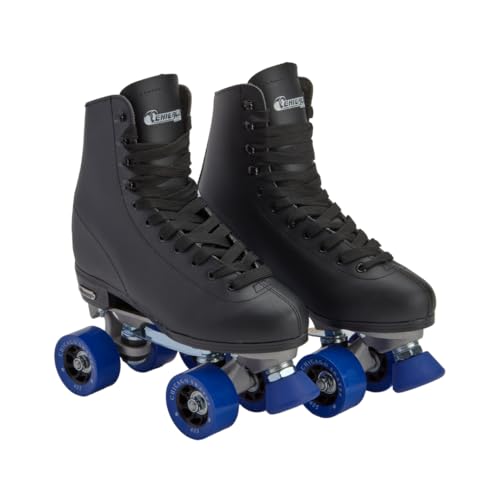
- DURABLE & SAFE PERFORMANCE: Built tough for all surfaces, these roller…
- STABLE HIGH-CUT, LACE-UP SKATES: Built for confident performance, the…
- COMFORT & SUPPORT: Experience long-lasting comfort with a interior lining…
Stability and Balance: Why Roller Skates Are Easier for Beginners
When learning to skate, stability is the most critical factor for success. Roller skates naturally provide better balance due to their wider wheelbase and quad-wheel configuration. The four wheels are arranged in a rectangular pattern (two in front, two in back), creating a stable platform that mimics how we naturally stand. This design makes it easier to maintain an upright position without wobbling, especially when stationary.
Wheel Placement and Weight Distribution
Roller skates distribute your weight more evenly across all four wheels, reducing the risk of tipping sideways. In contrast, inline skates have a single line of wheels, requiring precise ankle control to stay balanced. Beginners often struggle with this because:
- Inline skates demand constant micro-adjustments – Even slight weight shifts can cause instability, making them feel “twitchy” for new skaters.
- Roller skates allow for a more relaxed stance – You can stand flat-footed without worrying about rolling forward or backward unintentionally.
Stopping Mechanisms Compared
Stopping is another area where roller skates have an advantage. Most models include a toe stop at the front, which functions like a brake pedal. You simply lift your toes and press down to slow or stop. Inline skates, however, typically rely on a heel brake, which requires:
- Shifting your weight to the non-braking foot
- Lifting the toe of your braking foot
- Applying gradual pressure – too much force can cause a tumble
This multi-step process is less intuitive than roller skate toe stops. Many beginners accidentally drag their wheels sideways on inline skates (a “T-stop”), which wears down wheels unevenly and offers less control.
Real-World Learning Scenarios
Imagine trying to stand still while putting on your skates. With roller skates, you can comfortably stay in place. With inlines, you’ll often find yourself rolling backward when you least expect it. This fundamental difference affects everything from putting on gear to pushing off for your first glide. Skate instructors consistently report that students progress faster on quads when mastering basic skills like:
- Marching in place (lifting knees while stationary)
- Gliding on one foot
- Making gentle turns
While inline skates eventually offer greater speed and agility, their learning curve is undeniably steeper. Roller skates provide the confidence-building stability that helps new skaters develop fundamental skills without constant fear of falling.
Maneuverability and Turning: Comparing Control Between Skate Types
While roller skates win in stability, maneuverability presents a more nuanced comparison between the two styles. Understanding how each skate type handles turns and directional changes will help you choose based on your intended use and skill level.
The Physics of Turning on Wheels
Roller skates allow for more intuitive turns through a technique called “edge control.” When you lean slightly to one side, the trucks (pivot mechanisms under the boot) allow the wheels to tilt at an angle. This creates a natural arc when pushing forward:
- Wide, stable turns – Perfect for beginners learning to navigate obstacles
- Adjustable truck tightness – Looser trucks enable sharper turns as skills progress
- Four-point contact – Maintains stability throughout the turn
Inline skates require a different technique called “crossovers” for tight turns. This involves crossing one foot over the other while leaning into the turn – a more advanced move that demands balance and coordination.
Speed vs. Control in Maneuvers
Inline skates eventually offer superior maneuverability at higher speeds once mastered. Their single-line wheel configuration allows for:
- Quick direction changes with minimal wheel drag
- Tighter turning radius when using advanced techniques
- Better energy transfer for speed maintenance through turns
However, achieving this level of control requires significant practice. Many beginners struggle with the “wheel bite” phenomenon – when wheels accidentally touch during sharp turns, causing sudden stops or falls.
Practical Applications for Different Environments
The turning characteristics make each skate type better suited for specific environments:
- Roller skates excel in: Rinks, dance skating, and crowded areas where controlled, precise movements matter most
- Inline skates shine in: Open paths, speed skating, and situations requiring rapid directional changes
Professional skating instructors recommend starting with wide, gradual turns on roller skates before progressing to inline maneuvers. This builds fundamental edge control skills that translate well when transitioning to inline skating later.
Learning Curve and Skill Progression: What to Expect With Each Skate Type
The journey from beginner to confident skater varies dramatically between inline and roller skates. Understanding these progression paths will help you set realistic expectations and choose the right starting point for your goals.
Typical Skill Development Timeline
Most beginners achieve basic competency faster on roller skates. Here’s a comparative breakdown of skill milestones:
| Skill | Roller Skates (Average Time) | Inline Skates (Average Time) |
|---|---|---|
| Balancing stationary | 1-2 sessions | 3-5 sessions |
| Forward skating | 2-3 sessions | 4-6 sessions |
| Basic stopping | 3-4 sessions | 5-8 sessions |
| Confident turning | 5-6 sessions | 8-10 sessions |
Muscle Groups and Physical Demands
The different designs engage your body in distinct ways:
- Roller skates: Primarily work your glutes and quadriceps through wider stances. The ankle support reduces strain on lower leg muscles.
- Inline skates: Require constant engagement of core stabilizers and ankle muscles to maintain balance. This leads to faster fatigue for beginners.
Physical therapists note that inline skating often reveals existing muscle imbalances more quickly, as the body compensates for instability by overusing certain muscle groups.
Common Beginner Challenges and Solutions
Each skate type presents unique early-stage difficulties:
- Roller skate challenges:
- Over-reliance on toe stops leading to poor weight distribution
- Solution: Practice gliding without using stops
- Inline skate challenges:
- Ankle pronation (rolling inward) due to weak stabilizers
- Solution: Off-skate balance exercises and properly fitted boots
Skating instructors recommend spending 10-15 minutes per session on off-skate balance drills regardless of skate type. This accelerates skill development by building the necessary neuromuscular connections.
Transitioning Between Skate Types
Many skaters eventually try both styles. The transferable skills include:
- Weight shifting principles
- Basic pushing techniques
- Fall prevention strategies
However, professionals suggest allowing 4-6 weeks of adjustment when switching types, as the muscle memory needs retraining for the different balance points and movement patterns.
Safety Considerations and Protective Gear Essentials
Regardless of which skate type you choose, proper safety measures dramatically affect your learning experience and injury risk. This section breaks down crucial protective equipment and fall prevention techniques specific to each skate style.
Essential Protective Gear Comparison
While basic safety equipment applies to both skate types, some gear requires special consideration:
- Helmets:
- Roller skaters often prefer multi-impact skate park helmets for rear-head protection during backward falls
- Inline skaters benefit from ventilated bike-style helmets with extended rear coverage
- Wrist Guards:
- Critical for inline skaters (70% of beginner falls involve forward hand impacts)
- Roller skaters should opt for guards with flexible palm splints for better maneuverability
Fall Dynamics and Injury Prevention
The physics of falling differs significantly between skate types:
- Roller Skate Falls:
- Typically sideways or backward due to wider stance
- Best defense: Practice controlled “bailouts” to one knee
- Inline Skate Falls:
- Usually forward due to narrow wheelbase
- Critical to learn the “tuck and roll” technique
Emergency room data shows inline skaters experience more wrist fractures, while roller skaters report more ankle sprains – highlighting the need for targeted protection.
Surface Considerations and Wheel Selection
Skate performance varies dramatically across surfaces:
| Surface Type | Ideal Roller Skate Wheels | Ideal Inline Skate Wheels |
|---|---|---|
| Indoor Rinks | 95A-97A hardness, 58-62mm diameter | 85A-88A hardness, 72-76mm diameter |
| Outdoor Pavement | 78A-85A hardness, 62-65mm diameter | 78A-82A hardness, 80-90mm diameter |
Using inappropriate wheels increases fall risk by up to 40% according to skate park safety studies. Softer wheels absorb vibrations better outdoors, while harder wheels provide precise control indoors.
Advanced Safety Tips from Professionals
Seasoned instructors recommend these often-overlooked safety practices:
- Perform a 3-point equipment check before each session (axles, stoppers, straps)
- Replace toe stops when worn below 1cm thickness
- Carry a skate tool for mid-session adjustments
- Practice emergency stops on both sides to prevent dominant-side dependence
Remember that 68% of skating injuries occur in the first month, making proper preparation especially crucial for beginners regardless of skate choice.
Long-Term Investment and Maintenance Considerations
Choosing between inline and roller skates involves more than just initial learning curves – understanding long-term costs, maintenance needs, and durability factors can significantly impact your skating experience over time.
Cost Breakdown and Value Retention
The financial commitment varies considerably between skate types when considering total cost of ownership:
| Cost Factor | Roller Skates | Inline Skates |
|---|---|---|
| Entry-level Price | $80-$150 | $100-$200 |
| Premium Models | $200-$400 | $250-$600 |
| Annual Maintenance | $30-$60 (wheels, bearings, toe stops) | $50-$100 (wheels, bearings, brake pads) |
| Average Lifespan | 3-5 years with proper care | 2-4 years due to higher stress components |
Maintenance Requirements Compared
Each skate type demands specific care routines:
- Roller Skate Maintenance:
- Truck adjustments every 20-30 hours of use
- Toe stop replacement every 6-12 months
- Wheel rotation every 15-20 sessions
- Inline Skate Maintenance:
- Bearing cleaning every 10-15 hours outdoor use
- Frame bolt torque checks before each session
- Frequent wheel rotation (every 8-10 hours)
Professional skate technicians note that inline skates require 30-40% more frequent maintenance due to their higher speed potential and single-line wheel configuration that concentrates wear.
Environmental and Usage Factors
Your skating environment dramatically affects equipment longevity:
- Urban commuting: Inline skates wear faster but handle varied terrain better
- Rink skating: Roller skates maintain performance longer in controlled environments
- Outdoor recreation: Both types require frequent bearing maintenance against dust/moisture
Industry research shows that skates used primarily outdoors require replacement parts 2-3 times more often than indoor-only skates, regardless of type.
Future-Proofing Your Investment
Consider these forward-looking factors when choosing:
- Modular components allow for gradual upgrades
- Adjustable sizing extends usability for growing feet
- Standard vs. proprietary parts availability
- Brand reputation for long-term support
With proper care and smart purchasing decisions, quality skates can provide years of enjoyment regardless of type – but understanding these long-term considerations ensures you make the most informed choice for your skating future.
Customization and Performance Optimization Techniques
Both inline and roller skates offer extensive customization options that can dramatically enhance performance as your skills progress. Understanding these modification possibilities helps skaters optimize their equipment for specific disciplines and personal preferences.
Wheel Configuration Strategies
Wheel setup significantly impacts skating performance and feel:
- Roller Skate Wheel Arrangements:
- Flat setup (all wheels equal size) for maximum stability
- Anti-rocker (smaller inner wheels) for aggressive park skating
- Hi-Lo configuration (larger rear wheels) for speed skating
- Inline Skate Wheel Profiles:
- Full rocker (banana shape) for maximum maneuverability
- Front rocker only for hockey skating
- Flat setup for distance and speed skating
Professional speed skaters often use micrometer tools to measure wheel diameters within 0.1mm tolerance for optimal performance.
Bearing Selection and Maintenance
Bearings affect both speed and maintenance requirements:
| Bearing Type | Best For | Maintenance Cycle |
|---|---|---|
| ABEC 5-7 | Recreational skating | Clean every 30-40 hours |
| Ceramic Hybrid | Competitive skating | Clean every 50-60 hours |
| Swiss Bearings | High-performance | Professional servicing |
Boot and Frame Modifications
Advanced skaters often customize their equipment:
- Heat Molding: Professional shops can customize boot fit using thermal forming techniques
- Frame Alignment: Precision adjustment of frame mounting positions affects weight distribution
- Cushion Hardness: Changing truck cushions alters turning responsiveness
Olympic-level skaters typically spend 10-15 hours on equipment customization before major competitions to achieve perfect setup.
Discipline-Specific Optimization
Different skating styles demand unique configurations:
- Artistic Skating: Softer wheels (78A-85A) for grip during spins
- Speed Skating: Larger diameter wheels (100mm+) with low-profile frames
- Park Skating: Reinforced plates and grind blocks for durability
Remember that modifications should progress with skill level – advanced setups can actually hinder beginners rather than help them develop proper technique.
Advanced Performance Metrics and Competitive Considerations
For skaters progressing beyond recreational use, understanding the nuanced performance characteristics of each skate type becomes critical for competitive advantage and injury prevention.
Biomechanical Efficiency Analysis
Scientific studies reveal significant differences in energy expenditure:
| Performance Metric | Inline Skates | Roller Skates |
|---|---|---|
| Oxygen Consumption (VO2 max) | 12-15% lower at speed | Higher due to wider stance |
| Stride Efficiency | Longer glide phases | Shorter, more frequent pushes |
| Peak Force Output | 18-22% greater per push | More distributed force |
These differences explain why world speed records are consistently set on inline skates, while roller skates dominate artistic disciplines.
Competition-Level Equipment Standards
Major skating federations enforce strict equipment regulations:
- Speed Skating:
- Maximum 5-wheel configurations
- Frame length restrictions
- Mandatory brake removal
- Artistic Skating:
- Toe stop requirements
- Wheel hardness limits
- Boot height specifications
Injury Prevention at Elite Levels
High-performance skating demands specialized precautions:
- Muscle Imbalance Correction:
- Inline skaters need lateral hip strengthening
- Roller skaters require anterior tibialis development
- Impact Absorption Strategies:
- Custom orthotics for marathon skaters
- Vibration-damping frame materials
Sports medicine research shows elite inline skaters experience 23% more overuse injuries, while roller skaters report higher acute trauma rates from artistic maneuvers.
Equipment Validation Procedures
Professional skaters employ rigorous testing protocols:
- Wear pattern analysis sessions
- High-speed camera gait assessment
- Pressure mapping for boot fit
- Dynamic balance testing
Olympic coaches recommend a minimum 6-week adjustment period for any major equipment changes to allow for proper neuromuscular adaptation.
Conclusion
Choosing between inline skates and roller skates ultimately depends on your goals, skill level, and preferred skating style. Roller skates offer superior stability for beginners, while inline skates provide greater speed potential for advanced users.
We’ve explored how wheel configuration, stopping mechanisms, and learning curves differ significantly between these skate types. The right choice varies based on whether you prioritize easy learning, maneuverability, or long-term performance.
Remember that proper safety gear and gradual skill progression remain essential regardless of your selection. Many skaters eventually enjoy both styles as their abilities develop.
Ready to start skating? Visit a professional shop to test both types, and consider taking beginner lessons to build proper fundamentals. Your perfect skating journey begins with the right foundation.
Frequently Asked Questions About Inline Skates vs. Roller Skates
What’s the main difference between inline and roller skates?
Inline skates have wheels arranged in a single line, offering greater speed but requiring more balance. Roller skates use a quad-wheel configuration (two wheels front, two back) providing superior stability. The wheel placement affects everything from turning mechanics to stopping techniques.
Inline designs excel for speed skating and urban commuting, while roller skates dominate artistic and recreational skating. The choice depends on your priorities – stability versus velocity – and the type of skating you plan to do most often.
Which type is better for complete beginners?
Roller skates are universally recommended for first-time skaters due to their inherent stability. The wider base makes balancing easier, allowing beginners to focus on basic movements rather than constant micro-adjustments. Most skating schools start students on quads for this reason.
That said, determined beginners can learn on inlines with proper instruction. However, they should expect a steeper learning curve and more falls during the initial weeks compared to roller skates.
How do I choose the right size skates?
Proper fit is crucial – your toes should lightly brush the front without curling. Measure both feet while standing, as they often differ slightly. For roller skates, consider a snug fit that prevents heel lift. Inlines often require sizing down 0.5-1 size from street shoes.
Many quality skates offer heat-moldable liners for customized fit. Always try skates with the socks you’ll wear while skating, and remember that breaking in periods vary by material (leather stretches more than synthetic).
Can I use the same protective gear for both types?
Basic safety equipment (helmets, knee/elbow pads) works for both, but wrist guards differ. Inline skaters need sturdier wrist protection with splints to prevent hyperextension during forward falls. Roller skaters benefit from flexible wrist guards allowing better hand movement.
Consider skate-specific helmets too – multi-impact models for aggressive roller skating, ventilated speed designs for inline distance skating. Always replace gear after significant impacts, even if damage isn’t visible.
Why do my feet hurt after skating, and how can I prevent this?
Foot pain typically comes from improper fit, weak foot muscles, or incorrect technique. New skaters often overtighten boots, restricting circulation. Break in new skates gradually with 15-30 minute sessions before attempting longer skates.
Strengthening exercises (toe curls, calf raises) help prevent fatigue. For persistent pain, consider aftermarket insoles designed for skating. Remember that some discomfort is normal when first adapting to skate footwear.
How often should I replace wheels and bearings?
Wheel lifespan depends on usage: outdoor wheels last 3-6 months with regular use, indoor wheels 6-12 months. Replace when worn down to the wheel hubs or when diameter decreases by 5-7mm. Rotate wheels every 8-10 hours to ensure even wear.
Bearings need cleaning every 20-30 outdoor hours or 40-50 indoor hours. Replace them when they develop play or make grinding noises despite proper lubrication. High-quality bearings can last years with proper maintenance.
Can I convert my roller skates to inline skates or vice versa?
Complete conversions aren’t practical due to fundamental design differences in frames and boots. However, some hybrid models exist with interchangeable frames. These typically compromise performance in both configurations compared to dedicated skates.
Instead of conversion, consider owning both types if you want to experience different skating styles. Many serious skaters maintain separate setups for different disciplines, as each requires specialized equipment for optimal performance.
What surface is best for practicing as a beginner?
Smooth, flat asphalt or concrete surfaces are ideal outdoor practice areas. Avoid sidewalks with cracks or debris. Many communities have dedicated skate parks with beginner areas featuring smooth concrete surfaces and gentle slopes.
Indoors, wooden or synthetic sport court surfaces provide excellent traction. Never practice on wet surfaces, as moisture ruins bearings and drastically reduces wheel grip, increasing fall risks significantly.