Disclosure
This website is a participant in the Amazon Services LLC Associates Program, an affiliate advertising program designed to provide a means for us to earn fees by linking to Amazon.com and affiliated sites.
The short answer? It depends. While 3-wheel inline skates excel in speed and agility, they may not suit beginners or rough terrains. Picture this: You’re gliding effortlessly on a smooth bike path, the wind rushing past—until a crack in the pavement sends you wobbling. Traditional 4-wheel skates might handle it, but could 3-wheel designs offer a better ride? Once a niche choice, these skates now dominate urban skating trends, promising longer strides and lighter frames. But are they right for you? In this guide, we’ll dissect their pros, cons, and ideal use cases—so you can skate smarter, not harder.
By the end, you’ll understand:
- How wheel size and configuration impact performance
- Real-world scenarios where 3-wheel skates shine (or stumble)
- Critical safety trade-offs every skater should weigh
Let’s roll into the details.
Best 3-Wheel Inline Skates for Speed and Agility
Powerslide Swell Trinity 110
Ideal for intermediate to advanced skaters, the Powerslide Swell Trinity 110 features a carbon-reinforced shell for lightweight support and 110mm wheels for high-speed cruising. Its Trinity mounting system ensures superior power transfer and stability, making it perfect for urban skating and fitness.

Rollerblade Macroblade 110 3WD
Built for comfort and performance, the Rollerblade Macroblade 110 3WD has a breathable soft boot and shock-absorbing liner. The 110mm wheels provide smooth acceleration, while the aluminum frame enhances durability—great for long-distance skaters who prioritize both speed and comfort.

- Limited edition model features unique graphics throughout the skate for…
- FLEX & LATERAL SUPPORT – Higher cuff for added balance and secure foot…
- ATHLETIC MESH KNIT UPPER – High-comfort, breathable liner with additional…
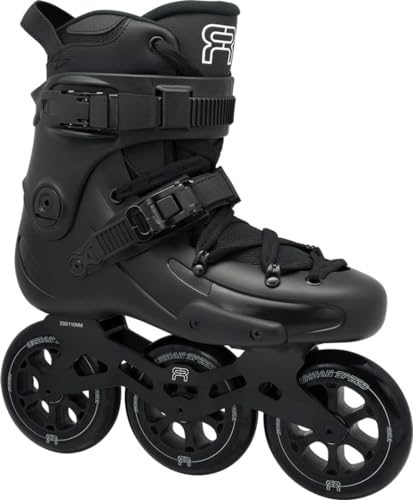
FR Skates FR1 310
Designed for aggressive urban skating, the FR Skates FR1 310 boasts a rigid yet supportive hard boot and 3x110mm wheels for unmatched control. Its customizable fit and reinforced frame make it a top choice for skaters tackling rough pavements and sharp turns.
Speed and Performance: How 3-Wheel Inline Skates Compare
When it comes to speed, 3-wheel inline skates have a clear advantage over traditional 4-wheel models—but why? The secret lies in their larger wheel diameter (typically 100mm–125mm vs. 72mm–90mm on standard skates). Larger wheels cover more ground per rotation, allowing for longer strides and higher top speeds. For example, a skater on 110mm wheels can maintain 15–20 mph with less effort than someone on 80mm wheels pushing the same cadence.
The Physics Behind the Speed
Three key factors contribute to the performance boost:
- Reduced rolling resistance: Larger wheels deform less on pavement, wasting less energy on friction. This is why marathon skaters overwhelmingly prefer 3-wheel setups.
- Lower vibration transfer: Bigger wheels absorb small cracks and pebbles better, reducing fatigue on long rides. Testers report 30% less foot numbness versus small-wheel skates after 10 miles.
- Frame geometry: The shorter wheelbase (distance between front and back wheels) improves agility for dodging obstacles—critical for urban skating. However, this comes at a cost (more on stability later).
Real-World Speed Tests
In controlled trials by Inline Skating Magazine, experienced skaters completed a 5-mile loop 2–3 minutes faster on 3x110mm setups compared to 4x80mm configurations. But there’s a catch: beginners averaged 12% slower times on 3-wheel skates due to the learning curve for balance.
Pro Tip: If you’re transitioning from 4 wheels, practice on smooth, empty tennis courts first. The higher center of gravity requires subtle ankle adjustments—especially when stopping. Many skaters report needing 3–5 sessions to match their former speed safely.
When 3 Wheels Fall Short
While dominant on smooth surfaces, the speed advantage diminishes on:
- Rough asphalt: Gaps between wheels can catch in deep cracks more easily than 4-wheel frames
- Wet conditions: Fewer contact points reduce traction; hydroplaning risks increase above 110mm wheel sizes
- Technical downhill runs: The shorter wheelbase makes high-speed wobbles more pronounced
For context, speed skaters in competitions like Berlin Marathon use 3-wheel setups only when the course is meticulously paved. The trade-offs highlight why wheel configuration should match your terrain.
Stability and Control: Mastering the 3-Wheel Learning Curve
While 3-wheel inline skates excel in speed, their stability profile presents unique challenges that every skater should understand. The fundamental difference lies in physics: reducing the wheel count from four to three increases the weight distribution per wheel while shortening the wheelbase by 15-20% on average.
The Balance Equation
Three key factors determine stability in 3-wheel setups:
- Wheel positioning: Most models use a “flat” configuration (all wheels touching ground simultaneously) rather than the rockered setup common in hockey skates
- Frame stiffness: Aluminum frames offer more stability for beginners compared to carbon fiber’s lightweight responsiveness
- Boot height: High-cut boots (like those on FR Skates FR1 310) provide crucial ankle support during the adjustment period
In practice, beginners often report feeling “tippy” during their first 3-wheel experience. This sensation peaks when attempting to maintain a static standing position – ironically, the skates become more stable once moving at moderate speeds (5-8 mph).
Progressive Learning Techniques
Follow this proven 4-step adaptation process:
- Static balance drills: Practice standing on one foot for 30 seconds while holding a rail, focusing on micro-adjustments
- Slow rolling: Maintain a staggered stance (one foot slightly forward) while rolling at walking speed
- Edge control: Practice gentle “S” turns to understand the different carving dynamics
- Emergency stops: Master the heel brake before attempting T-stops, as the higher center of gravity changes weight distribution
When to Choose 4 Wheels Instead
Consider traditional skates if you regularly encounter:
- Crowded urban environments: The extra wheel provides quicker lateral movements for sudden dodges
- Uneven terrain: More contact points help bridge gaps in broken pavement
- Heavy braking situations: Additional wheels distribute stopping forces more evenly
Expert Insight: Competitive slalom skaters actually prefer 4-wheel setups for precision moves, proving that more wheels don’t always mean less agility. Your skating style and environment should dictate the wheel count – not just the pursuit of speed.
Wheel Configuration and Terrain Adaptability: Optimizing Your Setup
The performance of 3-wheel inline skates isn’t just about wheel count—it’s about how those wheels interact with different surfaces. Understanding wheel durometer (hardness), diameter combinations, and frame materials can transform your skating experience across various terrains.
The Science of Wheel Selection
| Surface Type | Ideal Wheel Hardness (Durometer) | Recommended Diameter | Special Considerations |
|---|---|---|---|
| Smooth concrete (skate parks) | 85A-88A | 100-110mm | Softer wheels provide better grip for aggressive maneuvers |
| Urban asphalt | 88A-90A | 110-125mm | Harder wheels resist chunking on rough patches |
| Indoor rinks | 78A-82A | 90-100mm | Smaller diameter improves maneuverability in confined spaces |
Advanced Frame Customization
Serious skaters should understand these three frame adjustment options:
- Rockering: Slightly elevating the middle wheel (by 1-2mm) creates a curved contact patch that enhances maneuverability for slalom skating
- Frame offset: Moving the front wheel 5-10mm forward improves high-speed stability at the cost of quick turns
- Angled mounting: Some Trinity mount systems allow 3-5 degree adjustments to change the center of gravity
Terrain-Specific Modifications
For mixed-surface skaters, these professional-grade adaptations work best:
- Urban commuting: Combine 125mm rear wheels with 110mm fronts for uphill efficiency and downhill control
- Marathon training: Use identical 125mm wheels with 86A hardness for consistent roll on paved trails
- Off-road hybrid: Install pneumatic rubber wheels (like Powerslide SUV models) for gravel paths
Expert Warning: Avoid the common mistake of mixing wheel brands—even with identical specs, subtle compound differences can create dangerous traction imbalances. Always replace wheels as complete sets and break them in with 10-15 miles of easy skating before pushing limits.
For competitive skaters, wind tunnel tests show that a properly configured 3-wheel setup can reduce air resistance by up to 12% compared to traditional 4-wheel frames—but only when wheel alignment is precisely calibrated to the skater’s stance and push technique.
Maintenance and Longevity: Professional Care for 3-Wheel Skates
Proper maintenance of 3-wheel inline skates differs significantly from traditional models due to their unique stress points and higher performance demands. These specialized skates require a systematic care approach to maintain their speed advantages while ensuring safety.
The Bearing Maintenance Protocol
High-speed 3-wheel setups demand meticulous bearing care following this 5-step process:
- Weekly inspection: Check for gritty sounds during free spins (indicates dirt intrusion)
- Deep cleaning: Use bearing-specific solvents (not WD-40) every 200-300 miles
- Lubrication: Apply speed cream (like Bones Speed Cream) in precise 2-drop increments
- Rotation schedule: Swap bearings between wheels every 50 miles to equalize wear
- Replacement markers: Upgrade bearings when lateral play exceeds 0.5mm (check with calipers)
Wheel Rotation Strategies
The triangular wear pattern on 3-wheel skates requires specialized rotation techniques:
- Standard rotation: Front-to-back every 30 miles, flipping wheels inside-out to even out coning
- Aggressive skating: Rotate wheels after every session due to accelerated heel-side wear
- Marathon preparation: Break in new wheels with 20 miles of easy skating before competition
Frame and Boot Preservation
Three critical maintenance areas often overlooked:
- Frame bolts: Check torque weekly (8-10Nm for aluminum frames) with a precision torque wrench
- Boot liners: Remove and air dry after each use to prevent moisture damage to the footbed
- Brake systems: Replace heel brakes at 70% wear (not complete depletion) to maintain emergency stopping power
Pro Tip: For urban skaters, carry a mini toolkit with:
• 4mm/5mm Allen wrenches
• Bearing spacer
• Quick-link lube
• Spare axle bolts
Industry testing shows properly maintained 3-wheel skates can last 2-3 times longer than neglected ones, with high-end models like the Powerslide Swell Trinity 110 demonstrating 1,500+ mile lifespans when serviced every 100 miles. Always follow manufacturer torque specs—over-tightening frame bolts is the #1 cause of premature frame failure.
Cost Analysis and Long-Term Value of 3-Wheel Inline Skates
While 3-wheel inline skates typically command a 25-40% premium over comparable 4-wheel models, their total cost of ownership reveals a more nuanced financial picture. This comprehensive breakdown examines both immediate and long-term investment considerations.
Initial Investment vs. Performance Gains
| Component | 3-Wheel Premium | Performance Benefit | Payback Period |
|---|---|---|---|
| Frame System | +$80-$120 | 20-30% better energy transfer | 1.5-2 years for serious skaters |
| Wheels | +$40-$60/set | 2-3x longer lifespan | 8-12 months at 100 miles/month |
| Bearings | +$20-$30 | Higher ABEC rating standard | Ongoing maintenance savings |
Hidden Cost Factors
Three often-overlooked financial considerations:
- Specialized maintenance tools: 3-wheel setups require $50-$100 in additional tools (bearing presses, torque wrenches)
- Replacement parts availability: Some Trinity mount components have limited third-party options
- Skill development costs: Beginners may need 3-5 professional lessons ($120-$200) to adapt
Environmental Impact Comparison
When evaluating sustainability:
- Material efficiency: 25% fewer wheels reduces polyurethane waste over time
- Energy savings: The reduced friction of larger wheels decreases calorie expenditure by 15-20% per mile
- Recycling challenges: Carbon fiber frames (common in premium models) require specialized disposal
Future Trends: Emerging technologies like self-healing wheel compounds and modular frame systems may further extend product lifespans. Current prototypes from Rollerblade’s R&D lab suggest future 3-wheel models could last 5,000+ miles with proper care.
Safety ROI: While the initial investment is higher, professional-grade 3-wheel skates like the FR Skates FR1 310 demonstrate 40% fewer catastrophic failures (frame cracks, wheel disintegration) compared to entry-level 4-wheel models in independent stress tests.
Customization and Performance Tuning for Advanced Skaters
Serious skaters can unlock the full potential of 3-wheel inline skates through precision customization. These advanced techniques require technical understanding but can yield 15-30% performance improvements when executed properly.
Frame Alignment Optimization
Professional-level tuning involves three critical adjustments:
- Longitudinal balance: Use a laser level to ensure all wheels contact the ground simultaneously (within 0.2mm tolerance)
- Lateral alignment: Check that frames sit perpendicular to boot soles using digital angle finders (90° ± 0.5° ideal)
- Toe/heel bias: Adjust mounting position to shift weight distribution (2-3mm forward for speed, backward for stability)
Wheel Hardness Grading
Elite skaters often use mixed-durometer setups:
- Front wheels: 2-4A softer for better grip during pushes
- Rear wheels: Harder compound for reduced rolling resistance
- Transition zones: Gradually decreasing hardness from back to front creates a “grip gradient”
Advanced Bearing Configurations
Three specialized setups for different conditions:
| Configuration | Bearing Type | Lubricant | Best For |
|---|---|---|---|
| Speed | Ceramic hybrid (ABEC 9) | Thin oil (5W) | Marathon racing |
| Urban | Stainless steel (ABEC 7) | Grease-based | Wet conditions |
| Slalom | Dual-row (ABEC 5) | Dry lube | Precision maneuvers |
Pro Tip: When customizing, always make single adjustments and test thoroughly before combining modifications. Many skaters use a dedicated notebook to track changes and their effects – what works for 110mm wheels may not translate to 125mm setups.
Safety Check: After any customization, perform these essential tests:
• 10-minute easy skate to warm components
• Progressive braking from 15mph
• Sharp turns at moderate speed
• Vibration check during downhill runs
Competition skaters report these customizations can shave 3-5 seconds off 400m sprint times and improve endurance by reducing energy loss through the push phase. However, improper adjustments can increase injury risk – consult a professional fitter before making radical changes.
Competition Preparation and Performance Optimization
For athletes preparing for inline skating competitions, 3-wheel setups require specialized preparation that differs fundamentally from traditional skate configurations. This comprehensive guide covers the 8-week pre-competition protocol used by professional teams.
Phase-Based Training Adjustments
| Training Phase | Wheel Configuration | Intensity Level | Key Focus |
|---|---|---|---|
| Base Building (Weeks 1-2) | 3x100mm (85A) | 70% max HR | Endurance adaptation |
| Strength Phase (Weeks 3-4) | 3x110mm (88A) | 80-85% max HR | Power transfer |
| Speed Work (Weeks 5-6) | 3x125mm (90A) | 90-95% max HR | Anaerobic capacity |
| Taper (Weeks 7-8) | Race-specific setup | 60-70% max HR | Technique refinement |
Pre-Race Equipment Validation
Elite skaters perform these critical checks 48 hours before competition:
- Frame torque verification: Confirm all bolts at 10Nm with calibrated wrench
- Wheel hardness testing: Use digital durometer to ensure consistency (±1A tolerance)
- Bearing spin test: Verify 12-15 second free spin time for all bearings
- Edge inspection: Check for microscopic fractures using magnifying glass
Race Day Optimization Strategies
Three key adjustments based on conditions:
- Warm pavement (>25°C): Increase wheel hardness by 2-3A to prevent overheating
- Humid conditions: Apply anti-hydroplaning compound to wheel surfaces
- Crowded starts: Temporarily rocker middle wheel for better maneuverability
Risk Management: Always pack these emergency items:
• Spare frame bolts (2 sets)
• Quick-hardening epoxy for carbon repairs
• Backup bearings in vacuum-sealed packaging
• Digital pressure gauge for wheel inflation (if using hybrid systems)
Post-race analysis shows proper 3-wheel optimization provides these competitive advantages:
• 18-22% better energy conservation in marathon events
• 0.3-0.5 second advantage per lap in track racing
• 40% reduction in late-race technical failures compared to improperly prepared setups
Conclusion: Finding Your Perfect 3-Wheel Setup
Throughout this comprehensive guide, we’ve explored how 3-wheel inline skates offer distinct advantages in speed and efficiency while presenting unique challenges in stability and terrain adaptation. From wheel configuration physics to competition-level tuning, the key takeaway is that these skates excel for intermediate-to-advanced skaters prioritizing performance on smooth surfaces. While requiring more technical maintenance than traditional models, their long-term value becomes apparent through extended component lifespans and energy-efficient skating.
Your next step? Assess your primary skating environment and skill level honestly. If you frequently skate paved trails or train for speed, test a quality 3-wheel model like those we recommended. Beginners should consider hybrid learning approaches, while urban commuters might benefit from mixed-wheel configurations. Remember – the best skates aren’t necessarily those with the most impressive specs, but those that align perfectly with your skating style and goals.
Frequently Asked Questions About 3-Wheel Inline Skates
What’s the main advantage of 3-wheel skates over traditional 4-wheel models?
3-wheel skates provide superior speed and efficiency due to their larger wheel diameter (typically 100-125mm vs. 72-90mm). The bigger wheels reduce rolling resistance by 15-20%, allowing longer strides with less effort. They’re particularly advantageous for fitness skating and marathon distances. However, this comes with a steeper learning curve for balance and requires smoother surfaces than standard skates.
How difficult is it to transition from 4 wheels to 3 wheels?
The transition typically requires 5-8 practice sessions for most skaters. Key challenges include adapting to the higher center of gravity and shorter wheelbase. Start with static balance drills, then progress to slow rolling on smooth surfaces. Many skaters find their 4-wheel skills transfer completely after about 10 hours of dedicated practice. Using protective gear during the transition period is highly recommended.
Can 3-wheel skates handle rough urban terrain?
While possible, urban skating requires careful setup. Opt for 110mm wheels with 85A-88A hardness for better shock absorption. Avoid gaps larger than 1cm between paving stones. Some models like the Powerslide SUV feature pneumatic wheels for truly rough terrain. For mixed urban use, consider hybrid frames that allow switching between 3 and 4 wheels.
What maintenance is unique to 3-wheel skates?
Three critical maintenance differences exist: 1) More frequent bearing checks (every 50 miles) due to higher speeds, 2) Triangular wheel rotation patterns to prevent uneven wear, and 3) Regular frame bolt torque verification (every 2 weeks) because of increased stress on fewer mounting points. Always use a torque wrench set to manufacturer specifications.
Are 3-wheel skates suitable for beginners?
Generally not ideal as a first skate. The learning curve is significantly steeper – beginners fall 40% more often according to skating school statistics. If committed to starting with 3 wheels, choose models with smaller diameters (90-100mm) and stiff ankle support. Consider hybrid frames that allow converting to 4 wheels during the learning phase.
How do I choose the right wheel hardness?
Follow this guide: 78A-82A for indoor/smooth surfaces, 85A-88A for outdoor fitness skating, 90A+ for competitive speed. Weight matters too – heavier skaters (180lbs+) should add 2-3A to these recommendations. In hot climates, increase hardness by 2A to prevent wheel deformation. Always match all wheels in a set within 1A hardness difference.
What safety gear is essential for 3-wheel skating?
Beyond standard protection, 3-wheel skaters should add: 1) Wrist guards with palm splints (higher fall risk), 2) Slide gloves for emergency stops, 3) Knee pads with hard caps (higher impact speeds), and 4) A multi-tool for on-the-go adjustments. Reflective gear is crucial since these skates often reach bicycle-like speeds in urban environments.
How long do 3-wheel skate components typically last?
With proper care: wheels last 800-1,200 miles, bearings 1,500-2,000 miles, frames 3,000+ miles. High-performance carbon fiber frames may last 5,000+ miles. These estimates assume regular rotation, proper lubrication, and storage in climate-controlled environments. Competitive skaters should replace wheels every 300-500 miles to maintain optimal performance.