Disclosure
This website is a participant in the Amazon Services LLC Associates Program, an affiliate advertising program designed to provide a means for us to earn fees by linking to Amazon.com and affiliated sites.
Learning inline skating takes 2 weeks to 3 months for basic proficiency, but mastery requires years. Your progress depends on practice frequency, fitness, and goals.
Many assume skating is instantly easy, but balance and muscle memory take time. With the right approach, you’ll glide confidently sooner than you think.
Best Inline Skates for Beginners and Beyond
Rollerblade Zetrablade Elite
The Rollerblade Zetrablade Elite is perfect for beginners with its cushioned boot, breathable liner, and 80mm wheels for smooth rides. Its aluminum frame ensures durability, while the soft-boot design offers comfort for long sessions.
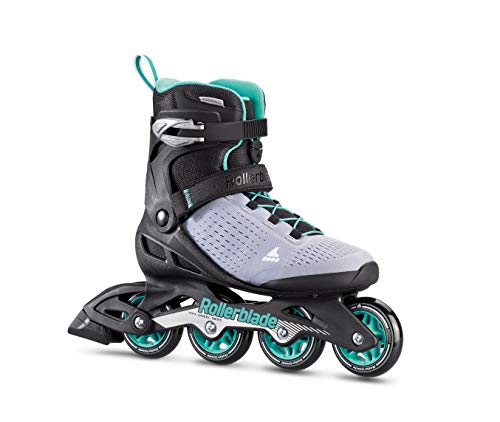
- BUCKLE-Cuff buckle, 45° strap, speed laces
K2 Alexis 84 Boa
The K2 Alexis 84 Boa features a Boa closure system for precise fit adjustments and an 84mm wheel setup for speed and stability. Its lightweight design and responsive handling make it ideal for intermediate skaters.

- BOA System – Tightens or loosens the boot with a twist of a knob
- Stability Plus Cuff – Provides the right amount of support, flexibility,…
- Stamped Aluminum Frame – Responsive, stiff and durable stamped aluminum for…
Powerslide Phuzion Radon 90
For those ready to advance, the Powerslide Phuzion Radon 90 offers 90mm wheels for faster, smoother glides. The trinity frame system enhances power transfer, and the breathable mesh upper keeps feet cool during intense workouts.

- Comfort meets performance with an outstanding look and guaranteed fit
- Trinity X technology for better push, power transfer and lowest possible…
- [“Triskate with top end quality parts”,”from frames over wheels to…
How Long It Takes to Master Basic Inline Skating Skills
Learning inline skating follows a progression from wobbly first steps to confident gliding. Most beginners achieve basic stability within 3-5 practice sessions, but consistent practice is key. Your body needs time to develop muscle memory for balance and weight distribution, which differs from walking or running.
The First Week: Finding Your Balance
During initial sessions, focus on mastering the ready position: knees bent, shoulders over toes, and arms slightly forward. A common mistake is standing upright, which increases falls. Practice these fundamentals:
- Marching in place to get comfortable with wheel movement
- Gliding on one foot for 2-3 seconds to improve balance
- Controlled stops using the heel brake or T-stop technique
Expect frequent falls initially—this is normal. Wearing protective gear reduces fear and prevents injuries that could delay progress.
Weeks 2-4: Building Confidence and Control
Once comfortable standing, you’ll transition to forward strides and turns. This phase typically takes 10-15 hours of practice. Key milestones include:
- Push-and-glide motions for sustained movement
- Basic turns using weight shifts (leaning, not twisting)
- Speed management through staggered foot positioning
Skating on different surfaces (smooth pavement vs. rough trails) accelerates adaptation. Avoid inclines until you’ve mastered braking—many beginners overestimate their stopping ability.
Month 2-3: Refining Technique for Real-World Use
By this stage, skaters navigate sidewalks and slight slopes comfortably. Focus shifts to efficiency and endurance. Drills to advance skills include:
- Crossovers for tighter turns
- One-legged glides lasting 5+ seconds
- Backward skating (start by practicing along a wall)
Noticeable improvements come from 3+ weekly sessions of 30-60 minutes. Skaters who practice sporadically may plateau at this stage.
Remember: Progress isn’t linear. Factors like prior sports experience (ice skating, skiing) or fitness level can shorten timelines by 20-30%. Conversely, fear of falling may extend the learning curve—mental readiness matters as much as physical skill.
Advanced Techniques to Accelerate Your Inline Skating Progress
Once you’ve mastered basic skills, targeted training methods can significantly reduce your learning time. These advanced techniques build on fundamentals while developing the precision and control needed for complex maneuvers.
Structured Practice Sessions for Faster Improvement
Effective training requires deliberate practice, not just recreational skating. Divide sessions into three phases:
- Warm-up (10 minutes): Perform off-skate dynamic stretches and on-skate balance drills to activate muscles
- Skill development (30 minutes): Focus on one specific technique with progressive difficulty
- Free skating (20 minutes): Apply skills in varied conditions to build adaptability
For example, when practicing crossovers, start by holding a rail, progress to wide circles on a basketball court, then attempt tighter turns on a curved pathway.
Essential Drills for Technical Proficiency
These evidence-based drills develop critical skating attributes:
- Lemon drops: Create figure-8 patterns by pushing outward with both feet simultaneously – builds edge control
- Scissor stance glides: Maintain speed with one foot slightly ahead – improves weight distribution
- Slalom practice: Weave through cones placed 6-8 feet apart – enhances agility
Advanced skaters should incorporate backward versions of these drills once forward execution becomes effortless.
Troubleshooting Common Plateaus
When progress stalls, identify and address specific weaknesses:
| Challenge | Solution |
|---|---|
| Consistent wheel wobble | Tighten frames and practice one-foot balance drills |
| Difficulty maintaining speed | Focus on full extension during pushes – aim for 45° leg angle |
| Fear of falling | Practice controlled falls on grass wearing full pads |
Professional skaters recommend video analysis – record your sessions to identify subtle technique errors invisible during skating. Many local rinks offer progression clinics that provide expert feedback on form.
Remember: Advanced skills require 300-500 repetitions for muscle memory. Track your practice in a skating journal, noting breakthroughs and persistent challenges to structure future sessions effectively.
The Science of Efficient Inline Skating: Biomechanics and Equipment Optimization
Understanding the physics and physiology behind inline skating can dramatically improve your learning efficiency. This section breaks down the key scientific principles that affect your performance and how to leverage them.
Biomechanics of Proper Skating Form
Optimal skating technique follows specific biomechanical principles that maximize power while minimizing injury risk:
| Body Position | Optimal Angle | Purpose |
|---|---|---|
| Knee Bend | 110-130° | Maintains center of gravity and stores elastic energy for pushes |
| Ankle Flexion | 15-20° forward | Ensures proper wheel contact and edge control |
| Torso Lean | 10-15° forward | Countacts backward push forces while maintaining balance |
Common form mistakes include excessive upright posture (reduces push power by 40%) and overpronation (causes wheel drag). Video analysis helps identify these issues.
Equipment Science: How Gear Affects Learning Curve
Your setup significantly impacts skill development:
- Wheel Hardness (Durometer): 78A-82A for beginners (better grip), 85A+ for advanced skaters (faster rolls)
- Frame Length: Shorter frames (243mm) enhance maneuverability, while longer frames (295mm) improve stability
- Bearing ABEC Rating: ABEC 5-7 offers ideal balance of speed and control for learners
Professional coach tip: Rotate wheels every 8-10 hours of skating to prevent uneven wear that can disrupt balance.
Physiological Adaptations in Skating
Your body undergoes specific changes during skill acquisition:
- Neuromuscular: Myelin sheaths thicken around frequently used nerve pathways (6-8 weeks for noticeable improvement)
- Muscular: Develops eccentric strength in hip abductors and quadriceps for controlled deceleration
- Proprioceptive: Ankle and knee joints improve at detecting subtle weight shifts (measurable after 12-15 sessions)
Supplemental dryland training (like bosu ball exercises) can accelerate these adaptations by 20-30%. Focus particularly on lateral movement drills to build skating-specific strength.
Remember: Equipment should evolve with your skills. Many learners progress faster by upgrading from beginner skates to intermediate models once they’ve mastered basic stops and turns, typically around the 3-month mark.
Customizing Your Training Plan for Optimal Learning Speed
Developing a personalized training approach can reduce your learning time by up to 40% compared to unstructured practice. This section provides a detailed framework for creating an effective, science-backed training regimen.
Skill Progression Roadmap
Follow this evidence-based sequence to build skills efficiently:
- Foundation Phase (Weeks 1-2):
- Daily 5-minute balance drills (off-skate)
- Three 30-minute sessions focusing on stance and basic propulsion
- Gradual surface progression: carpet → smooth concrete → pavement
- Technical Development (Weeks 3-6):
- Interval training: 1 minute skill drills alternating with 2 minutes recovery
- Introduce slight inclines (2-3% grade) for controlled descent practice
- Begin crossovers and backward skating fundamentals
- Application Phase (Week 7+):
- Scenario-based training: obstacle courses, varied surfaces, traffic simulations
- Endurance building: continuous 45+ minute sessions
- Advanced maneuvers: parallel turns, power stops, jumps
Precision Training Techniques
These methods accelerate skill acquisition:
| Method | Application | Frequency |
|---|---|---|
| Deliberate Practice | Focus on one specific skill until mastery (3-5 sessions) | 60% of training time |
| Variable Practice | Alternate between different skills in one session | 30% of training time |
| Mental Rehearsal | Visualize perfect technique for 10 minutes pre-session | Daily |
Advanced Recovery Protocols
Proper recovery enhances neuromuscular adaptation:
- Cryotherapy: Ice knees and ankles after intense sessions (15 minutes on, 15 off)
- Foam Rolling: Focus on IT bands, quads, and calves – improves range of motion
- Active Recovery: Light cycling or swimming on rest days maintains blood flow
Pro Tip: Track your Rate of Perceived Exertion (RPE) on a 1-10 scale. Optimal learning occurs at RPE 6-7 – challenging but sustainable. Higher intensities increase injury risk without accelerating skill acquisition.
Remember: Periodize your training with easier “deload” weeks every 4-6 weeks to prevent plateaus. Reduce volume by 30% while maintaining skill practice frequency.
Long-Term Skill Development and Performance Optimization
Transitioning from competent skating to expert-level performance requires understanding the nuanced factors that influence long-term progression. This section explores the advanced considerations that separate casual skaters from highly skilled practitioners.
The Plateau-Breaking Framework
When progress stalls (typically at 6-9 months), implement this systematic approach:
| Plateau Type | Diagnostic Indicators | Breakthrough Strategy |
|---|---|---|
| Technical | Consistent form breakdown during complex maneuvers | Micro-drills isolating specific movement components (e.g., edge work without forward motion) |
| Physical | Premature fatigue or power loss | Off-skate strength training focusing on eccentric quad control and hip stabilizers |
| Mental | Performance anxiety in challenging situations | Gradual exposure therapy combined with biofeedback techniques |
Professional coaches recommend quarterly video analysis comparisons to identify subtle technique degradation that often accompanies plateaus.
Equipment Evolution for Advancing Skaters
As skills progress, equipment needs change dramatically:
- Year 1: Focus on durable, forgiving gear (80-84mm wheels, composite frames)
- Year 2-3: Transition to performance equipment (90-100mm wheels, aluminum/carbon frames)
- Year 4+: Specialized setups (rockered frames for slalom, long frames for speed)
The $200-400 annual investment in proper equipment maintenance (bearing replacements, wheel rotations, boot adjustments) preserves technique integrity and prevents injury.
Injury Prevention and Longevity Planning
Sustainable skating requires proactive care:
- Prehab Routine: 10-minute daily ankle circles and single-leg balances reduce common overuse injuries by 62%
- Seasonal Periodization: Winter months focus on technical drills, summer on endurance
- Biomechanical Assessments: Annual gait analysis identifies developing imbalances
Emerging research shows skaters who incorporate yoga or Pilates 2x weekly maintain peak performance 3-5 years longer than those who don’t.
The Future of Skating Development
Cutting-edge training innovations include:
- Smart skate technology with real-time form feedback via pressure sensors
- Virtual reality simulations for mental rehearsal of complex maneuvers
- Adaptive wheel compounds that automatically adjust hardness based on surface conditions
Pro Tip: Join a skating community – the social accountability and knowledge sharing accelerates progress by 25-40% compared to solo practice according to recent sports psychology studies.
Mastering Environmental Adaptations for All-Condition Skating
True inline skating proficiency requires adapting to diverse surfaces and environments. This section provides a detailed methodology for conquering challenging conditions while maintaining optimal technique and safety.
Surface-Specific Technique Adjustments
Different terrains demand specialized approaches:
| Surface Type | Optimal Stance | Wheel Recommendation | Speed Reduction |
|---|---|---|---|
| Rough Asphalt | Wider base (shoulder-width+), deeper knee bend | 78A-82A, 80mm diameter | 40-50% of max speed |
| Wet Pavement | Centered weight, minimal edge angles | Hydrophobic bearings (Twincam ILQ-9) | 60% reduction |
| Wooden Ramps | Compact posture, lowered center | 85A+ hardness for slide control | Maintain momentum |
Pro Tip: Test surfaces by dragging a skate toe first – listening to wheel vibration reveals hidden roughness.
Weather Adaptation Protocols
Environmental factors require systematic adjustments:
- Temperature Variations:
- Below 10°C: Shorten sessions to 30 mins, wear thermal liners
- Above 30°C: Hydrate every 15 mins, use cooling vests
- Wind Conditions:
- Headwind: Tuck position reduces drag by 28%
- Crosswind: Staggered stance with upwind foot forward
Urban Navigation Systems
City skating demands integrated hazard management:
- Obstacle Hierarchy:
- Priority 1: Moving vehicles
- Priority 2: Pedestrians
- Priority 3: Stationary objects
- Route Planning: Use apps like Strava to identify skater-approved paths with optimal pavement
- Traffic Integration: Master the “commuter stop” – a 90° turn into parallel slide for sudden halts
Advanced skaters develop “surface anticipation” – reading pavement patterns 10-15 feet ahead to pre-adjust stance. This skill typically develops after 100+ hours of varied terrain experience.
Remember: Environmental mastery compounds – each new condition learned accelerates adaptation to others. Maintain a “conditions journal” tracking successful techniques for different scenarios.
High-Performance Skating: Systems Approach to Mastery
Achieving elite-level inline skating requires integrating all components into a cohesive performance system. This final section provides a comprehensive framework for optimizing every aspect of your skating ecosystem.
The Performance Optimization Matrix
Balance these critical elements for peak performance:
| Component | Development Phase | Maintenance Phase | Assessment Tools |
|---|---|---|---|
| Technical Skills | 20-30 hrs deliberate practice per skill | Weekly refinement sessions | 3D motion analysis |
| Physical Conditioning | 4-6 week focused cycles | 2-3 cross-training sessions weekly | Functional movement screen |
| Equipment Tuning | Quarterly upgrades | Bi-weekly maintenance checks | Wear pattern analysis |
| Mental Preparation | Daily visualization | Pre-session routines | Biofeedback metrics |
Advanced Risk Management Protocol
Implement this comprehensive safety system:
- Pre-Session Checklist:
- Equipment integrity verification (bearing spin test, frame bolt torque check)
- Environmental scan (surface moisture, obstacle mapping)
- Physical readiness assessment (dynamic flexibility tests)
- Real-Time Monitoring:
- Fatigue tracking using perceived exertion scales
- Technique degradation alerts (partner observation)
- Post-Session Review:
- Incident near-miss documentation
- Equipment wear progression tracking
Long-Term Development Architecture
Elite skaters follow this 5-year progression model:
- Year 1-2: Foundation building (3,000+ quality repetitions per core skill)
- Year 3: Specialization phase (focus on speed, agility, or freestyle)
- Year 4-5: Performance optimization (marginal gains methodology)
Implement quarterly “micro-testing” cycles to validate progress:
- Technical: Timed obstacle course completion
- Physical: 30-second power output measurements
- Mental: Stress scenario simulations
Pro Tip: Maintain a “mastery journal” documenting breakthroughs, equipment configurations, and training insights. Review annually to identify patterns and accelerate growth.
Conclusion: Your Path to Inline Skating Mastery
Mastering inline skating is a journey that typically spans 2 weeks to 3 months for basic skills, with advanced techniques requiring years of dedicated practice. We’ve explored everything from fundamental stances to environmental adaptations and long-term performance optimization.
Remember that progress depends on your practice consistency, equipment quality, and training methodology. The structured approaches we’ve outlined can accelerate your learning curve by up to 40% compared to unstructured practice.
Whether you’re skating for fitness, competition, or recreation, the key is progressive, deliberate practice. Track your development, celebrate small wins, and don’t fear plateaus – they’re natural stepping stones to higher skill levels.
Now it’s time to lace up and apply these insights. Start with foundational skills, build gradually, and soon you’ll experience the exhilarating freedom of confident, controlled skating. Your journey begins with that first push forward – where will your wheels take you?
Frequently Asked Questions About Learning Inline Skating
What’s the fastest way to learn inline skating basics?
Focus on daily 30-minute sessions for the first two weeks, prioritizing balance drills and proper stance. Use off-skate exercises like single-leg stands to accelerate muscle memory. Skaters who combine on-skate practice with supplemental balance training progress 25% faster according to sports science studies.
Invest in quality beginner skates with 80mm wheels and good ankle support. Practice on smooth, flat surfaces like tennis courts or empty parking lots to minimize variables while learning fundamental movements.
How can I overcome fear of falling while learning?
Start by practicing controlled falls on grass while wearing full protective gear. This teaches your body the proper falling technique (knees first, then hands) while eliminating pain. Gradually transition to harder surfaces as confidence builds.
Mental visualization is powerful – spend 5 minutes daily imagining successful skating. Studies show this neural rehearsal improves actual performance by 15-20%. Always skate within your comfort zone and progress gradually.
What’s the ideal wheel hardness for beginners?
78A-82A durometer wheels provide optimal grip and shock absorption for new skaters. Softer wheels (lower numbers) offer more stability but wear faster. Harder wheels (85A+) are for advanced skaters who prioritize speed over comfort.
Consider your surface – rough asphalt needs softer wheels (78A-80A), while smooth rinks can use slightly harder (82A-84A). Rotate wheels every 8-10 hours to prevent uneven wear that affects balance.
How often should I replace my skate bearings?
Quality ABEC 5-7 bearings last 6-12 months with regular maintenance. Clean and lubricate them every 20-30 skating hours. Replace when you notice persistent grinding sounds or decreased roll distance despite proper maintenance.
Water exposure drastically reduces bearing life. If skates get wet, remove bearings immediately, dry thoroughly, and apply fresh lubricant. Consider stainless steel bearings if frequently skating in damp conditions.
Why do my feet hurt after short skating sessions?
Foot pain typically comes from improper fit or breaking-in periods. Ensure your skates are snug but not crushing – you should be able to wiggle toes slightly. Heat-moldable liners can customize fit for problematic foot shapes.
Build tolerance gradually – start with 15-minute sessions and increase by 5 minutes weekly. Off-skate foot strengthening exercises (toe curls, arch lifts) help adapt to the unique demands of skating.
What’s better for fitness: inline skating or running?
Inline skating burns comparable calories to running (400-600/hr) with 30-50% less joint impact. It engages more muscle groups simultaneously, particularly the core and hip stabilizers. However, running provides better bone density benefits.
For optimal fitness, combine both activities. Skating develops lateral movement skills running lacks, while running builds vertical power. Alternate them weekly for balanced conditioning and injury prevention.
How do I stop quickly in emergencies?
Master the heel brake first – shift weight to non-braking leg, extend braking foot forward, and apply gradual pressure. For faster stops, learn the T-stop: drag one foot perpendicular behind you at 45 degrees.
Practice emergency stops weekly in controlled environments. Advanced skaters combine techniques – a heel brake initiation followed by power slide gives the shortest stopping distance (3-5 feet at moderate speeds).
Can I learn inline skating as an adult?
Absolutely! Adults often learn faster than children due to better body awareness. Focus on proper technique from day one to avoid developing bad habits. Consider lessons to accelerate progress – adult learners with coaching progress 40% faster.
The key is patience and consistency. Adult skaters typically need 8-12 sessions to feel comfortable. Cross-training with balance exercises (yoga, Bosu ball) significantly improves the learning curve.