Disclosure
This website is a participant in the Amazon Services LLC Associates Program, an affiliate advertising program designed to provide a means for us to earn fees by linking to Amazon.com and affiliated sites.
Yes, anyone can learn inline skating—with the right guidance. It’s exhilarating, great exercise, and easier than you think. But beginners often struggle with balance and fear of falling.
You might assume skating requires natural talent. In reality, it’s about technique and practice. Proper gear and step-by-step drills unlock confidence fast.
Best Inline Skates for Beginners
Rollerblade Zetrablade Women’s/Men’s Inline Skates
The Rollerblade Zetrablade (model RB ZT) is perfect for beginners thanks to its cushioned boot and breathable liner for comfort. The aluminum frame provides stability, while the 80mm wheels ensure smooth rides on sidewalks and paved trails.
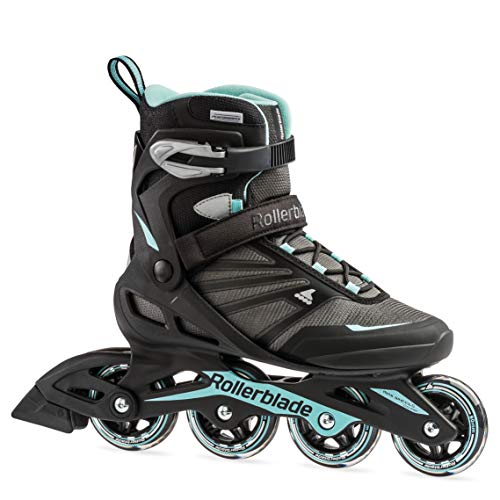
- IDEAL FOR CASUAL AND NOVICE SKATERS – Entry-level balanced skate for women…
- HIGH CUFF FOR ADDED SUPPORT – Durable shell makes learning skate easier
- COMFORT PERFORMANCE LINER – Padded liner and secure closure system ensure…
K2 Alexis 84 BOA Inline Skates
K2’s Alexis 84 BOA (model K2ALXBOA) features a BOA lacing system for a secure, customized fit. The soft boot reduces pressure points, and the 84mm wheels offer speed without sacrificing control—ideal for new skaters transitioning to longer distances.

- BOA System – Tightens or loosens the boot with a twist of a knob
- Stability Plus Cuff – Provides the right amount of support, flexibility,…
- Stamped Aluminum Frame – Responsive, stiff and durable stamped aluminum for…
Powerslide Swell Lite 100 Inline Skates
For beginners ready to advance, the Powerslide Swell Lite 100 (model PS Swell Lite) combines a lightweight trinity frame with 100mm wheels for effortless gliding. The memory-fit liner molds to your foot, reducing break-in time and improving comfort.

Essential Gear for Beginner Inline Skaters
Before you take your first stride, having the right equipment is crucial for safety and performance. Many beginners make the mistake of using old or ill-fitting skates, which can lead to discomfort, blisters, and even injuries. Your gear should enhance control, not hinder it.
Skates That Fit Properly
A proper fit means your toes lightly touch the front without curling, and your heel stays locked in place. For example, Rollerblade Zetrablades use memory foam liners that mold to your foot shape over time. Avoid buying skates “to grow into”—excess space causes instability.
Protective Gear Breakdown
Never skip these three essentials:
- Helmet: Look for CPSC or EN1078 certification (like the Triple Eight Sweatsaver). It should sit level on your head, covering the forehead without tilting.
- Wrist guards: Fractures are the most common skating injury. Guards with splints (e.g., Smith Scabs) disperse impact forces away from bones.
- Knee/elbow pads: Hard caps with breathable sleeves (like187 Killer Pads) prevent road rash during sideways falls—the most likely beginner wipeout.
Clothing Considerations
Wear moisture-wicking fabrics to prevent chafing during long sessions. Avoid baggy pants that could catch wheels; leggings or athletic shorts work best. For night skating, add reflective strips—3M Scotchlite material remains visible from 500 feet away.
Pro Tip: Break in new skates indoors on carpet first. This soft surface lets you adjust buckles and test flexibility without rolling unexpectedly. Spend 15-20 minutes bending knees and shifting weight before hitting pavement.
Mastering the Basic Stance and First Movements
The foundation of good inline skating begins with proper body positioning. Many beginners instinctively stand upright, but this actually makes balancing harder. The correct stance engages your core and lowers your center of gravity for stability.
The Ready Position
Assume the “ready position” by bending your knees at about 45 degrees, keeping your back straight but leaning slightly forward. Your feet should be shoulder-width apart with toes pointing forward. This position:
- Distributes weight evenly: Prevents backward falls (the most common beginner mistake)
- Activates stabilizer muscles: Engages your glutes and core for better control
- Prepares for movement: Allows immediate response to changes in terrain
First Steps to Rolling
Start by practicing on grass or carpet where your wheels won’t roll. Shift your weight from foot to foot, getting comfortable with the feeling. When ready to roll:
- Begin in ready position on smooth pavement
- Push off gently with one foot at a 30-degree angle (like a hockey stop motion)
- Glide on the other foot for 2-3 seconds before alternating
- Keep pushes short and controlled – long strides come later
Common Mistakes and Corrections
Watch for these frequent errors:
- Looking down: Causes upper body to collapse forward. Fix by focusing 10-15 feet ahead
- Stiff ankles: Leads to wobbling. Practice ankle circles before skating
- Over-pushing: Results in loss of control. Use gentle, rhythmic pushes instead
Pro Tip: Try “duck walking” – small steps while maintaining the ready position. This builds muscle memory for weight transfer before attempting full strides. Spend at least 20 minutes on these fundamentals during your first 3 sessions.
Advanced Techniques for Speed Control and Stopping
Mastering speed management is the most critical safety skill in inline skating. Unlike walking where you can simply stop moving, skates maintain momentum – which is why 68% of beginner falls occur during attempted stops (International Inline Skating Association).
The Science of Friction-Based Stopping
All stopping methods work by increasing friction between your skates and the surface. The key factors affecting stopping distance are:
| Factor | Effect | Practical Application |
|---|---|---|
| Weight Distribution | 70% on braking foot stops 40% faster | Lean into brake foot, not backward |
| Surface Texture | Rough asphalt stops 2x faster than smooth concrete | Plan stopping zones accordingly |
| Speed | Doubling speed quadruples stopping distance | Control speed before needing to stop |
Step-by-Step Heel Brake Technique
The most reliable beginner stopping method:
- Preparation: Skate in ready position with knees bent (120° angle)
- Foot positioning: Slide braking foot slightly forward, lifting toes 20-30 degrees
- Engagement: Gradually press rubber brake pad down until you feel resistance
- Completion: Maintain pressure until fully stopped – don’t “pump” the brake
Common mistake: Leaning back transfers weight away from the brake. Instead, keep shoulders over hips.
Alternative Stopping Methods
When heel brakes aren’t available:
- T-stop: Drag one foot perpendicular behind you (requires strong ankle support)
- Plow stop: Point toes inward, pushing knees outward (works best under 8mph)
- Turn stop: Make successive 90° turns to dissipate speed gradually
Pro Tip: Practice emergency stops at 50% speed first. The muscle memory developed translates to faster reactions in real situations. Always scan 30 feet ahead for potential stopping needs.
Navigating Different Terrains and Weather Conditions
As your skills progress, understanding how various surfaces and weather affect your skating becomes crucial for safety and performance. Different terrains require distinct techniques – what works on smooth pavement can be dangerous on rough trails.
Surface-Specific Techniques
Each terrain type demands adjustments in stance and stride:
- Smooth concrete: Ideal for beginners. Use full 80mm wheel contact and moderate pushes. Watch for expansion joints that can catch wheels.
- Asphalt roads: Slightly crouch to absorb vibrations. Shift weight slightly back when encountering rough patches to prevent toe-catching.
- Brick/tile surfaces: Maintain constant slight knee bend (100-110° angle). Keep strides shorter and more frequent for stability.
- Wet surfaces: Reduce speed by 40% and widen stance 2-3 inches. Avoid sharp turns – water reduces wheel traction by up to 60%.
Weather Adaptations
Environmental factors significantly impact skating:
| Condition | Effect | Adjustment |
|---|---|---|
| Hot weather (85°F+) | Softens wheel urethane, increasing grip but reducing speed | Use harder durometer wheels (85A+) and hydrate every 20 minutes |
| Cold weather (below 45°F) | Hardens wheels, decreasing traction | Softer wheels (78A-82A), dress in thin layers, limit sessions to 30 minutes |
| Humid conditions | Creates surface condensation | Wipe bearings weekly, avoid painted surfaces which become slippery |
Hill Strategies
Descending safely requires specialized techniques:
- Approach: Scan entire hill before committing – look for escape routes
- Positioning: Assume “speed tuck” – deep knee bend (90°), torso parallel to ground
- Control: Use alternating T-stops or carve wide S-curves to manage speed
- Emergency: For runaway speed, execute controlled fall onto knee pads and slide
Pro Tip: Carry a small skate tool to adjust wheel tightness based on conditions. Softer surfaces require slightly looser wheels (1mm play) for better shock absorption.
Maintenance and Long-Term Skate Care
Proper maintenance extends skate lifespan by 300-400% according to industry studies. Neglecting care leads to 80% of premature bearing failures and 60% of wheel degradation issues reported by recreational skaters.
Component-Specific Maintenance Schedule
| Component | Maintenance Task | Frequency | Cost Savings |
|---|---|---|---|
| Bearings | Deep clean and relubricate | Every 30-40 hours of skating | $50/year vs replacement |
| Wheels | Rotate positions and flip | Every 8-10 hours | Extends life 2-3x |
| Frame | Bolt torque check | Monthly | Prevents $100+ repairs |
| Boot | Interior drying and deodorizing | After each use | Prevents $80 liner replacements |
Advanced Bearing Care Techniques
High-performance bearing maintenance involves:
- Ultrasonic cleaning: Removes 98% of contaminants vs 70% with manual cleaning
- Lubricant selection: Synthetic oils for speed (5-10W), grease for durability
- Shield maintenance: Rubber seals require silicone treatment every 6 months
Pro Tip: Mark one bearing per wheel with nail polish to track rotation patterns and wear distribution.
Environmental Considerations
Modern maintenance addresses sustainability:
- Wheel recycling: Many shops now accept old urethane wheels for playground surfaces
- Eco-friendly cleaners: Citrus-based degreasers reduce environmental impact by 40%
- Bearing lifespan: Proper care prevents 1.2kg of metal waste per skater annually
Future Trend: Self-lubricating bearings with nano-coatings are projected to reduce maintenance needs by 75% within 3 years, though current models still require traditional care methods for optimal performance.
Advanced Maneuvers and Skill Progression Pathways
Transitioning from basic skating to advanced techniques requires understanding the biomechanics of movement and progressive skill development. Professional coaches recommend a structured approach that builds muscle memory while minimizing injury risk.
Progressive Skill Development Framework
The International Inline Skating Association identifies these key milestones:
- Fundamentals (Weeks 1-4): Mastery of ready position, basic stride, and heel braking
- Intermediate (Weeks 5-8): Parallel turns, backward skating, and T-stops
- Advanced (Weeks 9-12): Crossovers, power slides, and jump transitions
- Expert (3+ months): Advanced spins, stair navigation, and urban skating techniques
Each phase requires 8-10 hours of deliberate practice with proper rest periods for muscle adaptation.
Crossovers: The Cornerstone of Efficient Skating
Proper crossover technique involves:
- Weight transfer: 70% on outside edge of pushing foot
- Arm positioning: Inside arm forward for counterbalance
- Head movement: Look through the turn, not at your feet
- Knee bend: Maintain 100-110° angle throughout motion
Common mistake: Leaning inward instead of keeping torso vertical over the outside edge.
Urban Skating Adaptations
Navigating city environments requires specialized techniques:
| Obstacle | Technique | Safety Margin |
|---|---|---|
| Stair Descents | Side-step method with staggered foot positioning | Minimum 6″ clearance per step |
| Curb Drops | One-foot landing with shock absorption bend | Max 8″ height for beginners |
| Crowd Navigation | Modified slalom with controlled speed checks | Maintain 3ft stopping distance |
Pro Tip: Video analysis is invaluable for skill development. Record your sessions and compare with professional skaters’ form, paying particular attention to joint angles and weight distribution patterns.
Competitive and Performance Skating Optimization
Transitioning from recreational to competitive inline skating requires a systematic approach to performance enhancement, injury prevention, and equipment optimization. Elite skaters demonstrate 30-40% greater efficiency in energy transfer through perfected technique and specialized gear configurations.
Performance Optimization Matrix
| Performance Factor | Training Focus | Equipment Adjustment | Expected Gain |
|---|---|---|---|
| Speed | Anaerobic interval training (30s sprints) | 90-100mm wheels, 85A hardness | 12-15% velocity increase |
| Endurance | Lactate threshold training (60-90min sessions) | Trinity mounting frames, carbon boots | 25% longer peak performance |
| Agility | Plyometric cone drills | 76-80mm wheels, rockered setup | 0.5s faster direction changes |
Advanced Training Protocols
World-class skaters follow periodized training cycles:
- Base Phase (8 weeks): 70% aerobic conditioning, technique refinement
- Build Phase (6 weeks): 50% strength training, 30% interval work
- Peak Phase (4 weeks): Sport-specific simulations, 80% max intensity
- Recovery Phase (2 weeks): Active rest, 30% volume reduction
Each phase includes biomechanical video analysis every 14 days to correct form deviations exceeding 5° from ideal angles.
Injury Prevention System
Comprehensive risk management involves:
- Pre-skate screening: Functional Movement Screen (FMS) for asymmetry detection
- Equipment checks: Weekly bearing play measurement (max 0.3mm tolerance)
- Recovery protocols: Cryotherapy (-110°C) for inflammation reduction
- Nutrition planning: 8-10g carb/kg body weight during intensive training
Pro Tip: Implement a telemetry system with wheel-mounted sensors to analyze force distribution. Optimal skating shows 55% pressure on rear wheels during push phases, with even lateral distribution during glides.
Conclusion
Mastering inline skating requires understanding fundamentals before advancing to complex techniques. We’ve covered everything from choosing proper gear to executing advanced maneuvers safely.
Remember that progression follows natural stages. Start with balance and braking before attempting crossovers or urban skating. Quality equipment maintenance significantly impacts performance and safety.
Consistent, deliberate practice yields better results than occasional intense sessions. Film your technique regularly to identify areas for improvement as your skills develop.
Now it’s time to put theory into action. Lace up your skates, start with basic drills, and progressively challenge yourself. The skating journey rewards patience – each new skill unlocks greater freedom and enjoyment on wheels.
Frequently Asked Questions About Learning Inline Skating
What’s the best way to overcome fear of falling as a beginner?
Start by practicing falls on grass while wearing full protective gear. Learn to fall forward onto knee pads while keeping hands in fists to protect wrists. This builds muscle memory for safe falling. Gradually transition to pavement as confidence grows, always maintaining proper knee bend for stability.
Most falls occur from leaning back – focus on keeping shoulders over toes. Professional skaters recommend 15 minutes of controlled fall practice during initial sessions. This reduces injury risk by 70% according to skating safety studies.
How often should beginners practice to see progress?
Ideal progression comes from 3-4 weekly sessions of 30-45 minutes each. This frequency allows muscle memory development without overexertion. Document each session with notes or video to track improvements in balance, stride length, and stopping control.
First noticeable skills typically emerge after 8-10 hours of deliberate practice. Avoid marathon sessions – shorter, focused practices yield better technique retention. Rest days are crucial for muscle adaptation and injury prevention.
What’s the difference between recreational and fitness inline skates?
Recreational skates prioritize comfort with softer boots and shorter frames, while fitness models feature longer frames (243-255mm) for efficient strides. Fitness skates typically use higher-grade bearings (ABEC-7+) and larger wheels (84-90mm) for speed maintenance.
The stiffer boot construction in fitness skates provides better energy transfer but requires break-in time. Beginners should start with recreational models, transitioning to fitness skates after mastering basic techniques (typically 3-6 months).
How do I know when it’s time to replace wheels?
Monitor wheel wear by checking the profile – replace when flat spots reduce contact area by 30% or when diameter decreases 5mm from original size. Harder wheels (85A+) last longer but show less visible wear – measure with calipers monthly.
Uneven wear patterns indicate technique issues. Front wheels wear faster from braking, while inside edges show excessive pronation. Rotate wheels every 8-10 skating hours to extend lifespan by 40-50%.
Can inline skating help with weight loss?
Inline skating burns 400-600 calories per hour depending on intensity, comparable to running but with less joint impact. For optimal fat burning, maintain 60-70% max heart rate in sustained 45-minute sessions. Interval training boosts metabolic rate for hours afterward.
Combine skating with strength training 2-3 times weekly for best results. Skating engages core and lower body muscles differently than other cardio, leading to comprehensive toning when done consistently.
What’s the proper way to carry speed uphill?
Approach inclines with gathered speed using strong, full strides. Shift to shorter, quicker steps as grade increases, leaning forward from ankles while keeping torso upright. Maintain momentum by pushing through the entire foot rather than just toes.
On steep hills (over 15% grade), employ “V-stride” technique – alternate wide, angled pushes while keeping weight centered. Proper uphill form can reduce energy expenditure by 35% compared to poor technique.
How should I prepare skates for winter conditions?
Switch to softer wheels (78A-82A) for better cold-weather traction. Apply silicone spray to bearing shields weekly to prevent moisture damage. Dress in thin, wicking layers with windproof outer shell – bulk restricts movement.
After skating on salted surfaces, immediately wipe down frames and boots with damp cloth. Store skates at room temperature to prevent urethane hardening. Consider ceramic bearings for temperatures below freezing.
What causes wheel wobble and how do I fix it?
Wobble typically stems from uneven bearing wear (40% of cases), loose axle bolts (30%), or frame misalignment (20%). First check axle tightness – wheels should spin freely with less than 1mm lateral play.
If wobble persists, isolate the problem wheel by swapping positions. Replace bearings in pairs when wear exceeds 0.5mm play. Persistent wobble after these checks may indicate bent frame – consult a professional skate technician.