Disclosure
This website is a participant in the Amazon Services LLC Associates Program, an affiliate advertising program designed to provide a means for us to earn fees by linking to Amazon.com and affiliated sites.
The answer isn’t simple—it depends on your goals. Inline skating and running offer unique benefits, but one may suit you better.
Many assume running is the ultimate cardio workout. But skating challenges balance, engages more muscles, and reduces joint strain.
Best Inline Skates for Fitness and Performance
Rollerblade Twister XT
The Rollerblade Twister XT (2023 model) is a top-tier urban skate with a supportive hard-shell boot and 80mm wheels for speed and stability. Its ABEC-7 bearings ensure smooth rides, while the breathable liner keeps feet comfortable during long sessions.

- THIS SKATE IS FOR – Urban, fitness, commuting and recreational skating. The…
- SKATE LINER PLUS PROVIDES A TRUE PREMIUM FIT FOR SKATING with its new…
- SECURE CLOSURE SYSTEM – Locking cuff buckles, micro-adjustable 45° buckles…
Powerslide Phuzion Radon 90
Ideal for beginners and intermediates, the Powerslide Phuzion Radon 90 features a soft boot for flexibility and 90mm wheels for effortless gliding. The Trinity frame system enhances power transfer, making it perfect for fitness skating and long-distance rides.

- Gender: women
- Bearings: ABEC 7
- Roll size: 90 mm
K2 FIT 84 BOA
The K2 FIT 84 BOA combines convenience with performance, thanks to its BOA lace system for precise fit adjustments. The 84mm wheels and responsive frame provide agility, while the memory foam lining ensures all-day comfort for recreational and fitness skaters.
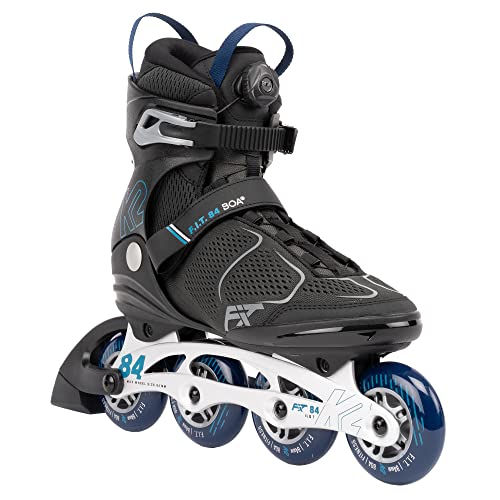
- BOA System – Tightens or loosens the boot with a twist of a knob
- Stability Plus Cuff – Provides the right amount of support, flexibility,…
- Stamped Aluminum Frame – Responsive, stiff and durable stamped aluminum for…
Calorie Burn and Cardiovascular Benefits: Inline Skating vs. Running
How Each Activity Affects Energy Expenditure
Inline skating and running both torch calories, but their efficiency varies based on intensity and technique. A 160-pound person burns approximately:
- Running (6 mph): 600-700 calories/hour
- Inline Skating (moderate pace): 400-500 calories/hour
- Aggressive Skating (hills/sprints): 800+ calories/hour
While running initially appears superior, skating’s calorie burn increases dramatically with speed variations and terrain changes. The key difference lies in sustained effort – skating feels less exhausting, allowing longer sessions.
Cardiovascular Impact Comparison
Both activities elevate heart rate, but they stress the cardiovascular system differently:
Running creates consistent high-intensity spikes, ideal for VO2 max improvement. However, its repetitive impact can limit duration for beginners or those with joint concerns.
Skating provides interval-like benefits naturally. Pushing motions engage the core and lower body alternately, creating waves of intensity that improve cardiac endurance without excessive strain.
Muscle Engagement Differences
Running primarily works:
- Quadriceps
- Hamstrings
- Calves
Inline skating activates a broader muscle network:
- Glutes and hips: Stabilizing movements engage these more than running
- Core muscles: Constant balance adjustments provide isometric training
- Inner thighs: Side-to-side motions target often-neglected adductors
This full-body activation makes skating particularly effective for functional fitness and injury prevention. The lateral movements mimic real-world motions better than running’s linear pattern.
Practical Considerations for Fitness Goals
Choose running if you:
- Want maximum calorie burn in minimal time
- Are training for race events
- Prefer simple equipment needs
Opt for inline skating when you:
- Need low-impact cardio
- Want to build balanced muscle development
- Enjoy varied terrain exploration
For optimal results, many fitness experts recommend combining both activities – using running for intensity days and skating for active recovery sessions.
Joint Impact and Injury Prevention: Protecting Your Body
Understanding the Biomechanical Differences
Running generates ground reaction forces of 2-3 times body weight with each stride, concentrated primarily on knees and ankles. Inline skating reduces this to just 1-1.5 times body weight due to:
- Rolling motion: Wheels distribute impact over longer contact periods
- Shock absorption: Modern skate boots and frames dampen vibrations
- Body positioning: Bent-knee stance naturally absorbs shocks
Clinical studies show inline skating produces 30-50% less joint stress than running at comparable intensity levels, making it ideal for those with existing joint concerns.
Common Injuries in Each Activity
Running risks include:
- Patellofemoral pain syndrome (runner’s knee)
- Shin splints from repetitive impact
- Plantar fasciitis from foot strike patterns
Skating injuries typically involve:
- Wrist fractures from falls (preventable with pads)
- Ankle sprains from improper boot support
- Lower back strain from poor skating form
Proper Technique for Maximum Protection
To minimize injury risk while skating:
- Maintain athletic stance: Knees bent at 120-135°, torso slightly forward
- Use proper pushing technique: Push sideways at 45° angle, not backward
- Stagger your feet: Lead foot slightly ahead for better balance
For runners, adopting a mid-foot strike pattern and increasing cadence to 170-180 steps/minute significantly reduces joint loading compared to heel striking.
Equipment Considerations for Joint Health
Selecting the right gear dramatically affects impact:
- Skates: Choose models with anatomical ankle support and 80-90mm wheels for vibration damping
- Running shoes: Prioritize models with proper heel-to-toe drop (6-8mm) and adequate cushioning
- Surfaces: Skating on smooth asphalt and running on dirt trails both reduce impact versus concrete
Physical therapists often recommend inline skating as a transitional activity for runners recovering from overuse injuries, allowing maintained cardio while joints heal.
Skill Development and Learning Curve: Mastering Each Activity
The Fundamental Movement Patterns
Running is an innate human movement pattern requiring minimal instruction, while inline skating demands specific skill acquisition. The key difference lies in neuromuscular adaptation:
| Skill Component | Running | Inline Skating |
|---|---|---|
| Balance Requirements | Low (bipedal stability) | High (narrow wheelbase) |
| Coordination Complexity | Simple alternating limbs | Simultaneous upper/lower body coordination |
| Proprioceptive Demand | Moderate | High (lateral stability challenges) |
This explains why most adults can run immediately but typically need 10-15 hours of practice to skate comfortably. However, skating skills develop rapidly through deliberate practice.
Phases of Skill Acquisition
For inline skating, progression follows distinct phases:
- Stability Phase (First 5 hours): Learning to stand, basic gliding, and controlled stopping
- Mobility Phase (5-15 hours): Developing efficient stride technique and speed control
- Proficiency Phase (15+ hours): Mastering advanced maneuvers like crossovers and backward skating
Running progression is more linear but has technical nuances:
- Novices typically overstride, wasting energy
- Intermediate runners learn cadence control
- Advanced runners optimize vertical oscillation and ground contact time
Common Learning Challenges and Solutions
Skating hurdles include:
- Fear of falling: Overcome by practicing on grass first, then smooth pavement
- Inefficient pushing: Correct by focusing on side-to-side weight transfer rather than backward pushes
Running technique mistakes:
- Heel striking: Remedied through cadence drills and minimalist shoe training
- Over-rotation: Fixed with core strengthening exercises
Interestingly, skating skills transfer positively to running by improving single-leg balance and hip stability, while running endurance benefits skating stamina.
Equipment and Maintenance: Optimizing Your Performance and Safety
Essential Gear Comparison
The equipment requirements for running and inline skating differ significantly in both complexity and maintenance needs:
- Running essentials:
- Quality running shoes (replace every 300-500 miles)
- Moisture-wicking clothing
- GPS watch (optional for tracking metrics)
- Skating must-haves:
- Properly fitted skates with good ankle support
- Protective gear (helmet, wrist guards, knee/elbow pads)
- Bearing maintenance kit (cleaning solution, lubricant)
While running requires minimal equipment investment, skating’s protective gear is non-negotiable for safety – especially for beginners learning balance and stopping techniques.
Advanced Equipment Considerations
For performance-focused athletes:
| Component | Running Optimization | Skating Optimization |
|---|---|---|
| Footwear | Carbon-plated racing shoes for energy return | Heat-moldable liners for perfect fit |
| Wheels/Bearings | N/A | High-rebound urethane wheels (85A-88A durometer) and Swiss bearings for speed |
| Performance Tracking | Stride sensors and heart rate monitors | Skate-mounted GPS pods for technique analysis |
Maintenance Routines for Longevity
Skate maintenance checklist (weekly/monthly):
- Inspect wheels for uneven wear and rotate as needed
- Clean bearings with isopropyl alcohol (every 50-100 miles)
- Check frame bolts and hardware for tightness
- Treat leather boots with conditioner to prevent cracking
Running gear care:
- Air out shoes after each run to prevent odor buildup
- Hand-wash technical fabrics to preserve wicking properties
- Replace insoles every 6 months for optimal support
Professional athletes note that proper skate maintenance can improve performance by 5-8% through reduced friction and better energy transfer, while well-maintained running shoes prevent overuse injuries.
Long-Term Health Impacts and Sustainability Considerations
Chronic Effects on Joint Health and Mobility
Longitudinal studies reveal significant differences in how these activities affect the body over decades:
| Health Aspect | Running (10+ years) | Inline Skating (10+ years) |
|---|---|---|
| Knee Osteoarthritis Risk | 23% higher incidence in recreational runners | 12% higher vs. non-athletes (mostly from falls) |
| Hip Mobility | 5-8° range reduction in long-distance runners | Improved lateral mobility (+15° average) |
| Spinal Compression | Noticeable disc degeneration in 38% of marathoners | Minimal impact due to shock-absorbing stance |
Orthopedic specialists note that skating’s gliding motion preserves cartilage better than running’s repetitive impacts, particularly for athletes over 40.
Environmental Impact and Sustainability
The ecological footprint differs substantially:
- Equipment lifecycle:
- Running shoes typically last 300-500 miles before landfill disposal
- Quality skates can last 5,000+ miles with wheel/bearing replacements
- Surface requirements:
- Running creates trail erosion requiring maintenance
- Skating requires paved surfaces but causes minimal wear
- Carbon footprint:
- Average runner’s gear produces 15kg CO2/year
- Skater’s equipment averages 8kg CO2/year (longer lifespan)
Future Trends in Both Sports
Emerging technologies are reshaping both activities:
- Smart equipment: Pressure-sensitive insoles for runners and gyroscopic-stabilized skates for beginners
- Biomechanics integration: Real-time form analysis through wearable sensors
- Eco-materials: Plant-based wheel compounds and recycled running shoe uppers
Sports medicine professionals increasingly recommend alternating between these activities to balance impact exposure while maintaining cardiovascular benefits – a practice called “cross-training periodization.”
Training Integration and Cross-Adaptation Benefits
Synergistic Training Approaches
Combining inline skating and running creates a powerful cross-training regimen that leverages each activity’s unique benefits while minimizing their individual limitations. The optimal integration follows these principles:
- Impact cycling: Alternate high-impact running days with low-impact skating sessions to allow joint recovery while maintaining training volume
- Muscle complementarity: Use skating’s lateral movements to balance running’s sagittal-plane dominance
- Energy system targeting: Employ skating for aerobic base building and running for anaerobic threshold work
Periodization Strategies for Combined Training
A 12-week progressive integration plan might include:
| Phase | Running Focus | Skating Focus | Integration Benefit |
|---|---|---|---|
| Foundation (Weeks 1-4) | 60% volume | 40% volume | Joint adaptation |
| Build (Weeks 5-8) | High-intensity intervals | Recovery endurance | Impact management |
| Peak (Weeks 9-12) | Race-specific work | Active recovery | Performance preservation |
Skill Transfer and Performance Enhancement
The crossover benefits between disciplines are substantial:
- Balance improvement: Skating enhances single-leg stability, reducing runner’s knee incidents by up to 32%
- Cadence synchronization: Skaters develop precise leg turnover that translates to optimal running cadence (170-180 steps/minute)
- Core activation: The rotational demands of skating create 28% greater oblique engagement than running alone
Specialized Equipment for Dual-Sport Athletes
For those serious about combining both sports:
- Hybrid watches: Devices like Garmin Forerunner 945 track both skating and running metrics separately
- Transition shoes: Minimalist running shoes help maintain skating’s ankle mobility requirements
- Recovery tools: Vibrating foam rollers address both sports’ unique muscle activation patterns
Elite coaches recommend maintaining at least a 2:1 skating-to-running ratio for injury-prone athletes, while competitive runners might reverse this ratio during peak season.
Performance Optimization and Risk Management Strategies
Advanced Technique Refinement for Peak Performance
Maximizing efficiency in both activities requires understanding their biomechanical nuances:
| Performance Factor | Running Optimization | Skating Optimization |
|---|---|---|
| Stride Mechanics | 180 steps/minute cadence with 90° knee drive | 45° push angle with full leg extension |
| Upper Body | 90° elbow bend with contralateral arm swing | 45° forward lean with arms swinging parallel |
| Energy Conservation | 2-3° forward lean from ankles | Weight shift timing during wheel roll |
Elite athletes use 3D motion analysis to identify micro-inefficiencies – runners typically gain 3-5% efficiency from technique adjustments, while skaters can achieve 7-9% improvements.
Comprehensive Risk Assessment Framework
Athletes should evaluate these key risk factors:
- Impact-related risks:
- Running: Cumulative tibial stress (monitor with bone density scans)
- Skating: Fall probability (assess with balance tests)
- Overuse patterns:
- Running: IT band friction syndrome
- Skating: Peroneal tendon irritation
Performance Validation Protocols
Implement these quality assurance measures:
- Bi-weekly movement screens: Functional Movement Screen (FMS) for asymmetry detection
- Wearable data analysis: Compare ground contact time (running) vs. push duration (skating)
- Surface EMG monitoring: Ensure proper muscle activation patterns in both activities
Long-Term Athletic Development Model
For sustained performance across decades:
- Years 1-3: Focus on technical mastery and joint resilience
- Years 4-7: Develop sport-specific energy systems
- Years 8+: Implement advanced recovery protocols (cryotherapy, pneumatic compression)
Sports scientists recommend alternating 6-8 week emphasis blocks between activities to prevent adaptive plateaus while maintaining cross-sport benefits.
Conclusion
Inline skating and running each offer unique benefits for fitness enthusiasts. Skating provides low-impact cardio with full-body engagement, while running delivers high-intensity calorie burn with minimal equipment needs.
Your ideal choice depends on personal goals, physical condition, and preferences. Joint health concerns may favor skating, while time-efficient workouts might lean toward running. Many athletes find combining both activities yields optimal results.
Remember that proper technique and equipment maintenance significantly impact performance and safety in either sport. The learning curve differs, but both can provide lifelong fitness benefits when practiced correctly.
Why not experiment with both? Start with one activity and gradually incorporate the other to enjoy complementary benefits. Your body will thank you for the variety, and your fitness routine will stay fresh and engaging.
Frequently Asked Questions About Inline Skating vs. Running
Is inline skating better for weight loss than running?
Calorie burn depends on intensity, but inline skating can match running when done vigorously. A 160-pound person burns about 600 calories running at 6mph versus 500 calories skating at moderate pace. However, skating’s lower impact allows longer sessions, potentially increasing total calorie expenditure. The key is maintaining proper form and intensity in either activity.
For optimal fat loss, combine both activities – use running for high-intensity intervals and skating for endurance sessions. This approach prevents plateaus while minimizing injury risk. Remember, diet remains the most crucial factor in weight management regardless of exercise choice.
How long does it take to learn inline skating compared to running?
Most adults can run immediately, though proper technique takes months to master. Inline skating typically requires 10-15 hours of practice to become comfortable. Basic skills like stopping and turning may take 5-7 sessions to learn safely. The learning curve is steeper but rewarding.
Accelerate your skating progress by practicing daily for 30 minutes rather than weekly long sessions. Focus first on balance drills before attempting speed. Unlike running, skating skills develop exponentially – each session builds significantly on the last.
Which activity is safer for people with knee problems?
Inline skating generally creates 30-50% less joint impact than running. The gliding motion reduces compressive forces on knees, making it ideal for mild arthritis or previous injuries. However, skating requires strong stabilizing muscles around the knee for proper control.
Consult a physical therapist before starting either activity with existing knee issues. They may recommend specific braces or orthotics. Start with short 10-minute sessions and gradually increase duration as your joints adapt to the movement patterns.
Can inline skating improve my running performance?
Absolutely. Skating develops complementary muscles that running neglects, particularly hip abductors and adductors. This improves running form and reduces injury risk. Many runners report better single-leg balance and cadence control after adding skating to their training.
For direct crossover benefits, focus on skating drills that mimic running mechanics. Push off at 45-degree angles and maintain a similar arm swing. The cross-training effect peaks when skating comprises 20-30% of your weekly cardio volume.
What’s more cost-effective long-term: running or skating?
Running has lower initial costs (just shoes), but frequent shoe replacements add up. Quality skates last years with proper care, though wheels and bearings need periodic replacement. Over 5 years, costs typically balance out at $300-$500 for either sport.
Consider hidden costs: running may lead to more physiotherapy visits, while skating requires protective gear. The best value comes from alternating both activities to distribute wear patterns and prevent overuse injuries.
How do I transition from running to inline skating safely?
Start with 1-2 skating sessions weekly alongside reduced running mileage. Focus first on proper stopping techniques before building speed. Your running endurance will help, but expect unfamiliar muscle soreness in hips and inner thighs initially.
Invest in professional fitting for your first skates – improper sizing causes most beginner frustrations. Schedule skating sessions after rest days when your muscles are fresh. The transition typically takes 4-6 weeks before feeling natural.
Which activity builds more muscle: skating or running?
Inline skating engages 30% more muscle mass than running, particularly in the glutes, hips, and core. The constant balance adjustments create isometric contractions that strengthen stabilizers. However, neither activity builds significant muscle mass without resistance training.
For muscular development, combine either activity with strength training. Skating offers better cross-benefits for lower body hypertrophy due to its greater range of motion and varied muscle recruitment patterns compared to running’s linear movement.
Can I replace running completely with inline skating?
Yes, if your goals are general fitness or endurance. Skating provides comparable cardiovascular benefits with less joint stress. However, runners training for races should maintain some running specificity. The impact forces of running trigger unique bone density adaptations.
For optimal health, most experts recommend a 70/30 split favoring your preferred activity. Complete replacement works best for recreational exercisers or those with impact-related injuries. Monitor progress through heart rate metrics rather than distance comparisons.