Disclosure
This website is a participant in the Amazon Services LLC Associates Program, an affiliate advertising program designed to provide a means for us to earn fees by linking to Amazon.com and affiliated sites.
Is inline skating hard? No, but it requires practice. With the right approach, anyone can learn—even if you’ve never skated before.
Many assume inline skating is only for athletes. But with proper technique and patience, beginners progress quickly. The key is starting slow.
Best Inline Skates for Beginners
Rollerblade Zetrablade Women’s/Men’s Inline Skates
The Rollerblade Zetrablade (RB ZT) is perfect for beginners, offering a comfortable fit with breathable mesh and a supportive cuff. Its soft boot design reduces foot fatigue, while the aluminum frame ensures stability for smooth rides on pavement and trails.
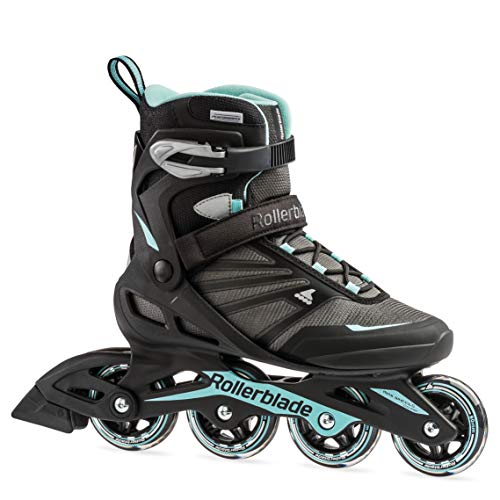
- IDEAL FOR CASUAL AND NOVICE SKATERS – Entry-level balanced skate for women…
- HIGH CUFF FOR ADDED SUPPORT – Durable shell makes learning skate easier
- COMFORT PERFORMANCE LINER – Padded liner and secure closure system ensure…
K2 Kinetic 80 Pro Inline Skates
The K2 Kinetic 80 Pro features a responsive, lightweight design with an adjustable lace-and-buckle system for a secure fit. The 80mm wheels provide speed and control, making them ideal for fitness skating and casual cruising.
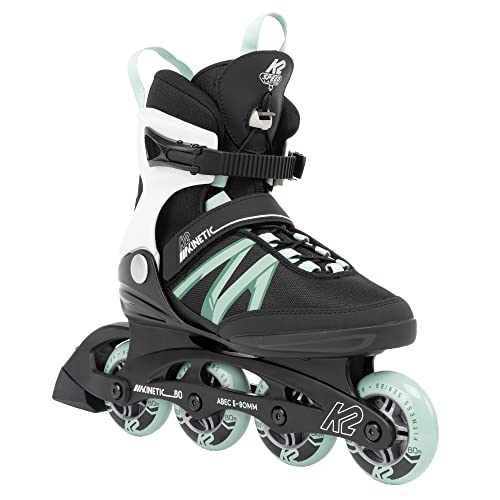
- Speed Lacing – Secures skates with one pull making it easy to put on and…
- Stability Plus Cuff – Provides the right amount of support, flexibility,…
- F.B.I. frame – is a vibration-absorbing composite frame that is interlocked…
Powerslide Phuzion Radon 80 Inline Skates
The Powerslide Phuzion Radon 80 (PS Radon 80) combines affordability with performance, featuring a durable hard-shell boot and 80mm wheels for stability. The trinity mounting system enhances power transfer, making it great for beginners transitioning to intermediate skating.
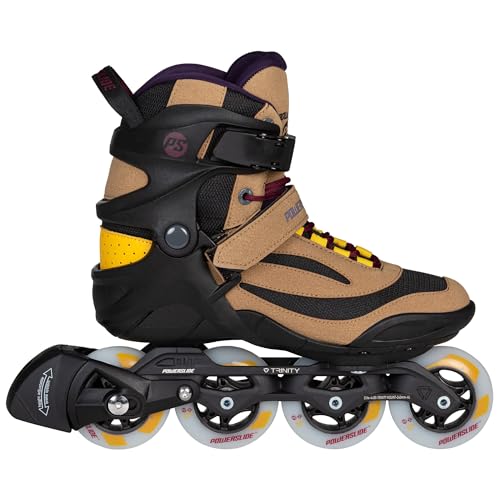
- Brown / black
What Makes Inline Skating Challenging for Beginners?
Inline skating looks effortless when watching experienced skaters glide, but beginners often face a steep learning curve. The primary challenge lies in mastering balance and coordination while moving on wheels. Unlike walking or running, skating requires distributing weight evenly while maintaining forward momentum, which can feel unnatural at first.
The Physics of Balance and Movement
Skating relies on three key physical principles: center of gravity, friction, and momentum. Beginners tend to lean too far forward or backward, disrupting stability. Proper stance involves bending knees slightly and keeping shoulders over toes—similar to a squat position. This lowers your center of gravity, improving control.
- Common Mistake: Standing upright increases wobbling because your weight isn’t anchored.
- Fix: Practice “duck walking” (small steps in skates) to build muscle memory for the correct posture.
Fear of Falling and How to Overcome It
Falling is inevitable, but fear often amplifies difficulty. New skaters tense up, making movements jerky and unstable. Protective gear (wrist guards, knee pads, helmets) reduces injury risk, allowing you to focus on technique. Learn to fall safely by:
- Dropping to your knees (protected by pads) first.
- Using wrists guards to absorb impact if falling forward.
- Tucking and rolling sideways to distribute force.
Turning and Stopping: The Technical Hurdles
Turning requires shifting weight diagonally, while stopping demands precise pressure on the heel brake or T-stop technique. For example, a right turn involves leaning right while pushing off the left skate’s outer edge. Beginners often struggle because:
- They look down at their feet instead of forward, disrupting balance.
- They brake abruptly, causing loss of control.
Pro Tip: Practice in an empty parking lot or smooth pavement. Start with wide turns and gentle stops, gradually increasing difficulty as confidence grows.
Understanding these challenges—and how to address them—transforms skating from frustrating to exhilarating. With patience and targeted practice, even clumsy first attempts evolve into fluid motion.
Essential Techniques to Master Inline Skating Quickly
Progressing from wobbly beginner to confident skater requires mastering fundamental techniques. These core skills form the foundation for all advanced maneuvers and dramatically reduce the learning curve when practiced correctly.
The Proper Stance: Your Foundation for Success
Your skating stance determines everything – balance, control, and efficiency of movement. The optimal position resembles an athletic ready stance:
- Feet shoulder-width apart (slightly wider than your normal standing position)
- Knees bent at about 120-degree angle (imagine sitting in an invisible chair)
- Torso leaning slightly forward from the hips, not the waist
- Arms bent at 90 degrees and held naturally at your sides
This stance lowers your center of gravity and prepares your muscles to absorb vibrations and maintain control. Many beginners make the mistake of straightening their legs when they feel unstable, which actually makes balancing harder.
The Push-and-Glide Technique: Creating Forward Motion
Generating smooth forward movement involves a precise sequence:
- Start in proper stance with weight evenly distributed
- Shift 70% of your weight to your dominant foot
- Push outward at a 45-degree angle with your non-dominant foot
- Maintain the push until your leg is nearly straight
- Return your pushing foot underneath your body while gliding on the dominant foot
- Alternate sides to maintain momentum
The key is pushing outward rather than backward. This creates more efficient propulsion and better balance. Each push should come from your whole leg, not just your foot.
Stopping Methods: From Basic to Advanced
Learning to stop safely is crucial for building confidence. Start with these methods in order of difficulty:
- Heel Brake Stop: Shift weight to non-brake foot, extend brake foot forward, and gradually apply pressure to the brake pad
- T-Stop: Drag one foot perpendicular behind you, applying light pressure to the wheels
- Powerslide (Advanced): A controlled sideways slide requiring precise weight distribution and edge control
Practice each stopping method at slow speeds first. The most common mistake is putting too much weight on the braking foot, which can cause spins or falls. Always look where you want to go, not at your feet.
These techniques may feel unnatural at first, but with consistent practice, they’ll become second nature. Dedicate 15-20 minutes per session to drilling these fundamentals before attempting more advanced skills.
Advanced Techniques for Improving Speed and Control
Once you’ve mastered basic inline skating skills, refining your technique will help you skate faster, smoother, and with greater precision. These advanced concepts focus on energy efficiency and precise body mechanics.
Weight Distribution and Edge Control
Professional skaters achieve fluid motion through expert edge work. Each skate has two edges:
| Edge | Function | Application |
|---|---|---|
| Inside Edge | Primary turning edge | Used for sharp turns and maintaining balance during crossovers |
| Outside Edge | Stability and power generation | Essential for powerful strides and maintaining straight-line speed |
To practice edge control, try serpentine patterns by alternately pressing on each edge while moving forward. The deeper your edge angle, the sharper your turn will be.
The Science of Efficient Striding
Maximizing your stride efficiency involves three key biomechanical principles:
- Full leg extension: Each push should utilize your entire leg from hip to toe for maximum power
- Recovery phase: Bring your foot back under your body in a straight line to minimize energy waste
- Arm swing coordination: Opposite arm should swing forward with each stride for balance and momentum
Common mistakes include short, choppy strides and failing to fully extend the pushing leg. These reduce efficiency by up to 40% according to sports biomechanics research.
Mastering Crossovers for Tight Turns
Crossovers allow you to maintain speed while turning sharply. The technique involves:
- Approaching the turn in a deep knee bend
- Crossing your outside foot over your inside foot
- Pushing outward with your inside foot as it leaves the ground
- Maintaining upper body lean into the turn
Practice this on large circles first, gradually decreasing the radius as you improve. The key is timing – your push should happen just as your crossed foot touches down.
Advanced Braking Techniques
Beyond basic stops, these methods offer more control:
- Parallel Slide: Both skates turn perpendicular to direction of travel while maintaining parallel position
- Magic Slide: One foot points forward while the other points backward, creating maximum friction
- Powerstop: An aggressive 90-degree turn that scrubs speed quickly through wheel friction
These techniques require proper protective gear and should be learned on smooth, open surfaces. Always practice at slow speeds first, gradually increasing velocity as your confidence grows.
Customizing Your Setup for Different Skating Styles
Your inline skate configuration dramatically affects performance and should be tailored to your skating style. Understanding component interactions helps optimize your setup for specific disciplines.
Wheel Selection and Durometer Ratings
Wheel hardness (measured in durometer) and diameter impact performance:
| Skating Style | Recommended Wheel Size | Ideal Durometer | Performance Characteristics |
|---|---|---|---|
| Recreational/Fitness | 80-90mm | 78A-82A | Balanced grip and roll for general skating |
| Aggressive | 54-60mm | 88A-94A | Harder for slide tricks, smaller for stability |
| Speed Skating | 100-125mm | 84A-86A | Larger diameter for maintaining momentum |
Advanced skaters often use mixed wheel setups (rockering) where middle wheels are slightly larger for better maneuverability.
Frame Materials and Configuration
Frame choice affects energy transfer and responsiveness:
- Aluminum frames: Offer maximum power transfer but less vibration dampening
- Composite frames: Provide better shock absorption with minimal weight penalty
- Carbon fiber frames: Deliver the best stiffness-to-weight ratio for competitive skating
For urban skating, consider frames with integrated shock absorbers. Speed skaters should prioritize stiffness, while slalom skaters benefit from shorter frame lengths.
Bearing Maintenance and Performance
ABEC ratings measure bearing precision, but other factors matter more for most skaters:
- Cleaning frequency: Every 20-30 hours of skating in dry conditions
- Lubrication: Use speed cream or Teflon-based lubricants (not WD-40)
- Replacement signs: Grinding noises, inconsistent roll, or visible rust
For maintenance:
1. Remove shields with a pin
2. Soak in degreaser for 15 minutes
3. Dry thoroughly
4. Apply 1 drop of lubricant per bearing
5. Reinstall shields
Boot Customization for Optimal Fit
Professional fitting techniques include:
- Heat molding: Many high-end boots can be custom-formed to your foot shape
- Ankle padding: Adjustable cuffs help prevent heel lift without restricting movement
- Insole upgrades: Replace stock insoles with orthopedic or performance models
Remember that new skates require 8-10 hours of break-in time. If pressure points persist after this period, consult a professional skate technician for adjustments.
Long-Term Skill Development and Performance Optimization
Transitioning from intermediate to advanced inline skating requires deliberate practice strategies and understanding the biomechanics of elite performance. This section explores systematic approaches to continuous improvement.
Periodized Training for Skaters
Effective training follows cyclical phases to maximize development while preventing burnout:
| Phase | Duration | Focus Areas | Intensity Level |
|---|---|---|---|
| Foundation | 4-6 weeks | Endurance, basic technique refinement | 60-70% max effort |
| Skill Acquisition | 6-8 weeks | New maneuvers, edge control drills | 70-80% max effort |
| Performance | 4 weeks | Speed, power application, competition prep | 85-95% max effort |
| Recovery | 2 weeks | Active rest, mobility work | 40-50% max effort |
Each phase should incorporate 3-4 weekly sessions with varied focus: endurance days (long distances), technique days (drill-focused), and power days (sprint intervals).
Advanced Cross-Training for Skaters
Complementary training enhances skating performance:
- Plyometrics: Box jumps and lateral bounds improve explosive push-off power
- Yoga: Enhances balance and hip mobility for deeper edges
- Cycling: Builds quad endurance while being low-impact
- Strength Training: Focus on single-leg exercises like Bulgarian split squats
For optimal transfer, mimic skating motions in dryland training. Resistance band exercises that replicate the push-off phase are particularly effective.
Nutrition and Recovery Protocols
Serious skaters should consider:
- Hydration: 500ml water per hour of skating in moderate conditions
- Carb Timing: 1g carbs/kg body weight 2-3 hours pre-session
- Protein Intake: 20-40g within 30 minutes post-training
- Active Recovery: Light skating or cycling on rest days
Compression gear and contrast water therapy (alternating hot/cold) can accelerate muscle recovery between intense sessions.
Equipment Longevity and Maintenance
Extend your gear’s lifespan with these practices:
- Wheel Rotation: Rotate wheels every 8-10 hours to ensure even wear
- Bearing Inspection: Check for grit monthly, more often in wet conditions
- Boot Care: Use leather conditioner on genuine leather boots quarterly
- Frame Inspection: Check for cracks or bending monthly
High-quality bearings and wheels typically last 1,200-1,500 km for recreational skaters, while competitive athletes may replace them every 600-800 km.
Tracking your progress with a skating journal (recording distance, technique focus, and perceived exertion) provides valuable data to refine your training approach over time.
Mastering Urban and Off-Road Inline Skating Techniques
Navigating complex urban environments and varied terrain requires specialized skills that go beyond basic skating proficiency. This section breaks down the technical adaptations needed for real-world skating scenarios.
Urban Navigation: Obstacle Management Strategies
City skating presents unique challenges that demand proactive planning and adaptive techniques:
- Stair Descents: Approach at 45-degree angle, maintain low center of gravity, and use staggered foot positioning (one foot slightly ahead)
- Curb Hops: Time your toe lift with the leading foot while pushing down slightly with the rear foot to clear the edge
- Crowd Navigation: Keep knees bent, arms slightly extended for balance, and practice emergency stops every 20-30 meters
The “scan-and-plan” method involves continuously evaluating terrain 10-15 meters ahead while maintaining awareness of immediate surroundings. This dual-focus approach prevents surprise obstacles.
Off-Road Skating: Surface Adaptation Techniques
Uneven surfaces require modified skating mechanics:
| Surface Type | Wheel Recommendation | Technique Adjustment | Speed Reduction |
|---|---|---|---|
| Rough Asphalt | 85A-88A, 80mm+ | Wider stance, softer knees | 20-30% |
| Gravel Paths | Off-road wheels (spoked) | Shorter strides, weight back | 40-50% |
| Wet Surfaces | Hydrophobic bearings | Gentle edges, avoid sharp turns | 30-40% |
Advanced Downhill Control Methods
Managing speed on declines requires mastering these progressive techniques:
- Carving Turns: Make wide S-shaped patterns across the slope to control speed
- Slalom Braking: Tight alternating turns that increase friction
- Air Braking: Standing upright with arms extended to increase wind resistance
- Plow Stop Variation: Modified T-stop with both feet at angles to the direction of travel
For steep hills (greater than 15% grade), consider installing additional braking systems like heel brake extensions or learning advanced slide techniques from a certified instructor.
Night Skating Safety Systems
Low-light conditions require comprehensive visibility solutions:
- Lighting: Minimum 200 lumen headlamp plus rear blinking LED (200+ candela)
- Reflective Gear: 360-degree reflectivity including moving parts (ankles/wrists)
- Surface Reading: Train to identify pavement variations by sound and vibration
- Route Planning: Pre-skate daylight reconnaissance of planned routes
Advanced urban skaters should practice emergency maneuvers monthly, including quick direction changes and obstacle jumps at progressively higher speeds to maintain reaction skills.
Competition Preparation and High-Performance Skating Systems
Transitioning from recreational to competitive inline skating requires a holistic approach encompassing equipment optimization, biomechanical efficiency, and strategic training methodologies. This section details the systems elite skaters use to maximize performance.
Race-Specific Equipment Optimization
Competition setups require millimeter-level precision in component selection and configuration:
| Component | Sprint Configuration | Marathon Configuration | Slalom Configuration |
|---|---|---|---|
| Frame Length | Short (231-243mm) | Long (255-275mm) | Medium (243-255mm) |
| Wheel Profile | Pointed (55° edge) | Rounded (45° edge) | Flat (90° edge) |
| Bearing Lubricant | Thin oil (0W-20) | Medium oil (5W-30) | Grease (for stability) |
| Boot Stiffness | Maximum (carbon fiber) | Moderate (composite) | Flexible (leather) |
Elite skaters typically maintain multiple wheel sets with 0.5mm diameter increments to fine-tune for specific track conditions and weather.
Advanced Biomechanical Efficiency Techniques
World-class skaters employ these refined movement patterns:
- Double Push Technique: Adds an extra push phase by rolling onto the outside edge during recovery
- Pelvic Rotation: 15-20° rotation increases stride length without compromising balance
- Ankle Dorsiflexion: Maintaining 85-90° ankle angle during push maximizes power transfer
Motion capture analysis reveals top competitors achieve 92-95% energy transfer efficiency compared to 75-80% for recreational skaters.
Periodized Nutrition and Hydration Strategies
Competition nutrition follows precise timing protocols:
- 72 Hours Pre-Event: Carb-load at 8-10g/kg body weight with sodium loading
- Race Morning: 2g/kg carbs 3 hours before, then 30g every 30 minutes
- During Race: 60-90g carbs/hour from multiple transportable sources
- Recovery: 1.2g/kg protein within 30 minutes post-race
Elite skaters practice gut training to tolerate up to 120g carbs/hour during endurance events.
Comprehensive Risk Management Framework
Serious competitors implement these safety protocols:
- Course Reconnaissance: 3-stage analysis (video review, walking inspection, slow skate-through)
- Equipment Checks: Pre-race bearing spin test, wheel hardness verification, frame torque inspection
- Contingency Planning: Alternate race lines for each technical section
Regular lactate threshold testing and biomechanical assessments help identify potential overuse injuries before they develop. Most professionals undergo formal gait analysis every 6-8 weeks during competition season.
Implementing these systems requires 12-18 months of gradual adaptation. Start by incorporating one element at a time, tracking performance metrics to assess effectiveness before adding additional components.
Conclusion
Inline skating presents challenges, but as we’ve explored, they’re all conquerable with proper technique and practice. From mastering basic balance to advanced urban navigation, each skill builds on the last.
The right equipment makes a significant difference. Quality skates like the Rollerblade Zetrablade or K2 Kinetic 80 Pro provide the stability beginners need. Pair these with protective gear, and you’ve eliminated most initial hurdles.
Remember that progression follows consistent effort. Start with 15-minute sessions focusing on stance and pushing. Gradually incorporate turns and stops as your confidence grows. Most beginners see noticeable improvement within 2-3 weeks.
Now it’s your turn to experience the joy of skating. Lace up, start slow, and celebrate small victories. The freedom of gliding awaits – take that first push today!
Frequently Asked Questions About Inline Skating
What’s the best way to learn inline skating as a complete beginner?
Start by practicing balance while stationary – hold onto a railing and find your center of gravity. Wear full protective gear and begin on smooth, flat surfaces like tennis courts or empty parking lots. Focus on maintaining the proper athletic stance (knees bent, shoulders over toes) before attempting movement. Most beginners need 3-5 sessions to feel comfortable rolling.
Progress to gentle pushes once stationary balance feels natural. Practice falling safely by dropping to your knees (with pads) to build confidence. Many skating rinks offer beginner classes that accelerate learning through structured drills and professional guidance.
How do I choose the right size inline skates?
Inline skates should fit snugger than regular shoes – about a thumb’s width of space in the toe box. Measure your foot in centimeters while standing and consult manufacturer sizing charts, as sizing varies by brand. Consider that feet swell during skating, so afternoon fittings are ideal.
Performance skaters often size down 0.5-1 size for better control, while recreational skaters may prefer true-to-size fits. Always try skates with the socks you’ll wear while skating. Many quality skates offer heat-moldable liners for customized fits after purchase.
What’s the proper way to stop on inline skates?
The heel brake is the easiest stopping method for beginners. Shift weight to your non-brake foot, extend the brake foot forward at a 45° angle, then gradually press down the heel. Avoid leaning back – keep your torso upright and knees bent.
For more advanced stops, learn the T-stop by dragging one foot perpendicular behind you. Master this at slow speeds first, applying light pressure to the wheels. Competitive skaters eventually progress to power slides and parallel stops for maximum control.
How often should I replace my inline skate wheels?
Wheel lifespan depends on skating style and surface. Recreational skaters typically replace wheels every 500-800 miles when they lose their round profile or develop flat spots. Aggressive skaters may need new wheels every 200-300 miles due to trick wear.
Rotate wheels every 8-10 skating hours to ensure even wear. Harder wheels (85A+) last longer but offer less grip. Check for wheel cracks or core separation regularly, as damaged wheels can fail catastrophically during use.
Can inline skating help with fitness and weight loss?
Inline skating burns 400-600 calories per hour at moderate intensity, making it excellent for cardiovascular health and weight management. It’s low-impact yet engages core, leg, and glute muscles continuously. Skating improves balance, coordination, and joint mobility over time.
For maximum fitness benefits, incorporate interval training – alternate 1 minute of intense skating with 2 minutes of recovery. Skating 3-4 times weekly for 45+ minutes can significantly improve endurance and muscle tone within 6-8 weeks.
What safety gear is absolutely essential for inline skating?
Minimum protection includes a certified helmet (CPSC or ASTM), wrist guards, knee pads, and elbow pads. Wrist guards are particularly crucial as wrist fractures account for 40% of skating injuries. Look for hard-shell pads with proper ventilation.
Advanced skaters should add padded shorts for hip protection and shin guards for urban skating. Always check gear for damage before use, and replace any compromised pieces immediately. Properly fitted gear shouldn’t restrict movement while providing impact absorption.
How do I maintain my inline skates for optimal performance?
Clean bearings every 20-30 skating hours using bearing cleaner or isopropyl alcohol. Lubricate with speed cream after cleaning – 1 drop per bearing. Regularly check frame bolts for tightness and inspect wheels for uneven wear or damage.
Store skates in a dry place away from direct sunlight. Remove liners after sweaty sessions to prevent odor buildup. For long-term storage, loosen the frame bolts slightly to prevent boot deformation. Professional tune-ups every 6 months extend equipment life significantly.
What’s the difference between recreational and aggressive inline skates?
Recreational skates feature larger wheels (80-90mm) for speed and smooth rides, with comfortable boots for extended use. Aggressive skates have smaller wheels (54-60mm) for grind tricks, with reinforced boots and soul plates for impact protection.
The frames differ substantially – aggressive frames are shorter with grind blocks, while recreational frames prioritize wheelbase length for stability. Boot stiffness also varies, with aggressive skates offering more ankle support but less flexibility for striding.