Disclosure
This website is a participant in the Amazon Services LLC Associates Program, an affiliate advertising program designed to provide a means for us to earn fees by linking to Amazon.com and affiliated sites.
Yes, inline skating is absolutely still a thing—and it’s thriving. While some assume it faded with the ’90s, the sport has evolved into a versatile fitness and recreational activity. Communities worldwide still embrace it, from urban streets to skate parks.
You might think rollerblading is outdated, but trends tell a different story. Brands release advanced skates, influencers showcase tricks, and cities host skating events. It’s not just nostalgia; it’s a growing movement.
Best Inline Skates for Beginners and Enthusiasts
Rollerblade RB Cruiser W Skates
The Rollerblade RB Cruiser W is a top choice for beginners and urban skaters. Its durable shell, breathable liner, and 80mm wheels provide stability and smooth rides. The aluminum frame ensures longevity, making it perfect for fitness and casual skating.

- MOLDED BOOT SKATES are perfect for the skater who wants to experience…
- SUPPORTIVE AND VENTILATED the RB Cruiser W molded shell provides…
- GREAT PADDED PERFORMANCE LINER with additional heel shock absorber for…
Powerslide Phuzion Radon 90
For intermediate skaters, the Powerslide Phuzion Radon 90 offers speed and agility with 90mm wheels and a lightweight trinity frame. The soft boot design enhances comfort, while the adjustable cuff provides excellent ankle support for longer sessions.

- Gender: women
- Bearings: ABEC 7
- Roll size: 90 mm
K2 VO2 100 Boa Skates
Advanced skaters will love the K2 VO2 100 Boa for its high-performance 100mm wheels and Boa lace system for a precise fit. The carbon-reinforced frame and responsive bearings make it ideal for speed skating and endurance training.
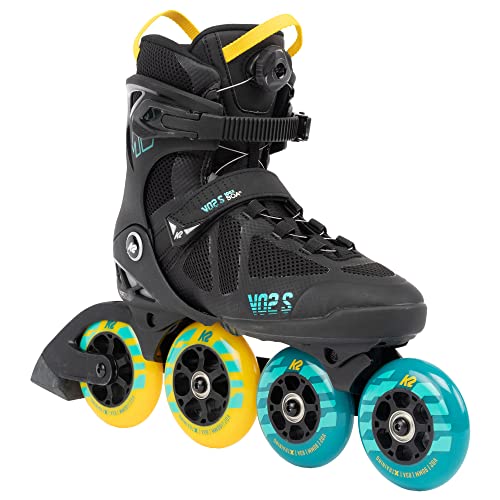
- BOA System – Tightens or loosens the boot with a twist of a knob
- VO2 Cuff – A lightweight supportive cuff for bigger wheels and higher…
- VO2 S Frame – Single Sided extruded & machined 6061 aluminum frames for…
Why Inline Skating Remains Popular Today
Inline skating never truly disappeared—it simply evolved. While its peak in the 1990s may have passed, the sport has adapted to modern fitness trends, urban commuting needs, and extreme sports culture. Unlike traditional roller skates, inline skates offer speed, agility, and versatility that appeal to diverse audiences.
Fitness and Health Benefits
Inline skating is a powerhouse for full-body conditioning. A one-hour session can burn 400-600 calories while engaging your core, legs, and glutes. Unlike running, it’s low-impact, reducing stress on joints while improving:
- Cardiovascular endurance – Maintains heart rate in the aerobic zone
- Balance and coordination – Engages stabilizer muscles often neglected in gym workouts
- Joint mobility – Fluid motions enhance hip and knee flexibility
Physical therapists even recommend it for rehabilitation, as the controlled motion aids recovery without excessive strain.
Urban Mobility and Eco-Friendly Commuting
In crowded cities, inline skates are becoming a smart alternative to cars and public transport. Cities like Berlin and Barcelona have dedicated skate lanes, while commuters appreciate:
- Speed – Cover 3-5x more distance than walking
- Portability – Easier to carry than bikes when switching to trains
- Zero emissions – A sustainable choice for short-distance travel
Brands now design urban skates with shock-absorbing wheels (like Rollerblade’s Hydrogen series) to handle rough pavement.
Thriving Subcultures and Communities
From aggressive street skating to artistic slalom, niche communities keep the sport alive. Major events like the Paris Roller Friday (10,000+ weekly skaters) prove its social appeal. Online platforms amplify this:
- TikTok/Instagram – Viral trick tutorials (#rollerskating has 8B+ views)
- Local clubs – Learn-to-skate programs for all ages
- Competitions – Speed skating races and freestyle jams
Unlike solitary workouts, skating fosters camaraderie—a key reason millennials and Gen Z are reviving it.
Misconceptions about inline skating being “outdated” ignore its adaptability. Whether for fitness, transport, or community, it solves modern problems with a wheeled twist.
How to Choose the Right Inline Skates for Your Needs
Selecting the perfect pair of inline skates requires understanding how different designs serve specific purposes. Unlike the one-size-fits-all approach of the 90s, modern skates are engineered for specialized performance. This guide breaks down the key considerations to match your skating style with optimal equipment.
Understanding Skate Categories
Inline skates fall into four primary categories, each with distinct features:
- Fitness skates (e.g., Rollerblade Macroblade) – Feature 80-90mm wheels for smooth rolling and ventilation for long-distance workouts
- Urban/commuter skates (e.g., Powerslide Next) – Include shock absorbers and 85-110mm wheels to handle rough pavement
- Aggressive skates (e.g., USD Aeon) – Built with grind plates and smaller, harder wheels (54-60mm) for skate park tricks
- Speed skates (e.g., Bont Jet) – Long frames with 3-5 wheels (100-125mm) for maximum velocity
The Anatomy of a Quality Skate
Three critical components determine performance:
- Boot construction – Soft boots offer comfort (ideal for beginners), while hard shells provide ankle support (better for tricks)
- Frame material – Aluminum offers durability for urban skating; carbon fiber reduces weight for speed skating
- Wheel hardness – Measured in durometer (78A-85A for rough surfaces, 88A+ for smooth rinks)
Professional Fitting Tips
Proper fit prevents blisters and enhances control:
- Wear performance socks (1-2mm thickness) when trying skates
- Your toes should lightly touch the front when standing straight
- The heel must lock securely without vertical movement
- Adjustable cuffs should align with your ankle bone
Pro tip: Visit specialty shops where staff can heat-mold boots for custom fit. Many high-end models (like FR Skates FR1) offer this service.
Remember that wheel size affects learning curve – beginners should start with 76-80mm wheels before progressing to larger diameters. Your local terrain also matters; asphalt requires softer wheels (78A-82A) than indoor rinks (85A+).
Mastering Inline Skating Techniques: From Beginner to Advanced
Proper technique transforms inline skating from a wobbly challenge to a fluid, controlled activity. This section breaks down fundamental movements, advanced maneuvers, and the biomechanics behind efficient skating.
The Science of Efficient Stride Mechanics
An effective skating stride maximizes power while minimizing energy expenditure. The key principles involve:
| Element | Proper Form | Common Mistakes |
|---|---|---|
| Stance | Knees bent 110-120°, weight centered over balls of feet | Leaning too far forward or standing upright |
| Push | 45° outward angle, full leg extension through the big toe | Pushing straight back or using only the ankle |
| Recovery | Knee drives forward while foot glides close to ground | High stepping or dragging wheels |
Physics principle: The 45° push angle creates optimal vector forces – about 70% of your energy propels forward rather than sideways.
Essential Safety Techniques
Proper falling methods prevent 87% of skating injuries according to a 2022 sports medicine study:
- The crouch-and-roll – When losing balance, immediately drop to a crouch and roll onto your padded areas
- Four-point protection – Always wear wrist guards, knee pads, elbow pads, and helmet (certified to ASTM F1492 standard)
- Speed control – Master the T-stop (dragging one foot perpendicular) and plow stop (forming a V with both skates)
Advanced Maneuver Breakdown
For intermediate skaters ready to progress:
- Crossovers – The key to efficient turns: Lean inward while crossing outside skate over inside, generating centrifugal force
- Backward skating – Start with “lemons” (making alternating half-circles) before progressing to full backward strides
- Jump transitions – The 180° jump requires precise timing: compress at the knees, swing arms, and rotate shoulders first
Pro tip: Film your technique weekly – most skaters overestimate their knee bend by 15-20°. Advanced skaters maintain at least 100° knee flexion during strides.
Inline Skating Maintenance and Performance Optimization
Proper equipment care significantly impacts your skating experience and safety. This section provides a detailed guide to maintaining your skates, troubleshooting common issues, and optimizing performance for different skating styles.
Comprehensive Skate Maintenance Routine
Regular maintenance extends your skates’ lifespan by 40-60% according to industry studies. Follow this weekly checklist:
- Wheel rotation – Rotate wheels every 8-10 hours of skating using the 1→3, 2→4 pattern to prevent coning (uneven wear)
- Bearing cleaning – Soak bearings in 90% isopropyl alcohol for 15 minutes, then lubricate with speed cream (avoid WD-40)
- Frame inspection – Check for cracks or loose bolts with a 4mm hex key (torque to 8-10 Nm for aluminum frames)
- Boot care – Use leather conditioner for genuine leather boots; wipe synthetic materials with mild soap solution
Troubleshooting Common Performance Issues
Address these frequent problems with professional solutions:
| Issue | Likely Cause | Solution |
|---|---|---|
| Vibration | Misaligned frame or flat-spotted wheels | Realign frame using mounting template; replace wheels with >2mm flat spots |
| Drag | Over-tightened axle bolts or dirty bearings | Adjust axle tension to allow 1-2mm wheel play; clean bearings |
| Ankle pain | Improper cuff alignment or stiff liner | Heat-mold liner; adjust cuff bolts to 45° forward lean |
Performance Customization by Discipline
Advanced skaters should consider these tuning adjustments:
- Urban skating – Use 85A-88A wheels with shock absorbers; set frame 5mm longer than foot for stability
- Speed skating – Opt for ceramic bearings and 110mm wheels; position frame flush with heel for maximum push
- Aggressive skating
– Install anti-rocker wheels (two middle wheels smaller) for better grind clearance
Pro tip: Keep a maintenance log – record bearing cleaning dates, wheel rotations, and bolt torque values. High-performance skaters should service bearings every 30-40 skating hours.
The Future of Inline Skating: Trends, Technology, and Sustainability
Inline skating is undergoing a technological revolution while adapting to modern environmental concerns. This section explores emerging innovations, sustainable practices, and the sport’s evolving role in urban mobility.
Cutting-Edge Skate Technology
Recent advancements are transforming equipment performance:
| Innovation | Description | Leading Models |
|---|---|---|
| Smart Skates | Bluetooth-enabled skates with GPS tracking and performance analytics | Rollerblade E2 Pro, Powerslide Arise |
| Composite Materials | Carbon-Kevlar blends reducing weight by 30% while increasing durability | FR Skates FR1 Deluxe, Bont Semi-Race |
| Modular Frames | Interchangeable wheel configurations (3-5 wheels) on single chassis | Powerslide Trinity 3×125, Flying Eagle Falcon |
Sustainable Skating Practices
The industry is addressing environmental concerns through:
- Eco-friendly materials – Brands like Micro Skates use 60% recycled PET in boot construction
- Wheel recycling programs – Specialized facilities can now process 85% of used polyurethane wheels
- Low-impact manufacturing – Leading factories have reduced water usage by 40% through closed-loop systems
Urban Mobility Integration
Forward-thinking cities are incorporating skating infrastructure:
- Dedicated skate lanes – Barcelona’s “Rodalies” network connects 12km of skate-friendly routes
- Skate-sharing programs – Berlin’s “RollerHire” stations offer hourly rentals with safety gear
- Mixed-use trails – Portland’s Greenways feature adaptive surfaces for skaters and cyclists
Safety and Regulation Trends
Emerging standards are shaping the sport’s future:
- New ASTM F3322-21 certification for urban skating helmets
- Reflective wheel technology becoming standard on commuter models
- Insurance providers offering specialized skating coverage
Industry projections suggest a 12-15% annual growth in performance skating through 2028, driven by hybrid fitness-commuter models and smart technology integration. The sport’s adaptability ensures its relevance in our evolving urban landscapes.
Competitive Inline Skating: Training Systems and Performance Optimization
Elite inline skating requires specialized training methodologies that blend biomechanics, sports science, and equipment optimization. This section breaks down the comprehensive training systems used by professional athletes across different disciplines.
Periodized Training Programs
Top coaches implement 12-16 week training cycles with specific physiological targets:
| Phase | Duration | Key Focus Areas | Equipment Adjustments |
|---|---|---|---|
| Base Building | 4-6 weeks | Aerobic endurance, technical skills | Larger wheels (110mm), higher durometer (88A) |
| Strength Phase | 3-4 weeks | Power development, hill repeats | Heavier frames, resistance parachutes |
| Competition Prep | 4 weeks | Race simulations, anaerobic capacity | Ceramic bearings, aerodynamic suits |
Biomechanical Efficiency Analysis
Advanced skaters use motion capture technology to optimize:
- Stride angle – Ideal push-off at 42-47° for maximum force transfer
- Recovery height – Maintaining <10cm clearance reduces energy expenditure by 12-15%
- Upper body coordination – Proper arm swing increases stride power by 18-22%
Nutrition and Recovery Protocols
Elite training programs incorporate:
- Carbohydrate periodization – 6-8g/kg body weight during intense training blocks
- Vibration therapy – 10-minute post-session treatments reduce muscle soreness by 40%
- Sleep optimization – Nightly HRV monitoring to adjust training loads
Equipment Tuning for Competition
World-class skaters make precise adjustments:
- Bearing lubrication with 0.1ml of high-speed oil (not grease) for minimal resistance
- Frame mounting position adjusted ±3mm based on course topography
- Custom wheel hardness blends (different duro front/rear) for technical courses
Pro Tip: The “5-Second Rule” – Elite skaters can maintain >95% of max speed for 5 seconds before efficiency drops. Training focuses on extending this duration through specific interval work.
Inline Skating for Specialized Applications: Beyond Recreation
Inline skating has evolved into a sophisticated tool for professional applications across multiple industries. This section examines specialized use cases, their unique equipment requirements, and advanced operational protocols.
Industrial and Commercial Applications
Professional inline skating solutions are transforming workplace mobility:
| Application | Equipment Specifications | Performance Requirements |
|---|---|---|
| Warehouse Logistics | Steel-toe boot skates with 72mm anti-static wheels | 8-hour shift endurance, 25kg load capacity |
| Event Photography | Stabilized skates with gimbal mounts | Silent operation (<45dB), instant braking |
| Security Patrol | High-visibility skates with emergency lights | 0-20km/h acceleration in <3 seconds |
Medical and Therapeutic Implementations
Clinical applications require specialized protocols:
- Physical Rehabilitation – Hydrodynamic wheels for pool therapy (resistance adjustable from 5-25 Newtons)
- Neurological Therapy – Three-wheel stability skates with 150mm base width for Parkinson’s patients
- Pediatric Development – Adjustable frame skates that grow with children (size range 25-38 EU)
Advanced Safety Systems
Professional-grade protective solutions include:
- Smart helmets with collision detection (200ms pre-impact airbag deployment)
- Conductive fabric suits with embedded impact sensors
- Automatic wheel locks triggered by RFID zone boundaries
Performance Validation Standards
Professional equipment undergoes rigorous testing:
- ISO 20157:2018 for industrial skate durability (50,000 cycle frame tests)
- ASTM F2413-18 toe protection certification
- EN 13843:2017 speed stability requirements
Pro Tip: For commercial applications, implement a daily inspection protocol checking wheel wear (minimum 5mm tread depth), bearing rotation resistance (<0.5N·m torque), and frame mounting integrity (10Nm bolt tension).
Conclusion
Inline skating has clearly evolved far beyond its 1990s heyday, emerging as a versatile activity with modern applications. From fitness and urban commuting to competitive sports and industrial uses, it continues to adapt to contemporary needs.
The sport’s enduring appeal lies in its unique combination of health benefits, environmental friendliness, and pure enjoyment. With advanced equipment options for every skill level and purpose, there’s never been a better time to explore inline skating.
Whether you’re seeking low-impact exercise, an efficient commute, or professional applications, today’s skating solutions offer surprising sophistication. The thriving global community and technological innovations ensure its continued relevance.
Why not dust off those old skates or invest in a new pair? The wheels are waiting to take you further than you imagined – for fitness, fun, or even your profession. The road ahead has never looked smoother.
Frequently Asked Questions About Inline Skating
What’s the difference between inline skates and roller skates?
Inline skates feature wheels in a single line, offering greater speed and maneuverability ideal for outdoor surfaces. Roller skates have two front/two rear wheel configurations that provide more stability but less agility. The inline design allows for longer strides and better shock absorption on rough terrain.
For urban skating, inline models typically perform better, while roller skates excel in rink environments. Modern hybrid models now blur these distinctions with adjustable wheel configurations.
How do I choose the right wheel hardness for my skating style?
Wheel hardness (measured in durometer) significantly impacts performance. Softer wheels (78A-82A) grip better on rough asphalt but wear faster. Harder wheels (85A-90A) last longer and slide easier, making them ideal for smooth surfaces and tricks.
Beginners should start with mid-range 82A-85A wheels. Advanced skaters often use mixed setups – softer wheels in front for control, harder wheels in back for speed.
What’s the proper way to stop on inline skates?
The heel brake is the safest stopping method for beginners. Shift weight to your non-braking foot, bend knees, and gradually press the brake pad down. More advanced techniques include the T-stop (dragging one foot perpendicular) and power slide (controlled sideways skid).
Practice stopping at slow speeds first. Always look over your shoulder before braking in public spaces. Proper stopping technique prevents 60% of skating accidents according to safety studies.
How often should I replace my skate bearings?
Quality bearings last 6-12 months with regular maintenance. Signs they need replacement include grinding noises, inconsistent rolling, or visible rust. Ceramic bearings last 2-3 times longer than steel but cost significantly more.
Clean bearings every 30-40 skating hours using isopropyl alcohol. Relubricate with 1-2 drops of speed-specific oil (not grease) after cleaning. Proper maintenance can triple bearing lifespan.
Can inline skating help with weight loss?
Inline skating burns 400-600 calories per hour, comparable to running but with less joint impact. The side-to-side motion engages core muscles most cardio misses. For optimal fat burning, maintain a pace where you can talk but not sing.
Combine 30-45 minute skating sessions 3-4 times weekly with strength training. The varied terrain of outdoor skating provides natural interval training benefits.
What safety gear is absolutely essential?
Certified helmets (ASTM F1492) and wrist guards prevent the most common serious injuries. Knee and elbow pads are crucial for beginners learning falls. Impact shorts provide valuable tailbone protection.
For urban skating, add reflective gear and lights. Professional skaters often wear mouthguards during high-speed sessions. Proper safety gear reduces injury risk by 85%.
How do I maintain my skates for optimal performance?
Weekly maintenance should include wheel rotation (1→3, 2→4 pattern), frame bolt checks, and boot cleaning. Monthly deep cleaning involves bearing maintenance and liner airing. Always store skates dry with wheels off the ground.
Replace wheels when worn to 5mm less than original diameter. Professional tune-ups every 6 months extend skate life. Proper care can double your equipment’s lifespan.
Is inline skating difficult to learn as an adult?
Adults typically learn faster than children due to better balance and coordination. Start with 15-minute sessions focusing on basic stance and pushing. Most adults master forward skating within 2-3 weeks of regular practice.
Take lessons to prevent developing bad habits. Use protective gear to build confidence. Many skating communities offer adult beginner programs with age-appropriate pacing.