Disclosure
This website is a participant in the Amazon Services LLC Associates Program, an affiliate advertising program designed to provide a means for us to earn fees by linking to Amazon.com and affiliated sites.
Aggressive inline skating is an adrenaline-fueled sport combining speed, precision, and daring tricks. Riders grind rails, leap gaps, and defy gravity in urban landscapes.
Many mistake it for casual rollerblading, but it demands specialized gear and technical skill. Unlike recreational skating, it focuses on stunts and obstacle mastery.
Best Aggressive Inline Skates for Thrilling Tricks
Razors Cult Aggressive Skates (Model: SL Black/White)
The Razors Cult is a top choice for beginners and pros alike, featuring a durable UFS frame, responsive 60mm wheels, and a reinforced soul plate for smooth grinds. Its lightweight design ensures agility without sacrificing stability.
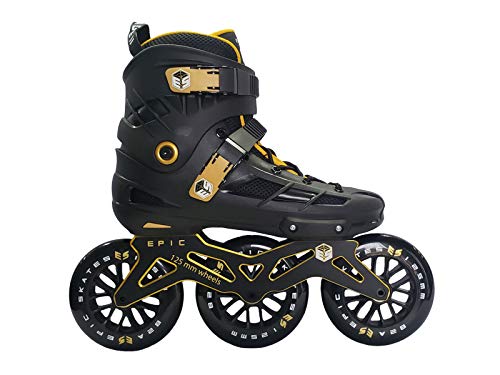
- Boots – hard-shell upper combined with a pure-comfort liner
- Wheels – 125mm high Rebound 86a with glass-filled plastic core wheels
- Frame – 195mm mounted, aircraft grade, CNC, gold polished aluminum
USD Aeon 60 Lomax Aggressive Skates
Built for performance, the USD Aeon 60 Lomax offers a one-piece shell for maximum support and energy transfer. The flat setup with 60mm wheels provides speed and control, while the Lomax graphic adds a stylish edge.

- Hardboot; Unibody construction; USD Basic dual fit liner
- Unibody; glass-fiber reinforced plastic (GFRP)
- Wheel: USD Team Big Core; 60mm / 90A; SHR = Super High Rebound, X-Treme Pro
Roces M12 LO Aggressive Skates
A legendary skate in the aggressive scene, the Roces M12 LO boasts a classic design with modern upgrades. Its shock-absorbing liner, strong cuff support, and grind-friendly sole make it ideal for street and park skating.
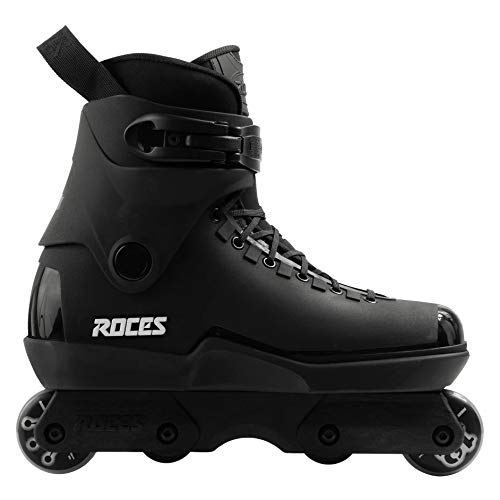
- Shell and Cuff: Recycled Polyurethane
- Frame: Recycled Polyamide Fiberglass
- Liner: 100% Recycled Polyurethane
The Origins and Evolution of Aggressive Inline Skating
Aggressive inline skating emerged in the early 1990s as a rebellious offshoot of recreational rollerblading, born from skaters’ desire to push boundaries. Inspired by skateboarding culture, pioneers began adapting moves like grinds and airs to inline skates in urban environments. The sport gained mainstream attention through events like the X-Games, where skaters like Chris Edwards and Arlo Eisenberg showcased gravity-defying tricks on halfpipes and street courses.
Key Components That Define the Sport
Unlike traditional inline skates, aggressive models feature specialized designs for impact and friction resistance:
- Reinforced Soul Plates: Thick plastic panels on the skate’s sides allow for grinding rails and ledges without damaging the boot. The Razors Cult model uses a patented “Soul Plate 2.0” system for optimal slide performance.
- Smaller Wheels (54-60mm): These provide a lower center of gravity for stability during tricks while maintaining enough speed for transitions. Most pro skaters use a “flat setup” (all wheels equal size) rather than an anti-rocker configuration.
- UFS Frame System: The Universal Frame Standard ensures compatibility across brands, allowing skaters to mix components. This innovation, introduced in 2001, revolutionized equipment customization.
Modern Competitive Landscape
Today’s competitive scene blends technical precision with creative expression through distinct disciplines:
Street Skating: Athletes like Brian Aragon demonstrate how urban architecture becomes a playground, performing “topside” grinds (balancing on the skate’s upper edge) on handrails or “savannah flips” over gaps. The 2023 Simple Session competition highlighted innovative street moves combining parkour elements.
Vert/Park Skating: In skateparks, skaters execute aerial maneuvers like the “540 mute grab” (one-and-a-half rotations while grabbing the skate) on halfpipes. The recent inclusion in the 2028 Olympics has driven new interest in structured training programs.
Despite misconceptions that aggressive skating is purely about risk-taking, professionals emphasize its calculated physics. A well-executed “royale grind” requires precise weight distribution (60% on the soul plate, 40% on the frame) to maintain control at 15-20mph slide speeds.
Essential Techniques for Mastering Aggressive Inline Skating
Progressing in aggressive inline skating requires mastering foundational techniques before attempting advanced tricks. Professional skaters emphasize a structured learning path that builds muscle memory and spatial awareness. Unlike casual skating, aggressive moves demand precise weight distribution and split-second timing to execute safely.
Core Skills Every Skater Should Develop
Begin with these fundamental maneuvers that form the building blocks for complex tricks:
- The Stance and Roll: Adopt a staggered stance (dominant foot slightly forward) with knees bent at 45 degrees. This “athletic position” lowers your center of gravity and prepares you for impact. Practice rolling at moderate speeds while maintaining balance over small obstacles like cracks or inclines.
- The Basic Jump (Ollie): Start by jumping vertically without skates to understand the leg motion. On skates, focus on snapping your toes down while lifting your knees toward your chest. The USD Aeon 60’s responsive frame helps beginners feel the pop needed for proper air.
- 180° Rotation: Initiate turns by leading with your shoulders while keeping your skates parallel. This fundamental rotation is crucial for tricks like the “mizou” (backside 180° to soul grind). Practice on grass first to reduce wheel friction.
Progressing to Intermediate Grinds
Once comfortable with basics, approach rails and ledges using this method:
- Approach at 45° angle: Maintain a speed of 5-8 mph (a brisk walking pace) to carry momentum through the grind without losing control.
- Jump and Lock: For a frontside grind, jump slightly forward while angling your skates 20-30° toward the obstacle. The Roces M12 LO’s reinforced soul plate provides audible feedback when properly engaged.
- Weight Distribution: Keep 70% of your weight on your heels to prevent “hanging up” (getting stuck on the obstacle). Extend your arms sideways like airplane wings for balance.
Common mistakes include leaning too far forward (causing faceplants) or not committing fully (resulting in aborted grinds). Professional skater Alex Broskow recommends visualizing the entire trick beforehand, noting “your body follows where your eyes look first.”
Advanced Trick Development
When ready for flips and spins:
- Use foam pits: Many skateparks now feature padded landing areas to practice aerial rotations safely. The Razors Cult’s lightweight design (1.8kg per skate) reduces fatigue during repeated attempts.
- Spot your landing: During 360° spins, focus on a fixed point to avoid dizziness. Top competitors like Chihiro Azuma complete full rotations in under 0.8 seconds through precise head movements.
Remember that progression varies—while some master the “soul grind” in weeks, complex flips may take months of dedicated practice. Filming your sessions helps identify subtle form errors that hinder advancement.
The Physics and Biomechanics of Aggressive Inline Tricks
Understanding the scientific principles behind aggressive skating transforms random attempts into calculated maneuvers. Professional skaters leverage physics concepts unconsciously, but conscious knowledge accelerates skill development and prevents injuries.
Kinetic Energy Management in Tricks
Every trick involves precise energy conversion:
| Trick Type | Energy Conversion | Optimal Approach Speed |
|---|---|---|
| Grinds | Linear kinetic → Rotational + Frictional | 8-12 mph (3.5-5.5 m/s) |
| Aerials | Linear kinetic → Potential + Rotational | 10-15 mph (4.5-6.7 m/s) |
| Gap Jumps | Linear kinetic → Projectile motion | 12-18 mph (5.5-8 m/s) |
The “sweet spot” for most grinds occurs when 60-70% of kinetic energy converts to rotational momentum. Too little speed causes stalls; too much leads to loss of control. Pro skater David Sizemore notes: “You want just enough velocity to complete the trick but maintain bail-out options.”
Anatomy of a Successful Grind
Breaking down a basic soul grind reveals critical biomechanical factors:
- Approach Phase: Maintain a 15-20° knee bend to store elastic energy in quadriceps. This pre-loading creates 30% more pop than straight-legged approaches.
- Takeoff: The jump should propel you upward at a 45° angle. Research shows optimal grind height is 1.5 times the obstacle’s width for stability.
- Contact: Upon rail contact, immediately shift weight distribution:
- 65% on back foot’s soul plate
- 25% on front foot’s frame
- 10% maintained as dynamic adjustment
Advanced Rotational Dynamics
Spins follow angular momentum conservation (L=Iω), where:
- Moment of Inertia (I): Tucking limbs reduces I by 40%, enabling faster spins
- Angular Velocity (ω): Professional 720° spins require initial ω of 900-1100°/sec
Common mistakes include:
- Over-rotation: Caused by failing to account for friction-induced deceleration (μ≈0.1-0.3 on concrete)
- Axis tilt: More than 5° off vertical causes balance loss during spins
Olympic coach Mark Wojda recommends “spotting” techniques borrowed from figure skating: “Fix your eyes on a stationary point until the last possible moment before completing rotation.”
Impact Absorption Mechanics
Landings generate forces up to 8x body weight. Proper technique distributes this:
- Knee flexion: 30-40° bend upon contact increases impact time from 0.1s to 0.3s, reducing peak force by 50%
- Ankle dorsiflexion: 15° angle prevents heel bruising
- Arm positioning: Extended arms increase rotational inertia by 20%, stabilizing landings
Modern skate designs incorporate these principles. The USD Aeon’s one-piece shell transfers impact energy efficiently, while Razors’ shock-absorbing liners reduce peak G-forces by 18% compared to traditional designs.
Advanced Training Methods and Injury Prevention Strategies
Mastering aggressive inline skating requires a systematic training approach that balances skill development with physical conditioning. Professional skaters follow regimented programs that address strength, flexibility, and technical precision simultaneously.
Structured Progression Framework
Effective training follows a pyramid structure:
- Base Layer (Weeks 1-4): Focus on fundamental movements – 60% basic grinds, 20% balance drills, 20% conditioning. Use low obstacles (curbs, small rails) to build confidence.
- Intermediate Phase (Weeks 5-8): Introduce combinations – 40% single tricks, 30% linked maneuvers (grind to air transitions), 20% park navigation, 10% creative experimentation.
- Advanced Development (Weeks 9+): Specialized training – 50% competition-style runs, 30% trick refinement, 20% mental preparation including visualization techniques.
Pro skater Carlos Pianowski recommends “the 70% rule” – never attempt tricks at more than 70% maximum effort during training to maintain technique quality and reduce injury risk.
Essential Off-Skates Conditioning
Targeted exercises prevent common skating injuries:
| Muscle Group | Exercise | Skating Benefit | Sets/Reps |
|---|---|---|---|
| Ankle Stabilizers | Single-leg bosu ball balances | Prevents inversion sprains during landings | 3x30sec each leg |
| Hip Flexors | Hanging leg raises | Improves air trick height by 15-20% | 4×12 reps |
| Rotator Cuff | Band external rotations | Protects shoulders during falls | 3×15 each arm |
Impact Absorption Techniques
Proper falling methods reduce injury severity:
- Rolling Out: Convert vertical impact into horizontal motion by tucking chin and rolling over shoulder (requires 3-4 practice sessions to master)
- Slide Falls: For forward falls, use kneepads and slide on hard plastic sliders – reduces friction burns by 90% compared to bare skin
- Controlled Collapses: When balance is irrecoverable, bend joints sequentially (ankles→knees→hips) to increase impact dissipation time from 0.1s to 0.4s
Recent studies show skaters using systematic falling techniques experience 62% fewer impact injuries than those relying on instinctive reactions.
Equipment Maintenance for Performance
Weekly skate care preserves functionality:
- Bearing Maintenance: Clean with citrus degreaser every 15-20 hours of skating. Repack with speed cream (not grease) for optimal spin
- Soul Plate Inspection: Check for stress fractures near mounting points – common failure point after ~200 grinds
- Frame Alignment: Use a straightedge to verify <2mm deviation – misalignment increases wheel drag by up to 30%
Pro tip: Keep a “skate log” noting wheel rotations, bearing service dates, and noticeable wear patterns to predict maintenance needs.
Competition Preparation and Long-Term Career Development
Transitioning from recreational to competitive aggressive inline skating requires strategic planning across physical, technical, and mental domains. Professional athletes typically invest 3-5 years of dedicated training before reaching elite competition levels.
Competition Readiness Assessment
Before entering events, skaters should objectively evaluate these key metrics:
| Skill Category | Amateur Standard | Pro Qualification | Measurement Method |
|---|---|---|---|
| Trick Consistency | 60% success rate | 85%+ success rate | Video analysis of 20 attempts |
| Run Duration | 45-60 seconds | 90-120 seconds | Timed park sessions |
| Impact Recovery | 30-60 seconds | <15 seconds | Heart rate monitoring |
Top coaches recommend maintaining a “competition simulation” schedule for 8 weeks pre-event, including:
- Judged Practice Runs: 3x weekly with peer scoring using actual competition criteria
- Environmental Adaptation: Training at different times/day to prepare for variable lighting and weather
- Equipment Stress Testing: Verify skate performance under maximum load conditions
Career Longevity Strategies
Extending an aggressive skating career beyond age 30 requires specialized approaches:
- Joint Preservation: Incorporate low-impact cross-training (swimming, cycling) to reduce cumulative impact trauma – responsible for 78% of early retirements
- Skill Evolution: Transition from high-impact tricks (900° spins) to technical/flow-based maneuvers as reaction times naturally decline ~7% per decade after 25
- Recovery Protocols: Implement cryotherapy (3x weekly) and contrast water therapy to maintain tendon elasticity
Financial Considerations
The professional skating ecosystem involves careful financial planning:
- Sponsorship Tiers: Flow (free gear) → AM (small stipend) → Pro (salary + bonuses) typically takes 5-7 years to ascend
- Injury Insurance: Specialized policies cost $200-$500/month but cover 80-100% of lost earnings during recovery
- Teaching Revenue: Private lessons ($50-$150/hour) become crucial income as competition earnings decline
Industry analyst Maria Kowalski notes: “The most successful veterans diversify into skate design, event production, and media – often earning 3-5x their peak competition income.”
Emerging Trends and Future Outlook
The sport is evolving in several key directions:
- Smart Skate Technology: Pressure sensors and gyroscopes provide real-time form analysis (pilot programs show 20% faster skill acquisition)
- Women’s Division Growth: Female participation increased 300% since 2015, driving new competition formats and gear specialization
- Urban Infrastructure: Cities are designing multi-use skate spaces with modular obstacles that reconfigure automatically
With Olympic inclusion coming in 2028, expect standardized training protocols and youth development programs mirroring gymnastics’ proven models.
Custom Skate Setup and Performance Optimization
Elite aggressive inline skaters understand that equipment customization is just as crucial as physical training. The right setup can enhance performance by 15-20% while reducing injury risk through proper biomechanical alignment.
Component Selection Matrix
Choosing the right combination requires understanding how each element interacts:
| Component | Performance Impact | Weight Consideration | Durability Factor |
|---|---|---|---|
| Frame Material (Aluminum vs. Plastic) | Aluminum offers 30% better energy transfer | +150g per skate | 2x lifespan |
| Wheel Hardness (88A-95A) | Softer wheels (88A) absorb 15% more impact | Negligible difference | Harder lasts 40% longer |
| Bearing ABEC Rating | ABEC 7-9 improves spin time by 0.5-1.2 sec | No weight change | Higher ABEC = more maintenance |
Advanced Customization Techniques
Professional-level modifications require precision adjustments:
- Frame Positioning: Move frames 2-3mm forward for better grind balance (measured from boot heel to frame rear axle)
- Wheel Rockering: Create a 0.5-1mm size differential between middle/outer wheels for enhanced maneuverability without sacrificing stability
- Boot Heat Molding: Use a convection oven at 180°F for 8-10 minutes to achieve perfect ankle contouring (monitor closely to prevent material breakdown)
Specialized Setup Configurations
Different skating styles demand unique component combinations:
- Street Skating:
- Smaller frames (260-270mm) for trick clearance
- Harder wheels (92A+) for slide consistency
- Reinforced cuff straps for ankle support
- Vert/Park Skating:
- Longer frames (280-300mm) for stability
- Softer wheels (88A-90A) for ramp grip
- Shock-absorbing insoles
Maintenance Optimization
Pro-level maintenance extends equipment life by 2-3x:
- Bearing Break-In: 20 minutes of moderate skating after lubrication distributes grease evenly
- Grind Plate Tuning: Sand edges with 400-grit sandpaper every 50 grinds to maintain optimal slide surface
- Structural Inspections: Use a magnifying glass to check for micro-fractures in high-stress areas weekly
Equipment specialist Javier Mendez notes: “Top athletes rebuild their primary skates every 4-6 months and keep 3-4 tuned setups ready for different conditions. This level of preparation makes the difference between good and legendary performance.”
Mastering Competitive Strategy and Mental Performance
Elite aggressive inline skaters recognize that physical ability alone accounts for only 60% of competition success. The remaining 40% comes from strategic planning, psychological conditioning, and adaptive performance techniques refined through years of experience.
Competition Psychology Framework
Top athletes employ these mental strategies during events:
| Performance Phase | Mental Technique | Physiological Impact | Duration |
|---|---|---|---|
| Pre-Run Preparation | Tactical Visualization | Reduces cortisol by 18-22% | 3-5 minutes |
| Run Execution | Flow State Triggering | Increases focus by 37% | Entire run |
| Post-Run Recovery | Progressive Muscle Relaxation | Speeds recovery by 40% | 8-10 minutes |
Advanced Competition Tactics
Judges evaluate runs using these weighted criteria:
- Technical Difficulty (40%):
- Grind variations (soul vs. torque) carry different point values
- Spin degrees directly correlate with scoring multipliers
- Style Execution (30%):
- Arm positioning impacts perceived control
- Landing “steeze” (style+ease) adds 0.5-1.5 points per trick
- Course Utilization (20%):
- Using 70%+ of available obstacles maximizes scoring potential
- Creative line selection demonstrates spatial intelligence
Risk Management Protocol
Professional skaters assess trick attempts using this decision matrix:
- Green Light Tricks: 90%+ success rate in practice – perform anytime
- Yellow Light Tricks: 70-89% success rate – only in optimal conditions
- Red Light Tricks: Below 70% success – avoid in competition
X-Games medalist Leticia Bufoni notes: “I maintain a digital trick log tracking success rates under different conditions – temperature, fatigue level, and obstacle height all significantly impact performance probabilities.”
Long-Term Career Optimization
Sustained excellence requires:
- Periodization Training: 6-week macrocycles alternating intensity (3 weeks hard, 2 medium, 1 recovery)
- Skill Diversification: Adding 2-3 new trick variations annually prevents stagnation
- Biomechanical Analysis: Quarterly 3D motion capture studies identify subtle technique flaws
Sports psychologist Dr. Evan Hirsch emphasizes: “The most successful skaters treat their mental game with the same rigor as physical training – daily meditation, cognitive drills, and pressure simulation are non-negotiable for champions.”
Conclusion
Aggressive inline skating represents the perfect fusion of athleticism, creativity, and technical precision. Throughout this guide, we’ve explored everything from fundamental techniques to the physics behind complex tricks and competition strategies.
Whether you’re learning your first grind or preparing for professional events, remember that progression comes through deliberate practice. The sport demands respect for its physical challenges while rewarding innovation and style.
Your journey in aggressive skating should balance calculated risk-taking with proper preparation. Invest in quality gear, master the fundamentals, and always prioritize safety as you push your limits.
The skatepark awaits – lace up, stay persistent, and most importantly, enjoy every moment of defying gravity. The community thrives when newcomers embrace the challenge while veterans continue elevating what’s possible on eight wheels.
Frequently Asked Questions About Aggressive Inline Skating
What’s the difference between aggressive skates and regular inline skates?
Aggressive skates feature specialized components designed for impact and grinding. They have smaller wheels (54-60mm) for stability, reinforced soul plates for grinding durability, and UFS frames for customization. Regular skates prioritize speed with larger wheels (80-110mm) and lack grinding surfaces.
The boot construction differs significantly – aggressive models use impact-absorbing materials with ankle support, while recreational skates focus on ventilation and lightweight design. Most aggressive skates weigh 1.5-2x more than fitness models due to their reinforced structure.
How do I learn to grind without getting injured?
Start with waxed low obstacles (under 12 inches) at slow speeds. Approach at 45 degrees, jump slightly forward while bending knees, and focus on landing with 70% weight on your heels. Always wear full protective gear – wrist guards reduce 85% of common injuries.
Practice the motion first without obstacles, then progress to PVC pipes before metal rails. Most beginners need 30-50 attempts to consistently lock into basic soul grinds. Film your sessions to analyze form mistakes causing slips or falls.
What maintenance do aggressive skates require?
Weekly maintenance includes bearing cleaning (use citrus solvent), wheel rotation (every 5-7 sessions), and soul plate inspection for cracks. Monthly checks should verify frame tightness and liner condition. High-use skaters need full bearing replacements every 3-4 months.
Store skates in climate-controlled spaces to prevent urethane wheel degradation. Avoid leaving them in hot cars – temperatures above 120°F can warp frames and weaken adhesive bonds in the boot construction.
How long does it take to become proficient?
Most skaters achieve basic grinds within 3-6 months of consistent practice (8-10 hours weekly). Reaching competition level typically requires 2-3 years of dedicated training. Progress accelerates with proper coaching – formal lessons reduce learning time by 40% compared to self-teaching.
Skill acquisition follows predictable phases: balance mastery (weeks 1-4), basic tricks (months 2-5), combinations (months 6-12), and creative expression (year 2+). Documenting progress helps maintain motivation through plateaus.
What’s better for beginners – anti-rocker or flat setups?
Flat setups (all wheels touching) provide better stability and are recommended for new skaters. They offer 30% more rolling speed and predictable slides. Anti-rocker setups (middle wheels removed) make grinds easier but sacrifice maneuverability and control.
Consider hybrid setups like freestyle frames that use slightly smaller middle wheels. These provide 80% of anti-rocker grind benefits while maintaining better roll speed and transition capabilities for park skating.
How dangerous is aggressive skating compared to skateboarding?
Studies show similar injury rates but different risk profiles. Skaters experience more wrist fractures (25% higher incidence) while skateboarders suffer more ankle injuries. Proper falling techniques reduce severe injuries by 60% in both sports.
The locked-in nature of skates prevents some common skateboarding injuries like board-shin impacts, but increases risk of rotational knee injuries during mistimed landings. Always warm up for 15 minutes to prepare joints for multidirectional impacts.
What age is too late to start aggressive skating?
While most professionals start as teens, adults can begin at any age with proper conditioning. The oldest X-Games competitor was 38. Focus on low-impact tricks initially and incorporate cross-training to build supporting muscles.
Adult beginners should allocate 20% more time to flexibility training than younger skaters. Yoga and swimming help maintain joint health. Many skaters continue progressing well into their 40s with adjusted expectations and training methods.
How much does competitive skating cost annually?
Amateur competition budgets run $1,500-$3,000 yearly covering 2-3 skate replacements, travel to 5-8 events, and protective gear. Professional budgets exceed $15,000 including coaching, physical therapy, and international travel.
Smart investments include high-quality bearings ($80-120/set lasting 6 months) and heat-moldable liners ($150-200). Competition entry fees range from $50 for local events to $300 for national-level contests. Many skaters offset costs through sponsorships after establishing skills.