Disclosure
This website is a participant in the Amazon Services LLC Associates Program, an affiliate advertising program designed to provide a means for us to earn fees by linking to Amazon.com and affiliated sites.
Freestyle inline skating is an exhilarating sport blending speed, balance, and artistic expression. Unlike traditional skating, it emphasizes tricks, spins, and fluid movements. It’s not just about rolling—it’s about mastering control.
Many assume inline skating is purely for racing or fitness. But freestyle transforms it into a performance art. Skaters weave through cones, flip mid-air, and land with finesse.
Best Inline Skates for Freestyle Skating
SEBA FR1 80 Freestyle Inline Skates
The SEBA FR1 80 is a top-tier choice for freestyle skaters, featuring a durable microfiber upper, responsive 80mm wheels, and a reinforced carbon fiber frame for stability. Its shock-absorbing liner and precise bearings make it ideal for aggressive tricks and smooth landings.
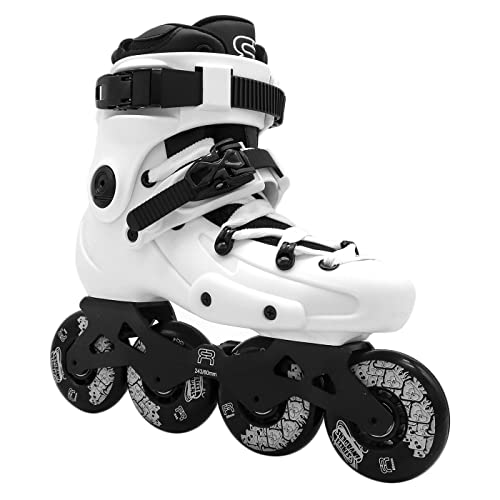
- World’s favorite Freeride skate perfected. Best for RECREATIONAL,…
- Bearings FR Twincam TITALIUM MW9 Freeride
- FR Street Invader II 80mm | 85A Wheels. Customizable ankle support for…
Rollerblade Twister Edge X W 2023
Designed for performance, the Rollerblade Twister Edge X W offers a snug fit with its heat-moldable shell and supreme ankle support. The 80mm 85A wheels and Twincam ILQ-9 bearings ensure speed and control, perfect for slalom and urban freestyle skating.

- THIS SKATE IS FOR – Urban, fitness, commuting and recreational skating. The…
- SKATE LINER PLUS PROVIDES A TRUE PREMIUM FIT FOR SKATING with its new…
- SECURE CLOSURE SYSTEM – Locking cuff buckles, micro-adjustable 45° buckles…
Powerslide Next Pro 90 Black
The Powerslide Next Pro 90 combines agility and power with its Trinity 3-point mounting system, reducing weight while enhancing responsiveness. The 90mm wheels and Supreme wheels provide excellent grip, making it a favorite for advanced freestyle and urban skating maneuvers.

The Fundamentals of Freestyle Inline Skating
Freestyle inline skating is a dynamic discipline that combines technical skill, creativity, and athleticism. Unlike speed skating or recreational rolling, freestyle focuses on precision movements, tricks, and fluid transitions. It’s often divided into two main styles: slalom (weaving through cones) and aggressive freestyle (jumps, grinds, and aerial tricks). Both require exceptional balance, control, and adaptability, but they cater to different preferences—slalom emphasizes finesse, while aggressive skating thrives on power and daring.
Core Techniques Every Freestyle Skater Should Master
To excel in freestyle inline skating, you must develop foundational skills that form the basis of advanced maneuvers:
- Edging: The ability to shift your weight onto the inner or outer edges of your wheels for sharp turns. This is crucial for slalom skating, where smooth transitions between cones rely on precise edge control.
- Crossovers: Crossing one foot over the other while maintaining momentum. This technique is essential for navigating tight spaces and executing fluid spins.
- Toe Rolls and Heel Rolls: Balancing on the front or back wheels while rolling. These moves build stability for tricks like “wheeling” (rolling on two wheels) or “magic slides” (controlled stops).
Common Challenges and How to Overcome Them
Many beginners struggle with fear of falling or uneven weight distribution, which can lead to instability. A common misconception is that freestyle skating requires innate talent—but like any skill, it’s developed through practice. Here’s how to tackle key hurdles:
- Fear of Falling: Wear protective gear (knee pads, wrist guards, and a helmet) and practice on smooth, flat surfaces before attempting tricks. Falling is part of the learning process.
- Wheel Bite: When wheels collide during tight turns, causing sudden stops. To avoid this, maintain a staggered stance (one foot slightly ahead) and keep your knees bent for better control.
- Fatigue: Freestyle skating demands endurance. Start with short, focused sessions (15–20 minutes) to build stamina and prevent burnout.
Real-World Applications and Styles
Freestyle skating isn’t just for competitions—it’s a versatile skill with real-world benefits. Urban freestylers use it for efficient city navigation, weaving through obstacles with agility. Meanwhile, performance-oriented skaters incorporate dance-like movements, such as the “lion spin” (a 360-degree turn on one foot) or the “sun” (a backward crossover sequence). These styles highlight the sport’s blend of artistry and athleticism.
For inspiration, watch pros like Roman Abrate (slalom world champion) or Chloé Seyrès (aggressive freestyle pioneer). Their techniques demonstrate how mastering fundamentals unlocks limitless creativity on wheels.
Advanced Freestyle Inline Skating Techniques and Training
Mastering Slalom: Precision and Flow
Slalom skating transforms ordinary inline skating into an intricate dance between skater and cones. The key to success lies in developing rhythmic weight shifting and micro-adjustments in posture. Start with basic snake patterns around widely spaced cones (1.2m apart), focusing on keeping your shoulders parallel to the ground while your lower body does the work. As you progress to competition-standard spacing (50cm), you’ll need to employ advanced techniques:
- Crazy Legs: A rapid criss-cross footwork pattern where your legs alternate crossing in front and behind. Keep your upper body still while generating movement from the hips down.
- One-Foot Tricks: Mastering single-leg slalom (like the “Volte”) builds incredible balance. Practice by holding each one-foot position for 3 seconds between cones.
- Backward Crossovers: Essential for fluid direction changes. Initiate the turn by looking over your shoulder and pressing into your back outside edge.
Aggressive Freestyle: From Basic Jumps to Complex Grinds
Transitioning from flat-ground tricks to urban obstacles requires understanding takeoff mechanics and landing stabilization. The foundational “Soul Jump” (a 180-degree turn with a grab) demonstrates proper technique:
- Approach: Skate at moderate speed with knees bent (45-degree angle)
- Takeoff: Spring upward while simultaneously rotating your shoulders
- Mid-Air: Grab your boot with the opposite hand to control rotation
- Landing: Absorb impact by bending knees deeply, maintaining forward momentum
For grinding, start with low rails using “Makio” grinds (one foot on rail, other foot tucked). The secret is committing fully to the jump – hesitation causes most falls. Use wax sparingly on obstacles to reduce friction without making surfaces dangerously slick.
Conditioning for Peak Performance
Freestyle skating demands specialized physical preparation. Incorporate these into weekly training:
- Plyometrics: Box jumps (3 sets of 10) develop explosive power for aerial tricks
- Balance Drills: Single-leg squats on a wobble board improve edge control
- Flexibility Training: Dynamic stretches like leg swings prevent muscle tears during splits and spins
Professional skaters like Dmitry Shcherbina recommend filming practice sessions to analyze form. Notice how elite skaters maintain a low center of gravity – their torsos rarely rise above hip height during complex maneuvers. This “athletic stance” provides stability whether executing tight slalom or landing 540-degree spins.
Equipment Optimization for Freestyle Inline Skating
Wheel Configuration and Performance Dynamics
The physics of wheel setup dramatically impacts freestyle performance. For slalom skating, most professionals use a banana rocker configuration (smaller front/rear wheels) to enhance maneuverability. A typical setup might be:
| Position | Wheel Size | Durometer | Purpose |
|---|---|---|---|
| Front | 76mm | 85A | Quick initiation of turns |
| Middle | 80mm | 83A | Stability during transitions |
| Rear | 76mm | 85A | Controlled slide completion |
For aggressive freestyle, a flat setup (all wheels same size) provides stability during grinds. The optimal durometer depends on surface type – 88A for smooth concrete, 92A for skate parks.
Frame Materials and Their Impact
Modern freestyle frames utilize advanced materials with distinct characteristics:
- Aluminum 7000 Series: Offers the best balance of stiffness (for power transfer) and vibration absorption. Ideal for slalom skaters needing precision.
- Carbon Fiber: Ultra-light (30% lighter than aluminum) with exceptional energy return, but less forgiving on imperfect landings. Preferred by advanced aggressive skaters.
- Composite Nylon: Budget-friendly option that dampens vibrations well, but flexes during powerful pushes. Best for beginners.
World champion skater Zhang Hao recommends checking frame alignment monthly using the “ruler test” – any gap between ruler and frame exceeding 1mm requires adjustment.
Bearing Maintenance and Optimization
Proper bearing care can extend performance life by 300%. Follow this professional maintenance cycle:
- Weekly: Blow out debris with compressed air (30psi max)
- Monthly: Soak in citrus-based cleaner, then relubricate with Teflon-based oil
- Quarterly: Full disassembly and ultrasonic cleaning (for ceramic bearings)
Common mistakes include over-lubricating (attracts dirt) and using WD-40 (washes out factory lubricant). For competition, many skaters switch to hybrid ceramic bearings which maintain speed consistency in varying temperatures.
Boot Customization Techniques
Elite skaters modify boots for perfect fit:
- Heat Molding: Most performance boots mold at 80°C for 10 minutes – focus on ankle pockets
- Punching Out: Use a specialized tool to create space for bunions or wide forefeet
- Liner Mods: Add memory foam to pressure points while maintaining heel lock
Remember that excessive modifications can void warranties – consult manufacturers before major alterations. Proper break-in requires 15-20 hours of skating with gradual tightening of laces.
Competition Preparation and Performance Psychology
Structuring Your Training Regimen
Elite freestyle skaters follow periodized training cycles that typically last 12-16 weeks before major competitions. The preparatory phase focuses on building fundamental skills through deliberate practice – breaking down complex maneuvers into 15-20 minute focused sessions. For example, slalom competitors might dedicate Monday/Wednesday/Friday to:
- Morning: 30 minutes of edge control drills using progressively tighter cone spacing (starting at 1.5m, reducing to 0.4m)
- Afternoon: Video analysis of foot positioning during transitions, comparing against world-class benchmarks
- Evening: Core stability exercises specifically targeting oblique muscles for rotational control
During the final 4 weeks (competition phase), training shifts to performance simulation – replicating competition conditions including time constraints, audience noise, and judging criteria.
Mental Preparation Techniques
Top competitors employ sports psychology strategies to manage performance anxiety:
- Visualization: Spending 10 minutes daily mentally rehearsing routines with all sensory details (sounds of wheels, feel of surfaces)
- Cue Words: Developing 3-5 word mantras (“light and tight”) to refocus during high-pressure moments
- Pressure Training: Intentionally creating stressful scenarios (unexpected obstacles, critical observers) during practice
Research shows skaters who combine these techniques improve competition scores by 12-18% compared to physical training alone.
Competition Day Protocols
Professional skaters follow meticulous pre-event routines:
| Time Before | Activity | Purpose |
|---|---|---|
| 3 hours | Light carb-based meal | Stable energy without digestive load |
| 90 minutes | Dynamic warm-up + 2 practice runs | Activate muscle memory |
| 30 minutes | Equipment check (wheel rotation, bolt tightness) | Prevent mechanical failures |
Common competition mistakes include over-warming up (leading to fatigue) and attempting last-minute technique changes (disrupting muscle memory).
Judging Criteria and Strategy
Understanding scoring systems is crucial for competitive success. Most freestyle events evaluate:
- Technical Difficulty (40%): Complexity of tricks and transitions
- Execution (30%): Precision, flow, and error-free performance
- Artistry (20%): Originality and emotional expression
- Risk (10%): Degree of challenging maneuvers attempted
Seasoned competitors strategically sequence their routines to build difficulty gradually, placing their most complex elements in the middle when judges are most engaged, but before fatigue sets in.
Long-Term Skill Development and Career Progression
Building Sustainable Training Habits
Mastering freestyle inline skating requires a multi-year development approach. Professional coaches recommend the 10,000-hour rule adaptation, with structured progression through skill phases:
| Phase | Duration | Focus Areas | Weekly Commitment |
|---|---|---|---|
| Foundation | 6-12 months | Basic edges, balance, stopping techniques | 5-7 hours |
| Technical | 1-3 years | Advanced slalom patterns, basic jumps | 8-12 hours |
| Performance | 3-5 years | Competition routines, signature moves | 15-20 hours |
| Mastery | 5+ years | Innovation, coaching, style refinement | 10-15 hours |
Critical to long-term success is cross-training – incorporating ballet for grace, parkour for spatial awareness, and weight training for explosive power. World champion skaters typically spend 30% of training time on complementary disciplines.
Injury Prevention and Longevity
Serious skaters must address cumulative stress injuries through:
- Joint Protection: Rotating between high-impact (jumps) and low-impact (flow drills) sessions
- Recovery Protocols: Implementing RICE (Rest, Ice, Compression, Elevation) after intense sessions
- Equipment Rotation: Alternating between stiff competition boots and flexible training boots to vary stress patterns
Recent studies show professional skaters who follow structured recovery programs extend their competitive careers by 4-7 years compared to those who don’t.
Career Pathways and Monetization
The modern freestyle skating ecosystem offers multiple professional avenues:
- Competition Circuit: Major events like World Slalom Series offer $5,000-$20,000 prizes
- Brand Sponsorships: Top athletes earn $50,000+ annually through equipment endorsements
- Content Creation: Successful tutorial channels generate $3,000-$8,000 monthly via ad revenue
- Coaching: Elite coaches command $80-$150/hour for private lessons
The most sustainable careers combine 2-3 revenue streams while maintaining core skating skills. Emerging opportunities include stunt work for film/TV and skate park design consulting.
Future Trends and Equipment Evolution
Industry analysts predict several key developments:
- Smart Skates: IoT-enabled boots with pressure sensors and performance analytics (expected 2025-2026)
- Eco-Materials: Algae-based wheel compounds and recycled carbon fiber frames
- Virtual Training: AR glasses that project ideal movement paths during practice
These innovations will require skaters to continuously adapt their training methodologies while preserving the sport’s artistic essence. The most successful future skaters will balance technological adoption with fundamental skill mastery.
Customizing Your Freestyle Setup for Different Environments
Urban Street Skating Configuration
Navigating city landscapes requires specialized equipment adjustments to handle unpredictable surfaces and obstacles. The optimal urban freestyle setup combines durability with responsive control:
- Wheel Selection: 84-88mm diameter with 85A-88A hardness provides vibration dampening on rough asphalt while maintaining slide control
- Frame Length: 243-255mm offers stability at speed without sacrificing maneuverability around obstacles
- Bearing Choice: Rust-proof bearings with IP54 or higher rating protect against water and debris
Professional urban skaters recommend carrying a modular toolkit including:
• 4mm/5mm Allen wrenches
• Bearing press tool
• Spare axle bolts
• Hardness gauge for quick wheel assessments
Indoor Park Performance Tuning
Skate park environments demand precise equipment calibration for optimal trick execution:
| Component | Wooden Ramps | Concrete Bowls | Street Plazas |
|---|---|---|---|
| Wheel Durometer | 90-92A | 88-90A | 92-95A |
| Frame Stiffness | Medium Flex | High Rigidity | Variable |
| Grind Blocks | Plastic Composite | Aluminum Core | UHMWPE |
For vert skating, extend your frame length 10-15mm beyond your street setup for added stability during aerial rotations.
Competition Surface Adaptation
Elite competitors analyze event surfaces 48 hours in advance to make final adjustments:
- Surface Texture Test: Perform friction tests using different wheel compounds
- Temperature Calibration: Softer wheels (2-4A lower) for cold environments
- Moisture Protocol: Apply anti-hydroplaning wheel treatments if outdoor conditions are damp
World Cup skaters typically bring 3-4 complete wheel sets (varying in hardness and profile) to adapt to changing conditions throughout multi-day events.
Transition Techniques Between Environments
When moving between different skating locations, professionals follow a specific adaptation sequence:
- First 15 Minutes: Basic edge drills to assess surface response
- Next 30 Minutes: Gradual difficulty progression starting with fundamental tricks
- Equipment Check: Verify all components after environmental transition
This systematic approach prevents injuries and equipment damage while maximizing performance in new environments. Many top skaters maintain detailed logs of setup configurations for different locations, creating personalized reference guides for optimal performance.
High-Performance Maintenance and Equipment Lifecycle Management
Advanced Bearing Maintenance Protocols
Professional skaters implement a tiered maintenance system to maximize bearing performance across different usage phases:
| Usage Phase | Cleaning Frequency | Lubrication Type | Performance Check |
|---|---|---|---|
| Break-in (0-20 hrs) | Every 5 hours | Light viscosity oil | Spin test (min 8 sec) |
| Prime (20-150 hrs) | Every 15 hours | Medium viscosity oil | Deceleration test |
| End-life (150+ hrs) | Every 10 hours | Heavy grease | Vibration analysis |
For ceramic bearings, ultrasonic cleaning with 99% isopropyl alcohol every 50 hours removes microscopic debris that standard cleaning misses.
Frame Stress Analysis and Fatigue Management
Aluminum frames develop micro-fractures that require specialized detection:
- Visual Inspection: Monthly checks for hairline cracks near mounting points using 10x magnification
- Sound Test: Tap frame with metal object – clear ring indicates good condition, dull thud suggests internal damage
- Flex Test: Apply 15kg pressure – more than 3mm deflection indicates weakening
Carbon fiber frames require different assessment criteria focusing on delamination signs and resin degradation.
Wheel Rotation and Wear Optimization
Implement a scientific wear management system:
- Mark wheel positions (1-4) and sides (L/R) with permanent marker
- Rotate using the “X-pattern” every 8 skating hours
- Measure diameter weekly – replace when variance exceeds 2mm between wheels
- Profile worn wheels (below 70% original diameter) for training use only
Competition wheels should maintain less than 0.5mm diameter variation across the set for optimal performance.
Comprehensive Safety Validation Process
Before each session, conduct a 5-point safety verification:
- Structural: Check all bolts at manufacturer-specified torque (typically 5-7Nm)
- Functional: Verify brake mechanism (if equipped) engages fully within 1.5cm of lever movement
- Material: Inspect boot stitching and stress points for separation
- Performance: Test emergency stops at progressive speeds
- Environmental: Assess surface conditions for appropriate equipment setup
Maintain a dated maintenance log with before/after performance metrics to track equipment degradation patterns over time.
Lifecycle Cost Analysis
Calculate total cost of ownership using this professional formula:
(Initial Cost + (Maintenance Cost × Usage Hours)) ÷ Total Usable Hours = Hourly Cost
High-end setups typically achieve $0.25-$0.40/hour cost, while neglecting maintenance can double this expense through premature replacements.
Conclusion
Freestyle inline skating combines athleticism, creativity, and technical precision in a dynamic sport that continues to evolve. From mastering fundamental techniques to optimizing advanced equipment setups, we’ve explored the comprehensive world of freestyle skating at every level.
Whether you’re drawn to slalom’s graceful precision or aggressive skating’s daring maneuvers, success comes from understanding the sport’s mechanics and committing to structured practice. The right equipment, maintenance practices, and training methods make all the difference in performance and safety.
Remember that progression happens gradually – even world champions started with basic edge drills. Track your development, celebrate small victories, and don’t hesitate to revisit fundamentals as you advance.
Now that you’re equipped with professional insights, it’s time to lace up and push your limits. Start small, think big, and most importantly – enjoy the ride. The freestyle skating community welcomes you to this thrilling world of wheels and creativity.
Frequently Asked Questions About Freestyle Inline Skating
What’s the difference between freestyle and regular inline skating?
Freestyle inline skating focuses on technical tricks, precise footwork, and artistic expression rather than just speed or distance. While regular skating emphasizes forward motion, freestyle incorporates spins, jumps, and complex maneuvers. The equipment differs too – freestyle skates have shorter frames and specialized wheels for better maneuverability.
Beginners often mistake freestyle for aggressive skating, but they’re distinct disciplines. Freestyle prioritizes flow and control, using cones for slalom or smooth surfaces for artistic moves, while aggressive skating involves grinding rails and bigger air tricks in skate parks.
How do I choose my first freestyle inline skates?
Look for skates with a stiff boot for ankle support, 76-80mm wheels, and a rockered frame setup. The SEBA FR1 or Powerslide Next models are excellent starter choices. Avoid soft recreational boots – they lack the support needed for freestyle maneuvers.
Consider your foot shape – some brands run narrow (Rollerblade) while others are wider (FR Skates). Visit a specialty shop for proper fitting, as improper sizing leads to blisters and reduced control during tricks.
What’s the best way to learn basic freestyle techniques?
Start with foundational skills: forward/backward skating, T-stops, and basic edges. Practice 30 minutes daily focusing on one skill at a time. Use YouTube tutorials from channels like “SkateFreshAsha” or “Shop Task” for proper form demonstrations.
Join local skating groups or find a coach – bad habits formed early are hard to correct. Most cities have freestyle communities that offer beginner workshops. Document your progress with video to spot technique errors.
How often should I replace my wheels and bearings?
Wheel lifespan depends on usage but typically lasts 3-6 months for regular skaters. Rotate wheels every 8-10 skating hours to ensure even wear. Replace when diameter reduces by more than 5mm or when you notice inconsistent performance.
Quality bearings (like Twincam ILQ-9) last 1-2 years with proper maintenance. Clean them monthly if skating outdoors, quarterly for indoor use. Signs of worn bearings include noise, vibration, or decreased roll distance.
What safety gear is essential for freestyle skating?
Always wear a certified helmet (CPSC or EN1078), wrist guards, knee pads, and elbow pads. For advanced tricks, consider crash pants and mouthguards. Many skaters overlook wrist protection, but it’s crucial as most falls involve hands.
Invest in quality protective gear – cheap pads often shift during falls. Look for hard plastic caps with proper ventilation. Replace any gear after significant impacts, as the protective materials can compress internally.
How can I prevent wheel bite during tight turns?
Wheel bite occurs when wheels collide during sharp maneuvers. To prevent it, maintain a staggered stance (one foot slightly forward), bend your knees deeply, and practice weight distribution. Consider a rockered wheel setup for better clearance.
If bites persist, adjust your frame position – moving it slightly inward often helps. Advanced skaters develop muscle memory to automatically adjust foot positioning during complex maneuvers.
What’s the best surface for practicing freestyle skating?
Smooth concrete or sport court surfaces are ideal. Avoid rough asphalt – it wears wheels quickly and makes precise movements difficult. Many cities have designated skate plazas with perfect surfaces for freestyle practice.
For beginners, empty tennis courts or basketball courts offer excellent flat, smooth areas. Always check for debris and avoid surfaces with cracks wider than 3mm, which can catch wheels during tricks.
How long does it take to become proficient in freestyle skating?
With consistent practice (3-4 times weekly), most skaters achieve basic proficiency in 6-12 months. Mastering advanced tricks typically takes 2-3 years. The learning curve varies based on prior skating experience and athletic background.
Don’t compare your progress to others – focus on incremental improvements. Keep a training journal to track milestones. Many skaters plateau around the 8-month mark; pushing through this phase is key to advancement.