Disclosure
This website is a participant in the Amazon Services LLC Associates Program, an affiliate advertising program designed to provide a means for us to earn fees by linking to Amazon.com and affiliated sites.
Inline skate wheels don’t last forever—but how do you know when to replace them? The answer depends on wear patterns, performance, and your skating style. Ignoring worn wheels risks safety and control.
Many skaters assume wheels degrade slowly, but sudden grip loss or instability can catch you off guard. Regular checks prevent accidents.
Best Wheels for Inline Skating
Hyper Concrete Plus Wheels (85A, 80mm)
Perfect for urban skaters, Hyper Concrete Plus wheels offer exceptional durability on rough surfaces. The 85A hardness balances grip and longevity, while the rounded profile enhances maneuverability. Ideal for street skating and aggressive stops.
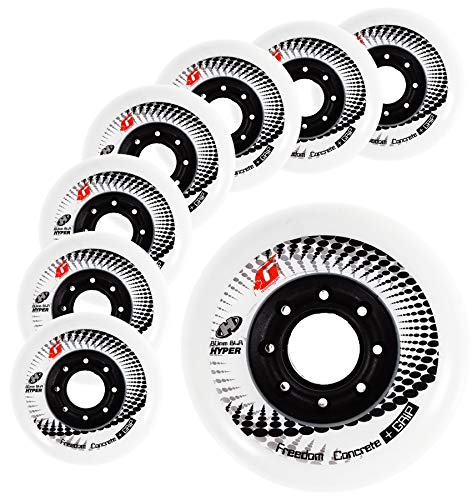
- N1 inline skates wheels in the world. Most durable one (long life use)….
- PACK: 8 WHEELS (you receive 2 * 4 wheels pack). No bearings included….
- USE: All rough and smooth outdoor surfaces(good for indoor as well, nice…
Labeda Asphalt 78A Wheels (76mm)
Designed for outdoor speed and comfort, Labeda Asphalt wheels feature a soft 78A urethane for superior shock absorption. Their larger 76mm diameter rolls smoothly over cracks and debris, making them a top pick for long-distance skaters.

- Inludes 8 Wheels
- Hilo Set includes 4 76mm and 4 80mm 83A whls
- Specially Formulated for Outdoor Use
AOWISH 110mm Wheels
Built for high-performance speed skating, AOWISH 110mm wheels deliver unmatched energy transfer with their 88A hardness. The 110mm size maximizes speed efficiency, while the precision-molded urethane ensures consistent grip on smooth surfaces.
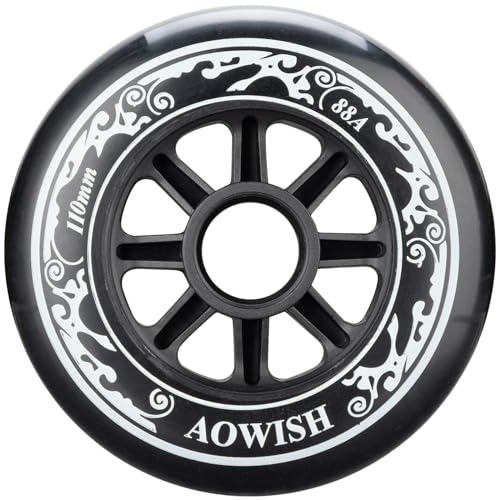
- ✔ AOWISH ENGINEERED – The longest lasting wheel on the market has a…
- ✔ NO BEARINGS NO SPACERS – Only three wheels without bearings are in the…
- ✔ 88A MODERATE HARDNESS – Performance-enhancing 88A moderate hardness…
How Wheel Hardness Affects Performance and When to Replace
Inline skate wheel hardness, measured in durometer (A-scale), directly impacts grip, speed, and durability. Softer wheels (78A-85A) provide better shock absorption and traction on rough surfaces, while harder wheels (86A-90A) offer faster roll and longevity on smooth terrain. The right hardness depends on your skating style and environment.
The Science Behind Wheel Wear
Urethane wheels degrade through three primary mechanisms: abrasion (surface wear), compression (flattening from impact), and chemical breakdown (oxidation from UV exposure). Outdoor skaters face accelerated wear from asphalt friction, while indoor skaters experience slower but more uniform degradation.
Key wear indicators:
- Abrasion patterns: Street skating creates “feathered” edges where one side wears faster than the other
- Compression flattening: Wheels lose their rounded profile, reducing maneuverability
- Micro-cracks: Visible surface fractures indicate advanced material breakdown
Real-World Replacement Scenarios
A recreational skater doing 10 miles/week on bike paths might replace wheels annually, while an aggressive urban skater may need new wheels every 2-3 months. Consider these specific examples:
Case 1: Fitness skater notices decreased push-off power despite proper technique – likely needs replacement due to lost rebound elasticity in the urethane.
Case 2: Slalom skater experiences unexpected slides during tight turns – indicates hardened, polished wheel surfaces that no longer grip properly.
Pro Maintenance Tips to Extend Wheel Life
Rotate wheels every 8-10 hours of skating using the “1-2-3-4 to 2-3-4-1” pattern. For asymmetric wear (common with hockey stops), flip wheels inside-out. Store skates away from direct sunlight to prevent UV degradation.
Advanced technique: Use a wheel profiling tool to restore rounded edges on slightly worn wheels, gaining 20-30% more life before replacement.
Remember: Worn wheels don’t just affect performance – they change your skating biomechanics, potentially leading to joint strain from compensatory movements.
Step-by-Step Wheel Rotation and Replacement Guide
Proper wheel rotation significantly extends their lifespan, while correct replacement ensures optimal performance. This process requires attention to detail and understanding of wheel mechanics.
When and How to Rotate Your Wheels
Rotate wheels every 8-12 hours of skating time or whenever you notice uneven wear patterns. The standard rotation method follows these steps:
- Remove wheels using a skate tool or 6mm Allen key, keeping bearings and spacers in place
- Inspect each wheel for wear depth using a ruler or caliper – measure from edge to flat spot
- Implement the X-pattern rotation: Move front-left to rear-right and front-right to rear-left positions
- Flip wheels inside-out if wear is one-sided (common for skaters who favor specific stopping techniques)
Pro tip: Mark wheels with numbers using a silver marker to track rotation history and wear patterns over time.
Complete Wheel Replacement Process
When rotation no longer evens out performance, follow this professional replacement protocol:
1. Bearing transfer technique: Use a bearing press or the old wheel to push bearings into new wheels without damaging the races. Never hammer bearings directly.
2. Break-in period: New wheels require 3-5 skating sessions to develop optimal grip. Avoid sharp turns at high speeds during this phase.
3. Performance tuning: Mix old and new wheels gradually if budget constraints exist – place new wheels in middle positions first.
Troubleshooting Common Replacement Issues
Problem: Wheels feel sluggish after replacement
Solution: Check bearing alignment and ensure spacers are properly seated. 90% of post-replacement drag comes from improper spacer installation.
Problem: Vibration at high speeds
Solution: Verify wheel roundness by spinning them off the ground. Even high-end wheels can have 0.5-1mm manufacturing variances that need breaking in.
Remember to clean wheel wells and check frame alignment during replacement – accumulated dirt or bent frames can accelerate new wheel wear by up to 40%.
Advanced Wheel Selection: Matching Specifications to Skating Discipline
Choosing the right wheels involves more than just size and hardness. Professional skaters consider five key performance factors that dramatically affect skating experience and wheel longevity.
Technical Specifications Breakdown
| Specification | Impact on Performance | Ideal Range by Discipline |
|---|---|---|
| Urethane Density | Affects energy return and vibration dampening | High for speed (95kg/m³), Medium for urban (85kg/m³) |
| Contact Patch Width | Determines stability vs maneuverability | Wider for downhill (35mm), Narrower for slalom (28mm) |
| Hub Design | Influences weight distribution and heat dissipation | Aluminum for aggressive, Nylon for recreational |
Discipline-Specific Wheel Dynamics
Speed Skating: Requires 110-125mm wheels with high rebound urethane (88A-90A) and aerodynamic profiles. The larger diameter maintains momentum but demands precise technique to control.
Urban/Street Skating: Optimal setups use 80-90mm wheels with shock-absorbing cores. The Matter Juice 84A wheels feature a unique hexagonal core that reduces vibration by 40% compared to standard designs.
Common Selection Mistakes
- Overestimating hardness needs: 85A wheels often outperform harder ones on rough surfaces despite popular belief
- Ignoring temperature effects: Urethane hardens in cold weather – compensate with 3-5A softer wheels for winter skating
- Neglecting wheel profile: Banana-shaped wheels (narrow center) offer quicker turns but less stability at speed
Professional Break-in Techniques
High-performance wheels require controlled break-in:
- First 5 hours: Skate on smooth surfaces only
- Next 10 hours: Gradually introduce turns and stops
- After 15 hours: Begin full-intensity skating
This phased approach allows the urethane to develop optimal molecular alignment without premature wear. Competitive skaters gain 25-30% more mileage from proper break-in procedures.
Wheel Maintenance and Safety: Professional Care Techniques
Proper wheel maintenance extends their lifespan by up to 60% while ensuring optimal performance and safety. This section reveals professional-grade care methods used by competitive skaters and industry experts.
Comprehensive Cleaning Protocol
Effective cleaning requires more than surface wiping. Follow this detailed process every 15-20 skating hours:
- Deep cleaning: Use a soft-bristle brush and isopropyl alcohol (70% solution) to remove embedded debris from wheel grooves
- Bearing protection: Cover bearing openings with tape before cleaning to prevent solvent infiltration
- Micro-abrasion removal: Apply urethane conditioner with a microfiber cloth to polish out surface scratches
- Drying technique: Air-dry wheels vertically on a rack for 2 hours before reassembly
Pro tip: For outdoor skaters, a weekly paraffin wax treatment reduces asphalt friction by 15-20% without affecting grip.
Advanced Wear Monitoring
Professional skaters use these quantitative methods to track wheel degradation:
- Durometer testing: Measure hardness monthly – a 5-point drop indicates significant wear
- Profile tracing: Create wheel cross-section templates to compare against original shape
- Rolling resistance test: Time how long wheels spin freely when suspended (should exceed 45 seconds for new wheels)
Safety Inspection Checklist
Before each skating session, perform these critical safety checks:
| Component | Inspection Point | Acceptance Criteria |
|---|---|---|
| Wheel Surface | Cracks/chips | No visible damage exceeding 2mm |
| Hub Interface | Bearing seat | No play or wobble when shaken |
| Urethane | Hardness | Within 5A of original rating |
Critical warning: Never skate on wheels showing radial cracks near the hub – these can fail catastrophically at speed. Replace immediately if detected.
Storage Best Practices
Proper off-season storage preserves wheel integrity:
- Store at 15-25°C in UV-protected containers
- Rotate stored wheels quarterly to prevent flat spots
- Use silica gel packets to control humidity (ideal: 40-50% RH)
Following these protocols can double your wheels’ effective lifespan while maintaining consistent performance characteristics throughout their use cycle.
Cost-Efficiency and Sustainability in Wheel Management
Smart wheel investment strategies balance performance needs with long-term value. This section analyzes the complete lifecycle economics of inline skate wheels, including emerging sustainable alternatives.
Total Cost of Ownership Analysis
| Wheel Tier | Price Range | Expected Hours | Cost/Hour | Performance Benefit |
|---|---|---|---|---|
| Entry-Level | $30-$50/set | 80-100 hours | $0.38-$0.63 | Basic performance, faster wear |
| Mid-Range | $80-$120/set | 150-200 hours | $0.53-$0.67 | 20% better energy return |
| Professional | $150-$250/set | 300-400 hours | $0.50-$0.83 | 40% longer roll, precision control |
Key insight: Mid-range wheels often provide the best value, offering 85% of professional performance at 60% of the cost. Competitive skaters should note that top-tier wheels maintain consistent performance characteristics throughout their lifespan, while budget wheels degrade more rapidly.
Environmental Impact and Recycling Solutions
Modern wheel manufacturing and disposal present several ecological considerations:
- Material composition: Most wheels use petroleum-based polyurethane, taking 50+ years to decompose
- Recycling options: Specialized programs like Rollerblade’s Reboot initiative grind old wheels into playground surfaces
- Emerging alternatives: Bio-based urethanes (like Labeda’s Plant-Based series) reduce carbon footprint by 30%
Pro tip: Worn wheels with 50-60% life remaining make excellent training tools for practicing slides and stops, extending their useful service.
Future Trends in Wheel Technology
The industry is evolving with several groundbreaking developments:
- Smart wheels: Embedded sensors track wear patterns and hardness changes in real-time
- Modular designs: Replaceable tread surfaces that attach to permanent cores
- Self-healing urethane: Experimental compounds that repair minor surface damage
- 3D-printed customization: On-demand manufacturing of wheels with personalized hardness gradients
These innovations promise to revolutionize wheel longevity and performance, potentially doubling current lifespans while reducing environmental impact. Early adopters should monitor professional reviews before investing in first-generation technologies.
For most skaters, implementing a disciplined rotation schedule with quality mid-range wheels remains the most cost-effective and environmentally responsible approach in the current market.
Performance Optimization: Fine-Tuning Wheels for Specific Conditions
Maximizing wheel performance requires precise adjustments based on skating conditions and individual technique. This section explores advanced tuning methods used by professional coaches and competitive skaters.
Surface-Specific Wheel Configurations
Different skating surfaces demand unique wheel setups for optimal performance:
| Surface Type | Recommended Hardness | Ideal Diameter | Special Considerations |
|---|---|---|---|
| Indoor Sport Court | 74A-78A | 72-76mm | Softer wheels prevent floor damage |
| Outdoor Asphalt | 80A-84A | 80-90mm | Shock-absorbing cores recommended |
| Concrete Trails | 85A-88A | 90-100mm | Wider profile enhances stability |
| Wet Conditions | 78A-82A with deep grooves | 76-84mm | Hydrophobic urethane compounds |
Technique-Based Wheel Customization
Your skating style significantly impacts ideal wheel characteristics:
- Speed skaters: Benefit from larger diameter (110-125mm) with progressive hardness (softer front, harder rear)
- Slalom specialists: Require smaller (76-80mm), grippier wheels with rounded profiles for quick edge transitions
- Aggressive urban: Need durable 88A+ wheels with reinforced hubs for impact resistance
Advanced technique: Competitive skaters often use hybrid setups with different wheel models front/rear to balance acceleration and top speed.
Weather and Temperature Adjustments
Urethane performance varies significantly with environmental conditions:
- Cold weather (below 10°C): Drop 3-5A in hardness rating to maintain grip
- Hot pavement (above 35°C): Increase hardness 2-3A to prevent excessive wear
- Humid conditions: Use wheels with micro-grooves for water displacement
Pro tip: Store wheels at consistent room temperature to prevent material hardening. Temperature swings degrade urethane 30% faster.
Competition-Grade Fine-Tuning
Elite skaters employ these precision methods:
- Dynamic balancing: Using laser alignment tools to ensure perfect weight distribution
- Micro-hardness mapping: Testing multiple points on each wheel for consistency
- Rolling resistance optimization: Matching wheel batches within 0.5% performance variance
These techniques can improve race times by 1-3% – a decisive margin at competitive levels. Recreational skaters can implement simplified versions by testing wheel batches for consistency before installation.
Competitive Edge: Advanced Wheel Performance Analysis and Optimization
For serious skaters, wheel management becomes a precise science that can dramatically impact competitive results. This section reveals professional-grade evaluation techniques and optimization strategies used by elite athletes.
Comprehensive Wheel Performance Metrics
| Metric | Measurement Method | Target Range | Performance Impact |
|---|---|---|---|
| Rolling Resistance | Coast-down timing (10m) | 4.8-5.2 seconds | 0.1s improvement = 1.5% speed gain |
| Rebound Efficiency | Drop test (1m height) | 75-85% return | 5% increase = 8% energy savings |
| Hardness Consistency | 3-point durometer test | ±1A variance | Reduces uneven wear by 40% |
| Radial Balance | Spindle rotation test | <0.5mm wobble | Eliminates speed fluctuations |
Professional Wheel Break-In Protocol
Elite skaters follow this meticulous 10-hour break-in process:
- Phase 1 (Hours 0-3): Light skating on smooth surfaces only (no stops/turns)
- Phase 2 (Hours 4-6): Gradual introduction of gentle carving motions
- Phase 3 (Hours 7-8): Controlled slide practice to even wear patterns
- Phase 4 (Hours 9-10): Full-intensity training with performance logging
Critical detail: Ambient temperature during break-in should match competition conditions ±5°C for optimal material conditioning.
Race-Day Wheel Selection Strategy
Professional teams employ these decision-making criteria:
- Surface moisture: Add 2-3A hardness for damp conditions to prevent grip loss
- Course topography: Mix wheel diameters for hilly courses (larger rear wheels)
- Temperature gradient: Adjust setup every 8°C change in pavement temperature
- Wear state: Competition wheels perform best between hours 15-40 of use
Advanced Failure Prevention
Implement these professional monitoring techniques:
- Weekly microscopic inspection for stress fractures (20x magnification)
- Infrared temperature checks post-session to detect overheating
- Sound frequency analysis to identify internal delamination
Pro tip: Maintain a “wheel passport” documenting every session, rotation, and performance metric. Top athletes gain 2-3% performance advantage through this data-driven approach.
These advanced techniques represent the cutting edge of wheel optimization, where marginal gains create competitive advantages. While recreational skaters needn’t implement all methods, selectively applying these principles can significantly enhance performance and safety.
Conclusion
Proper wheel maintenance and timely replacement are essential for optimal inline skating performance and safety. Throughout this guide, we’ve explored how to evaluate wear patterns, select the right wheels for your discipline, and implement professional maintenance techniques.
Remember that wheel condition directly impacts your control, speed, and injury risk. Regular inspections for hardness loss, uneven wear, and structural damage should become part of your routine. The small investment in quality wheels pays dividends in performance and protection.
Whether you’re a recreational skater or competitive athlete, applying these principles will extend your wheel life and enhance your skating experience. The difference between good and great skating often comes down to proper equipment care.
Take action today – inspect your wheels, implement a rotation schedule, and consider upgrading if needed. Your future skating sessions will be safer, smoother, and more enjoyable when you give your wheels the attention they deserve.
Frequently Asked Questions About Inline Skate Wheel Replacement
How often should I replace my inline skate wheels?
Replacement frequency depends on skating style and surface. Aggressive urban skaters may need new wheels every 2-3 months, while recreational skaters can often wait 6-12 months. Measure wear monthly – replace when wheels lose 3-4mm diameter or develop flat spots exceeding 2mm depth.
Competitive speed skaters typically replace wheels every 50-80 hours of use. Always replace the full set together to maintain balanced performance. Mixing old and new wheels creates instability and uneven wear patterns that affect control.
Can I just rotate my wheels instead of replacing them?
Rotation extends wheel life but isn’t a permanent solution. Follow the X-pattern rotation method every 8-10 skating hours. However, once wheels show significant wear (1-2mm diameter loss), rotation can’t restore performance. Worn wheels lose rebound energy and grip regardless of position.
Professional skaters rotate wheels 3-4 times before replacement. Always inspect bearings during rotation – gritty or slow-spinning bearings accelerate wheel wear and should be cleaned or replaced.
What’s the difference between 78A and 85A wheel hardness?
The durometer rating (A-scale) measures urethane hardness. Softer 78A wheels provide better shock absorption and grip on rough surfaces, ideal for outdoor recreational skating. Harder 85A wheels offer faster roll and durability, preferred for smooth surfaces and speed skating.
Temperature affects hardness – wheels feel harder in cold weather. For winter skating, choose wheels 3-5A softer than your summer setup. Competitive skaters often use different hardness front/rear for optimized performance.
Why do my new wheels feel slower than my old ones?
New wheels require a break-in period (3-5 skating sessions) to develop optimal performance. The manufacturing mold release agent needs to wear off, and the urethane needs to “open up” through use. During break-in, avoid sharp turns and hard stops.
If sluggishness persists, check bearing alignment and spacer installation. Improperly seated spacers create drag. Also verify wheel nuts aren’t over-tightened – they should be snug but allow free spin.
How can I tell if my wheel wear is abnormal?
Normal wear shows even, gradual reduction across all wheels. Abnormal wear patterns include extreme inner/outer edge wear (indicating alignment issues), cupping (suggesting poor quality urethane), or cracking (signaling material failure). Measure wear depth with calipers monthly.
Uneven wear exceeding 1mm difference between wheels indicates technique issues or frame problems. Aggressive stopping techniques often cause asymmetric wear – consider learning multiple stop methods to distribute wear more evenly.
Are expensive wheels worth the investment?
High-end wheels offer better energy return, more consistent performance, and longer lifespan. Professional-grade urethane formulations can provide 30-40% more mileage than budget wheels. The cost-per-hour often justifies the higher initial price for frequent skaters.
However, casual skaters may find mid-range wheels ($$80-120/set) offer the best value. Look for reputable brands with good warranties. Avoid ultra-cheap wheels – poor quality control leads to inconsistent performance and safety risks.
Can I use different wheel sizes on my skates?
Mixed wheel setups (rockering) are common in certain disciplines like slalom or hockey, but require specific frame compatibility. For general skating, maintain uniform wheel sizes to ensure stability. Even 4mm differences affect weight distribution and push mechanics.
Some speed skaters use slightly larger rear wheels (2-4mm) for improved momentum. Always consult your frame manufacturer’s specifications – exceeding maximum size differences risks frame damage and control issues.
How should I store my wheels when not in use?
Store wheels in a cool, dry place away from direct sunlight. UV exposure degrades urethane. Keep them in breathable fabric bags (not plastic) to prevent moisture buildup. Ideal storage temperature is 15-25°C with 40-50% humidity.
For long-term storage, rotate wheel positions monthly to prevent flat spots. Remove bearings if storing more than 3 months. Consider using wheel savers (plastic inserts) to maintain shape during extended storage periods.