Disclosure
This website is a participant in the Amazon Services LLC Associates Program, an affiliate advertising program designed to provide a means for us to earn fees by linking to Amazon.com and affiliated sites.
Inline skating is an exhilarating sport, but finding the right place to learn can be overwhelming. You want expert guidance, safety, and fun—but where do you star
Many assume only skate parks work, but that’s a myth. From indoor rinks to online courses, multiple options fit your skill level and schedule.
Best Inline Skates for Learning Inline Skating
Rollerblade RB Cruiser W
The Rollerblade RB Cruiser W (model RBW) is perfect for beginners with its supportive boot and smooth-rolling 80mm wheels. Its durable construction and comfortable liner ensure stability, making it ideal for mastering basic strides and turns.

- MOLDED BOOT SKATES are perfect for the skater who wants to experience…
- SUPPORTIVE AND VENTILATED the RB Cruiser W molded shell provides…
- GREAT PADDED PERFORMANCE LINER with additional heel shock absorber for…
K2 Kinetic 80 Pro
The K2 Kinetic 80 Pro features a soft boot for flexibility and a responsive fit, great for new skaters. Its 80mm wheels and rockerable frame allow easy maneuverability, while the breathable design keeps feet cool during practice.

- Speed Lacing – Secures skates with one pull making it easy to put on and…
- Stability Plus Cuff – Provides the right amount of support, flexibility,…
- F.B.I. frame – is a vibration-absorbing composite frame that is interlocked…
Powerslide Phuzion Radon 80
With its adjustable frame and cushioned liner, the Powerslide Phuzion Radon 80 offers a customizable fit for learners. The 80mm wheels provide a smooth glide, and the sturdy build ensures long-lasting performance for skill progression.
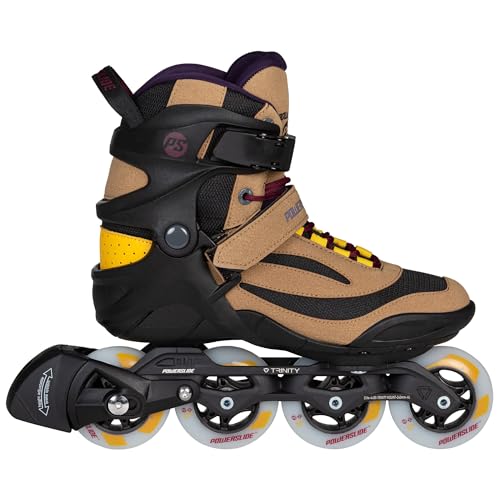
- Brown / black
Where to Learn Inline Skating: Top Training Locations
Learning inline skating requires the right environment—somewhere safe, smooth, and supportive. The ideal location depends on your skill level, goals, and available resources. Let’s explore the best places to practice, from beginner-friendly spots to advanced training grounds.
1. Local Skate Parks and Rinks
Skate parks aren’t just for aggressive skaters—many offer beginner sessions with smooth, obstacle-free zones. Look for rinks with:
- Padded flooring to cushion falls
- Rental gear if you’re testing equipment before buying
- Beginner classes led by certified instructors
Example: Many YMCA locations host “Learn to Skate” nights with discounted entry for first-timers. Call ahead to check if they accommodate inline skaters (some are ice- or roller-only).
2. Empty Parking Lots and Tennis Courts
Smooth, flat surfaces are critical for mastering basics like balancing and stopping. Asphalt parking lots (post-business hours) and unused tennis courts provide:
- Consistent pavement without cracks or debris
- Marked lines to practice straight-line drills
- Low traffic for uninterrupted sessions
Pro Tip: Avoid basketball courts—their rougher texture slows wheels. Bring a broom to clear small pebbles that could cause falls.
3. Dedicated Bike Trails
Once comfortable with basics, paved trails build endurance and turning skills. Seek trails with:
- Wide paths (6+ feet) for safe passing
- Gentle slopes to practice speed control
- Mile markers to track progress
Example: The Chicago Lakefront Trail has smooth concrete sections perfect for intermediate skaters. Early mornings offer fewer cyclists to navigate.
4. Online Coaching Platforms
For remote learners, platforms like SkateFresh Academy provide structured video courses covering:
- Foot positioning drills with slow-motion demos
- Fall recovery techniques to build confidence
- Progress tracking through skill checklists
Note: Pair online lessons with a full-length mirror to self-correct form. Many programs offer live Zoom critiques for personalized feedback.
Each location serves different needs—beginners should prioritize controlled environments, while advanced skaters can explore trails. Always check local regulations; some parks restrict skating hours or require protective gear.
Essential Gear and Safety Precautions for Beginner Inline Skaters
Proper equipment and safety knowledge form the foundation of successful inline skating. Many beginners underestimate how specialized gear impacts learning speed and injury prevention. Let’s break down exactly what you need and why each component matters.
1. Must-Have Protective Equipment
Never skate without these four critical safety items:
- Helmet (CPSC-certified): Look for multi-impact models like the Triple Eight Dual Certified with sweat-wicking liners. The hard outer shell disperses impact forces while the EPS foam absorbs shock.
- Wrist guards: Ennui City Braces feature splints that bend at 45° to prevent hyperextension while allowing push-off motions. 80% of beginner falls involve hands hitting pavement.
- Knee pads: Pro-designed pads like the 187 Killer Pro have articulated caps that stay in place during knee bends. The D3O foam hardens on impact to protect patellas.
- Elbow pads: Avoid slip-on styles; the Smith Scabs Elite uses medical-grade silicone grippers that won’t slide during falls.
2. Skate Setup for Beginners
Your first skates should prioritize stability over speed:
- Wheel hardness (78A-82A): Softer wheels grip better but wear faster. The Rollerblade Hydrogen 80mm/82A offers the ideal balance for street skating.
- Frame alignment: Flat setups (all wheels touching) provide maximum stability versus rockered configurations better for advanced maneuvers.
- Brake positioning: Right-rear brakes are standard, but left-handed skaters can request reverse mounting from shops like Inline Warehouse.
3. Common Mistakes to Avoid
Watch for these frequent beginner errors:
- Over-tightening skates: This restricts ankle mobility needed for proper stride. You should be able to fit one finger between your shin and tongue.
- Neglecting bearing maintenance: Clean ABEC-7 bearings monthly with citrus-based degreasers to prevent gritty rolling resistance.
- Wearing cotton socks: Moisture-wicking blends prevent blisters. Try WrightSock Double Layer with built-in friction control.
Pro Tip: Practice falling in grass before skating. Learn to collapse sideways onto padded areas while keeping fingers curled inward to avoid wrist injuries.
Mastering Fundamental Inline Skating Techniques: A Biomechanical Breakdown
Proper technique transforms awkward movements into fluid motion. Understanding the biomechanics behind each skill helps prevent bad habits that become harder to correct later. Let’s analyze the four foundational techniques every skater must perfect.
1. The Stride: Power Generation and Weight Transfer
An efficient stride combines three precise movements:
| Phase | Body Position | Common Errors |
|---|---|---|
| Push-off | Knees bent 45°, weight on middle wheels, push diagonally backward | Pushing straight back (reduces power) |
| Glide | Balanced on one foot, skating knee slightly forward, arms at 90° | Looking down (shifts center of gravity) |
| Recovery | Foot returns under body in slight “C” curve | Wide leg swings (wastes energy) |
Pro Tip: Practice stationary “scissor stance” drills first – maintain 60/40 weight distribution between feet before attempting motion.
2. The T-Stop: Controlled Deceleration Physics
This essential stopping method works through controlled friction:
- Drag foot angle: 30-45° provides optimal rubber-to-pavement contact
- Weight distribution: 90% on lead foot prevents dangerous spins
- Pressure application: Gradually increase drag pressure over 2-3 seconds
Common mistake: Beginners often place the drag foot too far back, causing instability. The toe of your braking foot should align with your standing foot’s heel.
3. Crossovers: Cornering Dynamics
These circular maneuvers use centripetal force principles:
- Upper body: Shoulders lead into the turn while hips follow
- Foot placement: Crossing foot lands between the other skate’s wheels
- Edge control: Inside edges of both skates create the turning arc
Drill: Set up cone markers in progressively tighter circles to practice lean adjustment.
4. Falling Safely: Impact Dissipation Techniques
Professional skaters use these impact-reducing methods:
- Knee-tap fall: Drop to one knee pad while leaning forward
- Roll-out: Convert forward momentum into a sideways roll
- Four-point contact: Simultaneous knee and hand touch (requires wrist guards)
Advanced Tip: Practice falling at different speeds – slow falls require different techniques than high-speed spills.
Progressing Your Skills: Structured Training Plans for Different Skill Levels
Advancing in inline skating requires systematic training tailored to your current abilities. This section provides detailed progression roadmaps with specific drills, duration recommendations, and performance benchmarks for each development stage.
1. Beginner Foundation Building (First 30 Hours)
Establish core competencies with this 4-week training cycle:
- Week 1-2: Balance Development
- Static stance holds (3x 60 seconds) on different surfaces (carpet, pavement, slight incline)
- Slow marches (lifting knees without rolling) focusing on centered weight distribution
- Assisted glides using railings or walls for support
- Week 3-4: Basic Mobility
- “Duck walks” (short strides with full foot lifts) to develop push-off mechanics
- Controlled stopping drills every 10 feet using heel brakes
- Figure-8 patterns around cones spaced 10 feet apart
2. Intermediate Skill Acquisition (Months 2-4)
Transition to more dynamic movements with this periodized approach:
| Focus Area | Key Drills | Success Metrics |
|---|---|---|
| Stride Efficiency | 1-mile continuous skating maintaining 80% proper form | Under 10 minutes with ≤5 form breaks |
| Edge Control | Slalom through 15 cones at 6-foot spacing | Clean runs at 8-10 mph |
| Advanced Stops | T-stop practice on 2% grade declines | Full stop within 15 feet from 10 mph |
3. Advanced Performance Training (6+ Months)
For skaters targeting fitness or competitive goals:
- Interval Training: 30-second sprints at 90% effort with 90-second recovery, repeated 8-10 times
- Endurance Blocks: 90-minute continuous skates at 60-70% max heart rate
- Technical Sessions: Video analysis of stride mechanics using smartphone slow-motion capture
Progression Tip: Always dedicate 15% of session time to reviewing fundamental skills, even at advanced levels. This prevents technique degradation as you add complexity.
Equipment Maintenance and Long-Term Performance Optimization
Proper inline skate maintenance significantly impacts performance, safety, and equipment lifespan. This section provides a comprehensive guide to preserving your gear through all skating phases, from recreational use to competitive training.
1. Wheel Rotation and Wear Patterns Analysis
Understanding wheel degradation requires monitoring these key indicators:
| Wear Pattern | Cause | Corrective Action |
|---|---|---|
| Conical (tapered) | Excessive T-stops or hard turns | Rotate wheels every 4-6 hours of skating |
| Flat spots | Locked slides or abrupt braking | Replace wheel if >3mm flat section |
| Edge feathering | Improper frame alignment | Check frame bolts for 5Nm tightness |
Pro Tip: Use a digital caliper to measure wheel diameter variance – rotate when difference exceeds 2mm between any wheels.
2. Bearing Maintenance Protocols
High-performance bearings require systematic care:
- Cleaning Frequency: Every 30 skating hours or after wet conditions
- Proper Technique:
- Remove shields with dental pick
- Soak in citrus cleaner for 15 minutes
- Spin-dry in salad spinner
- Apply 1 drop of speed cream per bearing
- Replacement Signs: Audible grinding or >0.5mm axial play
3. Boot Care and Structural Integrity
Extend your skate’s lifespan with these preservation methods:
- Leather Boots: Condition monthly with beeswax-based products to prevent cracking
- Carbon Fiber: Inspect for stress fractures every 50 hours using coin tap test
- Ventilation: Remove liners after each session and use cedar shoe trees
4. Environmental Considerations
Different conditions demand specific preparations:
- Wet Weather: Apply dielectric grease to bearing seals and silicone spray to frames
- Extreme Heat: Store skates away from car trunks to prevent wheel deformation
- Cold Climate: Warm bearings to room temperature before skating to maintain lubricant viscosity
Advanced Insight: Professional skaters log maintenance in equipment journals, tracking hours per component and environmental conditions for optimal replacement timing.
Advanced Maneuvers and Specialized Skating Techniques
Mastering advanced inline skating techniques requires understanding the biomechanics and physics behind each movement. This section breaks down complex maneuvers into their fundamental components with detailed progression drills.
1. Power Stride Optimization
The elite skating stride incorporates three critical power phases:
- Load Phase: 65° knee bend with shoulders forward of hips creates potential energy
- Drive Phase: 45° leg extension through the ball of the foot maximizes force transfer
- Recovery Phase: Foot follows a elliptical path returning under the center of gravity
Drill Progression: Start with stationary “pistol squats” holding skate position, then progress to resisted strides using elastic bands before attempting full-speed execution.
2. Parallel Slide Mechanics
This advanced stopping technique involves precise weight distribution:
| Component | Technical Specification | Common Error |
|---|---|---|
| Body Position | 45° rotation to direction of travel, 70/30 weight distribution | Leaning too far back |
| Edge Angle | 15-20° edge engagement on all wheels | Over-edging causing wheel bite |
| Speed Range | Effective between 8-15 mph | Attempting at low speeds |
3. Backward Skating Dynamics
Effective backward propulsion requires mastering these elements:
Weight Transfer: Shift from heel to toe during each “C-cut” stroke
Head Position:Chin slightly tucked to maintain balanceLooking straight downArm SwingOpposite arm/leg coordinationOver-rotating shoulders
Training Tip: Practice first on a slight decline (1-2% grade) to develop muscle memory before attempting on flat surfaces.
4. Jump Technique Breakdown
Proper jumping form prevents injuries and maximizes height:
- Approach: 3-5 stride buildup at 60% max speed
- Takeoff: Explosive extension through ankles, knees and hips simultaneously
- Air Position: Knees tucked to chest with skates parallel
- Landing: Absorb impact through bent knees, maintaining forward momentum
Progression Drill: Start with curb hops before attempting full jumps, using video analysis to check form mid-air.
5. Advanced Turning Physics
High-speed cornering relies on these principles:
- Centripetal Force: Lean angle determines maximum cornering speed (45° = 1G force)
- Edge Control: Progressive edge pressure prevents wheel slippage
- Body Alignment: Shoulders parallel to turn radius
Practice Method: Set up progressively tighter cone circles, decreasing diameter by 1 foot each lap while maintaining speed.
Competition Preparation and Performance Optimization Strategies
Transitioning from recreational to competitive inline skating requires a systematic approach to training, equipment optimization, and mental preparation. This section provides a comprehensive roadmap for athletes preparing for races or artistic competitions.
1. Periodized Training Cycles
Elite skaters follow scientifically-designed training phases:
| Phase | Duration | Focus Areas | Intensity Level |
|---|---|---|---|
| Base Building | 8-12 weeks | Aerobic capacity, technical drills | 60-70% max HR |
| Strength Phase | 6 weeks | Hill repeats, resistance training | 75-85% max HR |
| Speed Phase | 4 weeks | Interval training, race simulations | 90-95% max HR |
| Taper Phase | 2 weeks | Maintenance, mental preparation | 50-60% max HR |
2. Equipment Fine-Tuning
Competition-grade adjustments require precision:
- Frame Alignment: Laser-align to 0.1mm tolerance for optimal power transfer
- Wheel Hardness: Match durometer to track temperature (e.g., 85A for hot asphalt)
- Bearing Lubrication: Use competition-grade oils with viscosity matched to humidity
3. Race-Specific Strategy Development
Different event types demand specialized approaches:
- Sprints (500m): Power-based starts with 3-5 stride acceleration pattern
- Middle Distance (10k): Drafting techniques and pack positioning strategies
- Marathon (42k): Fueling schedules and pace management
4. Advanced Recovery Protocols
Optimize between training sessions with:
Cryotherapy: 3-minute sessions at -110°C to reduce inflammation
EMS Recovery:20-minute sessions post-workoutEnhances muscle repairNutrition Timing30g protein within 30 minutesMaximizes glycogen replenishment
5. Mental Preparation Techniques
Psychological edge development methods:
- Visualization: Daily 10-minute sessions of perfect race execution
- Pressure Training: Simulated competition scenarios with distractions
- Focus Drills: Object fixation exercises during fatigue states
Competition Tip: Maintain a detailed log tracking equipment configurations, nutrition, and performance metrics for each event to identify winning patterns.Conclusion: Your Journey to Inline Skating Mastery
From selecting your first pair of skates to mastering advanced techniques, we’ve covered every essential aspect of learning inline skating. You now understand the importance of proper gear, safe practice locations, and progressive skill development.
Remember that consistent, focused practice matters more than rushing through skills. The biomechanics and maintenance knowledge you’ve gained will help prevent injuries and extend your equipment’s lifespan.
Whether you’re skating for fitness, competition, or recreation, the structured training approaches we’ve outlined will help you measure and celebrate your progress. Each session builds confidence and capability.
Now it’s time to strap on those skates and start rolling. Begin with basic drills in safe environments, track your improvements, and most importantly – enjoy the ride. The skating community welcomes you!
Frequently Asked Questions About Learning Inline Skating
What’s the best age to start learning inline skating?
Inline skating can be learned at any age, but most instructors recommend starting between 5-10 years old when balance and coordination develop significantly. Adults often progress faster in skill acquisition but may need more protective gear. The key is proper instruction and gradual progression regardless of age.
For young children, look for adjustable skates that grow with their feet. Adults should prioritize supportive boots to prevent ankle strain. Many rinks offer age-specific classes focusing on appropriate skill development for different maturity levels.
How often should beginners practice to see progress?
Beginners should aim for 2-3 sessions weekly, each lasting 30-45 minutes. This frequency allows muscle memory development while preventing fatigue-related injuries. Consistent short practices are more effective than occasional marathon sessions.
Track your progress by recording session duration, distance covered, and skills attempted. Most learners achieve basic gliding and stopping within 8-10 hours of focused practice. Increase duration gradually as endurance improves.
What surfaces are safest for beginner practice?
Smooth concrete or sport court surfaces provide ideal traction for new skaters. Avoid rough asphalt, gravel, or wet surfaces that increase fall risks. Many schools have outdoor basketball courts that work well during off-hours.
Indoor roller rinks offer the most controlled environment. If practicing outdoors, inspect the area for cracks, debris, and slopes. Tennis courts often provide excellent smooth surfaces but check local regulations first.
How do I know when to replace my wheels?
Replace wheels when they develop flat spots larger than 3mm or when diameter reduces by more than 10%. Hardened wheels (over 85A durometer) typically last 6-12 months with regular use, while softer wheels wear faster.
Rotate wheels every 4-6 skating hours to ensure even wear. Performance skaters should measure wheels monthly with calipers. Worn wheels significantly impact stability and push-off efficiency, especially for beginners.
What’s the proper way to fall to prevent injuries?
Always aim to fall forward onto padded areas – knees first, then hands. Keep fingers curled inward to avoid wrist fractures. Practice controlled falls on grass before attempting on hard surfaces to develop muscle memory.
Wear all protective gear during practice falls. Learn to roll through falls rather than bracing abruptly. Most skating injuries occur from backward falls, so mastering the squat position helps maintain low center of gravity.
Can I learn inline skating if I can’t ice skate?
Absolutely. While some skills transfer between disciplines, inline skating has distinct techniques. The wheel base provides more stability than ice skate blades, making certain maneuvers easier to learn initially.
Many find stopping techniques simpler on inlines. However, edge control differs significantly. Focus on inline-specific instruction rather than relying on ice skating experience. The learning curve is manageable for complete beginners.
How tight should inline skates fit?
Skates should fit snugly without causing pain or numbness. You should be able to wiggle toes slightly but not slide forward in the boot. A properly fitted skate will feel uncomfortably tight when new but break in after 8-10 hours of use.
Wear thin performance socks when fitting. The heel should lock in place without lift. Many beginners mistakenly choose oversized skates – remember they shouldn’t fit like regular shoes. Professional fitting is worth the investment.
What’s better for beginners: hard or soft boot skates?
Soft boots offer more comfort and flexibility for new skaters, while hard boots provide superior ankle support. Recreational skaters typically prefer soft boots (like K2 models), while those pursuing aggressive skating need hard shells.
Consider your goals – fitness skaters benefit from soft boots’ ventilation, while technical skaters need hard boot precision. Mid-range hybrid models often work best for beginners unsure of their long-term skating direction.