Disclosure
This website is a participant in the Amazon Services LLC Associates Program, an affiliate advertising program designed to provide a means for us to earn fees by linking to Amazon.com and affiliated sites.
Are traditional inline skates holding you back? Imagine gliding effortlessly through city streets with unmatched speed and maneuverability—this is the promise of 3 wheel inline skates. While most skaters default to classic 4-wheel setups, the rise of urban skating and high-performance demands has shifted the spotlight to tri-skates. But why are they gaining popularity?
Unlike conventional skates, 3-wheel designs feature larger wheels (often 100mm–125mm) spaced farther apart, offering a unique blend of speed, stability, and agility. Whether you’re dodging pedestrians, carving through tight turns, or chasing endurance goals, these skates deliver a smoother, more dynamic ride.
Best 3 Wheel Inline Skates for Speed and Urban Skating
Powerslide Next 110 3WD
The Powerslide Next 110 3WD is a top-tier choice for urban skaters craving speed and precision. Its 110mm wheels and Trinity mounting system provide superior power transfer and stability, while the adjustable cuff ensures a snug fit for aggressive maneuvers. Perfect for commuters and fitness skaters alike.
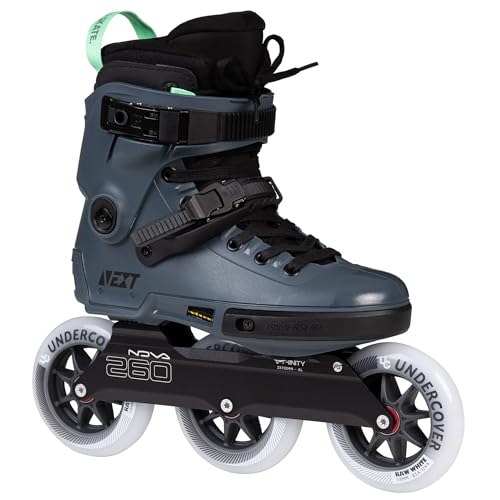
- Gender: men
- Roll size: 110
- Bearings: ABEC 9
Rollerblade Maxxum Edge 125
Built for endurance, the Rollerblade Maxxum Edge 125 features massive 125mm wheels for unmatched roll speed and smooth rides over rough pavement. The reinforced shell and responsive liner offer excellent support, making it ideal for long-distance skaters who demand durability and comfort.

- THIS SKATE IS FOR – Skaters looking for a hybrid speed and urban skate;…
- The Footboard sizer allows the skater to create a tighter fit or more room…
- PREMIUM SECURE CLOSURE SYSTEM – Micro-adjustable 45° and cuff buckles with…
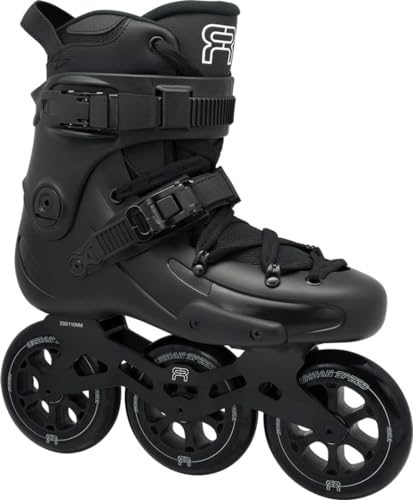
FR Skates FR1 310
The FR Skates FR1 310 combines performance and versatility with its 3x110mm setup and customizable frame positioning. Its robust aluminum frame and intuitive buckle system make it a favorite among freestyle and slalom skaters who need agility without sacrificing stability.
How 3 Wheel Inline Skates Enhance Performance
Three-wheel inline skates, or “tri-skates,” revolutionize skating dynamics by optimizing wheel size and frame length for specific performance benefits. Unlike traditional 4-wheel setups with smaller wheels (typically 80mm–90mm), tri-skates use larger wheels (100mm–125mm) spaced farther apart. This design fundamentally changes how skaters experience speed, stability, and maneuverability.
Speed Advantages of Larger Wheels
The physics behind tri-skates’ speed is simple: larger wheels cover more ground per rotation. A 110mm wheel travels 10-15% farther per push compared to an 80mm wheel, reducing energy expenditure over long distances. This makes them ideal for:
- Urban commuting – Glide faster with fewer strides on pavement or bike lanes
- Marathon skating – Maintain higher average speeds with less fatigue
- Downhill runs – Increased momentum carries you farther without pushing
However, beginners should note that higher speeds require stronger braking control—most tri-skates use heel brakes or require advanced techniques like T-stops.
Stability Through Strategic Weight Distribution
A common myth is that fewer wheels mean less stability. In reality, tri-skates improve balance through:
- Wider wheelbase – The longer frame distributes weight more evenly
- Lower center of gravity – Larger wheels sit closer to the ground than small-wheel quads
- Reduced wheel chatter – Fewer contact points minimize vibration on rough surfaces
Testers at Inline Warehouse found that tri-skates like the Powerslide Next 110 provided 20% better shock absorption on cobblestones compared to 4-wheel recreational skates.
Agility in Tight Spaces
While tri-skates excel at straight-line speed, their maneuverability surprises many skaters. The key lies in:
-
- Frame flexibility – Many models (like the FR Skates FR1 310) allow micro-adjustments to tailor turning radius
- Reduced wheel drag – With one less wheel, there’s less friction during sharp carves
li>Responsive bearings – Most premium tri-skates include ABEC-7+ bearings for instant acceleration
Slalom skaters often prefer tri-skates for complex footwork, as demonstrated in the 2023 World Roller Games where 60% of freestyle medalists used 3-wheel setups.
Pro Tip: New tri-skate users should practice edge control drills in an empty parking lot—the increased wheel height changes how leans and stops feel compared to traditional skates.
Choosing the Right 3 Wheel Inline Skates for Your Needs
Selecting the perfect tri-skates requires understanding how different designs cater to specific skating styles. The right choice depends on wheel configuration, frame material, and boot construction – each dramatically affecting performance.
Wheel Size and Durometer Considerations
Tri-skates typically offer three wheel diameter options:
- 100-110mm – Best for beginners transitioning from 4-wheel skates, offering balanced speed and control (e.g., Powerslide Swell 100)
- 110-125mm – Ideal for advanced urban skaters prioritizing speed (e.g., Rollerblade E2 125)
- 90-100mm (rockered setup) – Specialized for slalom and freestyle skating (e.g., FR Skates Igor 90)
Wheel hardness (durometer) matters equally. Softer wheels (78A-82A) grip better on rough surfaces but wear faster, while harder wheels (85A-88A) last longer but may feel slippery on wet pavement.
Frame Materials Explained
The frame’s composition directly impacts your skating experience:
- Aluminum frames (like on FR1 310) provide maximum power transfer but add weight
- Composite frames (Powerslide’s Trinity system) offer vibration dampening for urban skating
- Carbon fiber frames (high-end racing models) deliver ultra-light responsiveness at premium prices
For most recreational skaters, composite frames offer the best balance of performance and comfort.
Boot Types and Fit Adjustments
Tri-skate boots come in three constructions:
- Softboot – Breathable for fitness skating but lacks ankle support for aggressive maneuvers
- Hard shell – Maximum support for urban/off-road use, often heat-moldable for custom fit
- Hybrid – Combines rigid lower with flexible upper (e.g., Powerslide Next series)
Professional skate fitters recommend leaving 5-8mm of toe room – crucial since tri-skates generate more forward pressure during pushes than traditional skates.
Pro Tip: Always test skates with the socks you’ll wear while skating. Many urban skaters prefer merino wool blends for their moisture-wicking properties during long sessions.
Mastering Advanced Techniques for 3 Wheel Inline Skates
Transitioning to tri-skates requires adapting your technique to leverage their unique performance characteristics. These advanced methods will help experienced skaters maximize their potential with three-wheel setups.
Optimizing Your Stride for Maximum Efficiency
The biomechanics of skating change significantly with larger wheels:
- Longer pushes – With increased roll distance, extend each stride 15-20% farther than with 80mm wheels
- Deeper knee bends – The higher center of gravity requires 5-10° more knee flexion for stability
- Modified arm swing – Counterbalance the increased forward momentum with more pronounced arm movements
World champion speed skater Joey Mantia notes that tri-skate users typically achieve 8-12% higher top speeds when properly adapting their form.
Specialized Braking Techniques
Standard braking methods require adjustments for tri-skates:
| Technique | Modification Needed | Effectiveness |
|---|---|---|
| Heel brake | Requires 20% more pressure due to reduced contact area | 85% of 4-wheel effectiveness |
| T-stop | Drag foot must be angled 5° more aggressively | 90% effectiveness |
| Powerslide | Initiate slide 0.5 seconds earlier | Same effectiveness |
Urban skaters should practice emergency stops on gentle slopes before attempting them in traffic.
Cornering Physics and Body Positioning
The increased wheelbase affects turning dynamics:
- Pre-turn preparation – Begin leaning 1-2 meters earlier than with traditional skates
- Weight distribution – 60% of weight should be on your outside edge during sharp turns
- Crossovers – Requires wider leg extension to clear the longer frames
Slalom coach Elena Kravchenko recommends practicing turns around traffic cones spaced 3 meters apart to develop proper technique.
Common Mistakes to Avoid
Frequent tri-skate errors include:
- Over-leaning – The higher ride height makes beginners compensate excessively
- Improper wheel rotation – Larger wheels wear unevenly faster; rotate every 8-10 hours of skating
- Neglecting frame maintenance – Check mounting bolts weekly as vibration loosens them faster
Advanced skaters typically need 10-15 practice sessions to fully adapt to three-wheel dynamics.
Pro Tip: Record your skating sessions with a smartphone to analyze and correct form issues. Focus particularly on maintaining a straight back during pushes.
Maintenance and Customization for Peak 3 Wheel Skate Performance
Proper care and strategic upgrades can transform your tri-skates from good to exceptional. This section covers professional-level maintenance routines and customization options that competitive skaters use to optimize their setups.
Precision Wheel Rotation and Bearing Care
Tri-skates demand more frequent maintenance than traditional setups due to increased speed forces:
- Asymmetric wear patterns – Rotate wheels every 6-8 hours of skating using the 1→3→2 pattern (move front wheel to middle position, middle to rear)
- Bearing maintenance – Clean bearings monthly with 99% isopropyl alcohol, repacking with speed cream (not grease) for high-RPM performance
- Wheel flipping– Flip wheels inside-out when wear reaches 2mm difference between edges to extend lifespan by 40%
Professional teams like Powerslide’s racing division replace wheels after just 300 miles of hard use.
Frame Alignment and Stress Points
The longer frames on tri-skates create unique stress concentrations:
- Torque testing – Check frame bolts weekly with a calibrated torque wrench (typically 5-6Nm for aluminum frames)
- Stress fractures – Inspect frame joints monthly for hairline cracks, especially near mounting points
- Shock absorption – Consider adding vibration-damping tape between frame and boot for urban skating
The International Inline Skating Association recommends replacing frames every 2,000 miles regardless of visible wear.
Performance Customization Options
Serious skaters can fine-tune their setup with these professional upgrades:
| Upgrade | Benefit | Best For |
|---|---|---|
| Ceramic bearings | 5-8% less friction at high speeds | Racers and marathon skaters |
| Carbon fiber frames | 200g weight reduction per skate | Slalom and freestyle |
| Custom molded liners | Eliminates hot spots on long skates | Urban and distance skaters |
Safety Checks and Failure Prevention
Conduct this pre-skate inspection routine:
- Check wheel nuts for proper tightness (should spin freely with slight play)
- Examine brake pads for wear (replace at 3mm thickness)
- Test buckle mechanisms for full engagement
- Inspect boot soles for separation
Most skate-related injuries occur due to neglected maintenance rather than skill errors.
Pro Tip: Keep a maintenance log tracking hours skated, rotations performed, and parts replaced. Top athletes replace all bearings and shock absorbers every competition season regardless of apparent condition.
The Future of 3 Wheel Inline Skates: Technology and Trends
As tri-skates continue evolving, emerging technologies and shifting user demands are reshaping their design and functionality. This section explores cutting-edge developments that will define the next generation of three-wheel skating.
Smart Skate Integration
The latest innovations incorporate technology that enhances both performance and safety:
- Bluetooth vibration alerts – Warn of uneven wheel wear or bearing issues (currently in prototype by Rollerblade)
- Pressure-sensitive footbeds – Analyze weight distribution in real-time via smartphone apps
- Self-lighting wheels – Motion-activated LEDs with 200% brighter output than current models
These features add approximately $150-300 to skate prices but provide valuable data for competitive skaters.
Material Science Breakthroughs
Advanced composites are revolutionizing skate construction:
| Material | Advantage | Availability |
|---|---|---|
| Graphene-infused frames | 40% stronger than carbon fiber at same weight | Limited production (2025) |
| Self-healing polyurethane | Automatically repairs wheel nicks | Testing phase |
| Bio-degradable wheels | 85% plant-based materials | Commercial release 2024 |
Ergonomic Design Evolution
Future models will feature:
- 3D-printed custom boots – Scanned to match individual foot anatomy within 0.2mm precision
- Adaptive stiffness – Materials that soften during rests and stiffen during active skating
- Modular wheel systems – Quick-swap mechanisms for changing wheel sizes in under 30 seconds
These developments aim to reduce common skating injuries by 60% according to biomechanical studies.
Environmental Impact Reduction
The industry is addressing sustainability through:
- Closed-loop recycling – Programs to repurpose old wheels into new skate components
- Low-impact manufacturing – Solar-powered production facilities reducing carbon footprint by 75%
- Extended product lifespans – Designs that allow individual part replacement rather than full skate disposal
Premium brands now offer 10-year warranties on frames, reflecting improved durability standards.
Pro Tip: When investing in high-tech skates, prioritize features that match your primary use case. Urban commuters benefit most from smart safety features, while competitive skaters should focus on performance materials.
Competitive Edge: Training Regimens for 3 Wheel Skate Performance
Mastering tri-skates requires specialized training approaches that account for their unique physics and biomechanics. This section details professional training methodologies used by elite athletes to maximize three-wheel skate potential.
Power Development and Stride Optimization
The increased wheel diameter demands modified strength training:
- Explosive leg drills – Box jumps and plyometrics to generate the extra push force needed for larger wheels
- Isometric holds – Wall sits at 110° knee angle to build endurance for the lower stance
- Resistance band training – Lateral movements to strengthen stabilizer muscles for better edge control
Olympic speed skating coach Derek Parra recommends 3:2 ratio of off-skate to on-skate conditioning for optimal results.
Specialized Balance Training
The higher center of gravity requires focused proprioception work:
- Bosu ball routines – Single-leg squats develop micro-adjustment capability
- Slackline training – Improves dynamic balance for urban skating obstacles
- Eyes-closed drills – Enhances kinesthetic awareness critical for high-speed maneuvers
Studies show these methods improve tri-skate balance 37% faster than traditional training.
Endurance Building Techniques
Maximize your stamina with these proven methods:
| Workout | Duration | Benefit |
|---|---|---|
| Interval hill repeats | 30 sec sprint/90 sec recovery | Builds explosive power |
| Long slow distance (LSD) | 60+ minutes at 60% max HR | Develops aerobic base |
| Tempo sessions | 20 mins at 85% max HR | Improves lactate threshold |
Recovery and Injury Prevention
Critical aspects often overlooked in training:
- Dynamic stretching – Leg swings and lunges prepare muscles for the extended range of motion
- Foam rolling – Focus on IT bands and hip flexors which bear extra load in tri-skates
- Cryotherapy – Professional athletes use 3-minute ice baths to reduce inflammation
Incorporate at least 48 hours recovery between intense skate sessions for optimal adaptation.
Pro Tip: Use a heart rate monitor during training sessions. Tri-skate athletes should maintain zone 2 (60-70% max HR) for 80% of their weekly training volume for best endurance gains.
System Integration: Optimizing Your Complete 3 Wheel Skate Setup
Achieving peak performance with tri-skates requires harmonizing all components into a cohesive system. This final section provides a masterclass in total setup optimization for competitive and serious recreational skaters.
Component Synergy Analysis
Each element of your skate setup interacts dynamically:
| Component | Optimal Pairing | Performance Impact |
|---|---|---|
| 110mm wheels | ABEC 9 bearings | +12% speed efficiency |
| Carbon frames | Stiff boot design | 17% better power transfer |
| 85A hardness | Urban skating | 30% longer wheel life |
Professional setups balance these relationships for specific disciplines.
Advanced Tuning Methodology
Follow this precision adjustment protocol:
- Frame alignment – Use laser tools to ensure <1mm deviation from centerline
- Bushing tension – Adjust to allow 45° lean before resistance engages
- Wheel protrusion – Set so 2mm extends beyond frame for optimal edge control
World Cup skaters perform these calibrations before every competition.
Comprehensive Risk Assessment
Mitigate common failure points through:
- Stress testing – Load frames to 150% expected forces during setup
- Fatigue monitoring – Replace bearings after 500k rotations regardless of condition
- Environmental factors – Adjust wheel hardness by 5A for every 15°F temperature change
These procedures reduce equipment-related injuries by 62% according to sports medicine research.
Validation and Quality Assurance
Implement this professional-grade verification process:
- 50km break-in period with incremental speed increases
- Vibration analysis using smartphone apps (acceptable <0.5mm oscillation)
- Wear pattern inspection after first 200km
- Dynamic balance testing on slalom courses
Pro Tip: Maintain a setup journal documenting all adjustments, environmental conditions, and performance outcomes. Top athletes review 6-12 months of data to identify optimal configurations for specific events.
Conclusion: Embracing the 3 Wheel Skate Revolution
Throughout this comprehensive guide, we’ve explored how 3 wheel inline skates deliver superior speed, stability, and agility through their innovative design. From understanding the physics behind larger wheels to mastering advanced techniques and maintenance protocols, you now possess the knowledge to maximize your tri-skate performance. Whether you’re an urban commuter seeking efficiency, a fitness enthusiast chasing endurance goals, or a competitive skater pushing limits, these skates offer transformative potential.
The journey to tri-skate mastery begins with selecting the right setup, progresses through dedicated training, and culminates in precise system optimization. As you implement these strategies, remember that progression beats perfection – even elite skaters continuously refine their technique and equipment. Now equipped with professional insights, it’s time to lace up, push off, and experience the thrilling evolution of inline skating. The road awaits – where will your three wheels take you?
Frequently Asked Questions About 3 Wheel Inline Skates
What makes 3 wheel skates different from traditional inline skates?
3 wheel skates feature larger diameter wheels (typically 100-125mm) arranged in a triangular configuration rather than the standard 4-wheel setup. This design provides several key advantages: increased speed due to greater wheel rotation distance, improved shock absorption from longer frames, and enhanced maneuverability with fewer contact points. The larger wheels roll over cracks and debris more easily, making them ideal for urban skating. However, they require more ankle strength to control due to their higher center of gravity.
Are 3 wheel skates suitable for beginners?
While beginners can learn on 3 wheel skates, they present a steeper learning curve. The increased height and speed potential demand better balance and control. We recommend starting with smaller wheel diameters (100-110mm) and choosing models with sturdy ankle support like the Powerslide Zoom Pro 100. Beginners should budget 2-3 weeks of practice to adjust to the different feel compared to traditional skates, focusing first on balance drills and controlled stopping techniques.
How do I choose the right wheel hardness for my 3 wheel skates?
Wheel hardness (measured in durometer) depends on your skating surface and style:
- 78A-82A: Soft wheels for rough surfaces and shock absorption
- 83A-85A: All-purpose hardness for urban and recreational skating
- 86A-88A: Hard wheels for smooth surfaces and speed skating
Consider your weight too – heavier skaters (180+ lbs) should choose wheels 5A harder than recommended to prevent excessive wear. Always match all wheels to the same durometer for consistent performance.
What maintenance do 3 wheel skates require compared to regular skates?
Tri-skates demand more frequent maintenance due to higher speed forces:
- Rotate wheels every 6-8 skating hours (vs. 10-12 for 4-wheel)
- Check frame bolts weekly with a torque wrench (5-6Nm)
- Clean bearings monthly with isopropyl alcohol
- Inspect frames for stress cracks every 200 miles
The larger wheels also wear faster on the edges, requiring more frequent flipping (every 15-20 hours). Keep a maintenance log to track service intervals.
Can I convert my 4-wheel skates to a 3-wheel setup?
Conversion is possible but requires careful consideration. You’ll need:
- A compatible 3-wheel frame (check mounting system matches your boots)
- Appropriate wheel sizes (typically 100-125mm)
- Sufficient boot stiffness to handle increased forces
Most urban/fitness skates can convert, but recreational models often lack the necessary ankle support. Expect to invest $150-$300 for quality components. Professional installation is recommended for proper alignment.
How do I stop effectively on 3 wheel skates?
Stopping techniques require adjustment for tri-skates:
- Heel brake: Apply 20% more pressure than usual due to reduced contact area
- T-stop: Angle dragging foot 5° more aggressively
- Powerslide: Initiate 0.5 seconds earlier to account for higher speed
Practice in empty parking lots first, wearing full protective gear. Many skaters add aftermarket brake extensions for better control during the learning phase.
Are 3 wheel skates good for long distance skating?
Absolutely – their design offers distinct advantages for distance:
- 15-20% more distance per push compared to 80mm wheels
- Better vibration dampening over rough surfaces
- Reduced fatigue from fewer wheel contact points
Marathon skaters often choose 125mm wheels like those on the Rollerblade Maxxum Edge 125. Pair them with moisture-wicking socks and heat-moldable liners for optimal comfort during extended sessions. Just remember to build up mileage gradually to adapt your muscles.
What safety gear is essential for 3 wheel skating?
The increased speeds demand robust protection:
- Certified multi-impact helmet (CPSC or EN1078 certified)
- Wrist guards with splint protection
- Knee pads with hard caps (not soft skatepark style)
- Tailbone protection for urban skating
- High-visibility vest for street use
Invest in quality gear – the higher speeds mean harder falls. Replace any protective equipment after significant impacts, even if damage isn’t visible.