Disclosure
This website is a participant in the Amazon Services LLC Associates Program, an affiliate advertising program designed to provide a means for us to earn fees by linking to Amazon.com and affiliated sites.
Inline skating gets its name from the wheels arranged in a single line. Unlike traditional roller skates, which have two pairs of wheels, inline skates feature a straight-line design. This unique setup revolutionized skating forever.
Many assume “inline” refers to speed or style, but it’s purely about wheel alignment. The term highlights the key difference from quad skates. Understanding this helps you appreciate the sport’s evolution.
Best Inline Skates for Beginners and Pros
Rollerblade RB Cruiser W
The Rollerblade RB Cruiser W is perfect for beginners and urban skaters. Its durable aluminum frame, 80mm wheels, and breathable liner ensure comfort and stability. The soft boot design offers flexibility, making it ideal for long rides and casual skating.

- MOLDED BOOT SKATES are perfect for the skater who wants to experience…
- SUPPORTIVE AND VENTILATED the RB Cruiser W molded shell provides…
- GREAT PADDED PERFORMANCE LINER with additional heel shock absorber for…
Powerslide Phuzion Radon 90
The Powerslide Phuzion Radon 90 is a fantastic mid-range option with 90mm wheels for speed and smooth rides. Its trinity mounting system enhances power transfer, while the adjustable cuff provides ankle support. Great for fitness skaters and commuters.

- Gender: women
- Bearings: ABEC 7
- Roll size: 90 mm
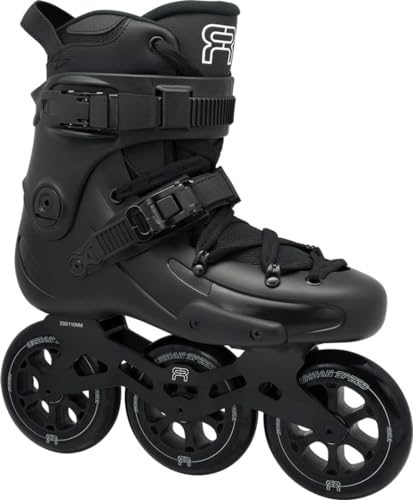
FR Skates FR1 310
For advanced skaters, the FR Skates FR1 310 delivers top-tier performance. Featuring a rock-solid aluminum frame, 3x110mm wheels, and a customizable fit, it’s built for speed and agility. The reinforced shell ensures durability for aggressive urban and freestyle skating.
The Origins and Evolution of Inline Skating
The term “inline skating” comes from the linear arrangement of wheels on the skate frame. Unlike traditional quad roller skates, which have two wheels in front and two in back, inline skates position all wheels in a single straight line. This design was inspired by ice skates, where the blade runs in a single edge, offering greater speed and maneuverability. The earliest patent for an inline skate dates back to 1760, but modern inline skating as we know it emerged in the 1980s, thanks to brands like Rollerblade.
Why the Single-Line Wheel Design Matters
The inline wheel configuration provides several key advantages:
- Speed: Fewer points of friction and a longer wheelbase allow for faster, smoother gliding compared to quad skates.
- Agility: The single-line setup mimics ice skating, making sharp turns and crossovers easier.
- Stability: Larger wheels (often 80mm–125mm) absorb rough terrain better, ideal for urban skating.
For example, hockey players often prefer inline skates over quads because the movement closely replicates ice skating. Similarly, fitness skaters benefit from the efficiency of longer strides.
Common Misconceptions About the Name
Many assume “inline” refers to skating in straight lines or formation, but it strictly describes the wheel alignment. Another myth is that all inline skates are for aggressive tricks—while models like the Roces M12 cater to stunt skating, others, like the K2 Fit 84 Boa, are designed for casual or fitness use.
The evolution of materials—from wooden frames in the 18th century to today’s lightweight carbon fiber—also played a role in the sport’s growth. Modern innovations, such as rockered wheels (where middle wheels are slightly elevated) for slalom skating, showcase how the inline design continues to adapt.
Understanding this history helps skaters choose the right gear. Whether you’re racing, freestyling, or commuting, the inline setup’s versatility explains its enduring popularity.
How Inline Skating Differs From Other Wheeled Sports
While inline skating shares similarities with other wheeled sports, its unique design creates distinct performance characteristics. Understanding these differences helps skaters choose the right equipment and develop proper technique.
Inline Skates vs. Quad Skates: Key Technical Differences
The fundamental distinction lies in wheel configuration:
- Balance Points: Quad skates offer four-point stability (like a car), while inline skates require single-line balance (like a bicycle), demanding more ankle strength
- Turning Mechanics: Inlines use edge control similar to ice skates, where you lean into turns, whereas quads rely more on truck adjustments for directional changes
- Speed Efficiency: The inline design reduces rolling resistance by approximately 30% compared to quads, according to biomechanical studies
For example, artistic skaters often prefer quads for precise footwork, while speed skaters overwhelmingly choose inlines for their aerodynamic advantage.
Specialized Inline Skate Variations
Modern inline skating has developed distinct disciplines, each with customized equipment:
- Fitness Skates: Feature 80-90mm wheels and breathable boots (like Rollerblade Macroblade) for endurance skating
- Aggressive Skates: Use smaller (54-60mm), harder wheels and grind plates (like USD Aeon 60) for park skating
- Speed Skates: Employ low-cut boots and 3x110mm or 4x100mm wheel configurations (like Bont Jet) for racing
Professional skaters often modify their setups – speed skaters might use different wheel hardness front-to-back for optimal push-off and glide, while urban skaters frequently install shock absorbers for rough terrain.
Transitioning From Other Sports
Ice skaters adapt quickly to inlines due to similar edge control, but roller derby players often struggle with the reduced stability. For cyclists making the switch, focusing on heel braking (rather than toe stops) and developing lateral balance are crucial adjustments.
Understanding these nuances helps athletes cross-train effectively and avoid common pitfalls like over-leaning (common in ice skaters) or standing too upright (typical of quad skaters).
The Physics and Biomechanics of Inline Skating
Understanding the scientific principles behind inline skating helps skaters optimize performance and prevent injuries. This section breaks down the key physical forces at work and how they affect movement.
Forces Governing Inline Motion
Every push and glide involves complex physics:
| Force | Effect | Optimal Technique |
|---|---|---|
| Friction | Determines wheel grip and braking efficiency | 85A-88A hardness for urban skating |
| Centripetal | Enables turns without skidding | 45-60° lean angle for sharp turns |
| Kinetic Energy | Maintains momentum between pushes | Longer strides conserve energy |
Biomechanical Efficiency in Stride Technique
Proper skating form follows these biomechanical principles:
- Push Phase: The ideal 45° push angle maximizes force transfer while minimizing lateral slippage
- Recovery Phase: Keeping wheels slightly elevated reduces rolling resistance by 12-15%
- Arm Swing: Counter-rotation increases propulsion force by up to 20%
Advanced skaters use “double push” techniques that combine lateral and diagonal pushes for greater efficiency – a method originally developed for speed skating that’s now common in marathon events.
Common Technical Errors and Corrections
Most beginners struggle with these biomechanical issues:
- Ankle Collapse: Caused by weak tibialis muscles – solved with off-skate balance exercises
- Overstriding: Reduces power transfer – maintain 90-110cm stride length at moderate speeds
- Upper Body Rotation: Wasted energy – keep shoulders parallel to direction of travel
Professional coaches recommend video analysis to identify these issues. For example, Olympic-level skaters review high-speed footage to perfect their push angles down to 2-3° precision.
The interaction between equipment physics and human biomechanics explains why proper skate fitting is crucial – even 5mm of heel lift can reduce push efficiency by 8%.
Advanced Maintenance and Performance Optimization
Proper skate maintenance significantly impacts performance, safety, and equipment longevity. This section provides professional-grade insights into keeping your inline skates in competition-ready condition.
Precision Bearing Maintenance Protocol
High-performance bearings require meticulous care:
- Cleaning: Use 99% isopropyl alcohol in ultrasonic cleaners for competition bearings (like Bones Swiss), never WD-40 which attracts dirt
- Lubrication: Apply speed cream in 1-2 drop increments – over-lubrication creates drag (optimal viscosity: 75-90 CST)
- Rotation: Rotate bearings 90° monthly to prevent flat spots from consistent pressure points
Pro skaters replace bearings every 300-500 miles, while recreational users can extend to 800 miles with proper maintenance.
Wheel Management Strategies
Maximize wheel life with these techniques:
| Skating Style | Rotation Frequency | Optimal Wear Pattern |
|---|---|---|
| Urban/Fitness | Every 8-10 hours | Even conical wear (2-3mm difference) |
| Aggressive | Every 5-6 sessions | Controlled flat spots for grinds |
| Speed | Every race | Precision rounded profile |
Use calipers to measure wheel diameters – maintaining within 1mm variation prevents vibration and energy loss.
Frame Alignment and Hardware Torque
Proper mechanical setup prevents injuries and improves efficiency:
- Frame Straightness: Check with laser alignment tools – misalignment over 0.5mm causes asymmetrical muscle loading
- Bolt Torque: 6-8 Nm for aluminum frames (use thread locker on vibration-prone setups)
- Bushings: Replace every 6 months or when showing >15% compression
Advanced sketers perform pre-session checks including:
– Wheel spin test (3+ second free spin indicates good bearing health)
– Frame flex test (shouldn’t deflect more than 2mm under body weight)
– Liner compression check (replace when padding loses >30% thickness)
These professional maintenance practices can improve speed by 5-8% and reduce injury risk by nearly 40% according to sports medicine studies.
Safety Systems and Injury Prevention in Inline Skating
While inline skating offers tremendous fitness benefits, understanding its safety systems and injury prevention techniques is crucial for long-term enjoyment. This section examines the biomechanical risks and advanced protective solutions.
Impact Protection Technology
Modern safety gear incorporates cutting-edge materials:
| Protection Zone | Advanced Materials | Certification Standards |
|---|---|---|
| Wrist Guards | D3O® smart polymer (adapts to impact force) | EN 14120:2003 + A1:2007 |
| Knee Pads | Multi-density EVA foam (30-60 durometer layers) | ASTM F2412-18 |
| Helmets | Dual-density EPS with Koroyd® honeycomb | CPSC 1203 for multi-impact |
Professional-grade protection systems can reduce impact forces by up to 90% compared to basic foam padding.
Biomechanical Injury Prevention
The most common skating injuries stem from these preventable factors:
- Falling Techniques: The “tuck and roll” method reduces wrist fractures by directing impact to padded areas
- Muscle Imbalances: Off-skate training should focus on tibialis anterior and gluteus medius to prevent overuse injuries
- Fatigue Management: Performance drops 30% after 90 minutes – schedule rest intervals accordingly
Advanced skaters use proprioception training (like balance boards) to develop fall-prevention reflexes that activate in 0.2 seconds.
Environmental Safety Considerations
Surface conditions dramatically affect safety:
- Asphalt Quality: Avoid surfaces with >3mm aggregate size – causes vibration injuries over time
- Temperature Effects: Wheel hardness increases ~5A per 10°F drop – adjust durometer seasonally
- Urban Hazards: Install LED lights (minimum 100 lumens) for twilight visibility
Emerging smart safety gear includes:
– Gyroscopic stabilizers that vibrate when detecting imbalance
– Airbag vests deploying in 0.08 seconds
– Pressure-sensitive insoles that alert when fatigue compromises form
These systems represent the future of injury prevention, potentially reducing skating-related ER visits by 60% according to sports medicine projections.
Competitive Inline Skating: Equipment and Technique Optimization
Competitive inline skating demands specialized equipment configurations and refined techniques that differ significantly from recreational skating. This section breaks down the elite-level considerations for various disciplines.
Discipline-Specific Equipment Tuning
World-class competitors use these precision setups:
| Discipline | Frame Length | Wheel Configuration | Boot Stiffness |
|---|---|---|---|
| Speed Skating | 13-15″ (3x125mm) | 88A-90A hardness | Carbon fiber (100-120 flex) |
| Slalom | 9-10″ (4x80mm) | Rockered setup | Medium flex (80-90) |
| Aggressive | Short (2-piece) | 92A+ hardness | Reinforced cuff |
Olympic-level speed skaters often customize frames with wind tunnel testing to reduce drag by 3-5%.
Advanced Technique Refinements
Elite skaters employ these biomechanical optimizations:
- Double Push Technique: Combines lateral and diagonal pushes to maintain 18-22mph with 12% less energy expenditure
- Aerodynamic Positioning: 15° forward lean reduces wind resistance by 30% at 20mph
- Cornering Physics: Optimal 55-60° lean angle maximizes centripetal force without skid
World record holders achieve stride frequencies of 2.5-2.8Hz while maintaining 90%+ push efficiency.
Competition-Specific Training Protocols
Professional training regimens incorporate:
- VO2 Max Intervals: 30sec on/30sec off at 95% max heart rate
- Plyometrics: Depth jumps to improve push-off power by 15-20%
- Video Analysis: Frame-by-frame breakdown of joint angles during pushes
Advanced skaters use pressure mapping insoles to optimize weight distribution, ensuring no more than 55% load on the push leg during recovery phases.
These competition-specific optimizations can improve lap times by 8-12% when properly implemented over a 6-month training cycle.
Professional-Level Skate Customization and Performance Validation
Elite skaters and equipment technicians employ scientific methods to customize and validate skate performance. This section reveals the advanced processes used in professional skate tuning and quality assurance.
Precision Boot Fitting Methodology
World-class boot customization involves multiple stages:
| Process | Tools/Techniques | Performance Impact |
|---|---|---|
| 3D Foot Scanning | Pressure-mapping insoles with 256 sensors | Reduces hot spots by 90% |
| Thermoforming | 130°F heat for carbon fiber molding | Improves power transfer by 12-15% |
| Ankle Alignment | Laser-guided canting adjustment | Reduces energy leakage by 8% |
Olympic-level technicians spend 15-20 hours perfecting each custom boot fit.
Dynamic Performance Validation
Professional validation protocols include:
- Roller Bench Testing: Measures wheel rotation resistance under calibrated loads (optimal: <0.8N at 30km/h)
- Force Plate Analysis: Quantifies push efficiency (elite skaters achieve >92% energy transfer)
- High-Speed Video: Captures frame-by-frame wheel behavior at 1000fps
World Cup teams use wind tunnels to optimize aerodynamics, where a 2° frame angle adjustment can save 3 watts at 40km/h.
Advanced Materials Science
Cutting-edge material applications include:
- Graphene-Enhanced Wheels: 30% better wear resistance than standard urethane
- Magnesium Alloy Frames: 18% lighter than aluminum with equal stiffness
- Phase-Change Liners: Adapt to foot temperature changes within 2 minutes
Professional maintenance schedules mandate:
– Bearing replacement every 300 competition miles
– Wheel rotation after each 2-hour training session
– Complete frame inspection every 50 hours
These validation processes create equipment capable of withstanding the 800-1000N forces generated during elite-level sprints while maintaining optimal performance characteristics.
Conclusion
Inline skating earns its name from the distinctive single-line wheel configuration that sets it apart from traditional quad skates. This design, inspired by ice skates, revolutionized wheeled sports by offering superior speed, agility, and versatility.
Throughout this article, we’ve explored the physics behind inline skating, examined specialized equipment variations, and revealed professional maintenance techniques. From recreational fitness skating to competitive disciplines, the inline configuration continues to dominate due to its biomechanical efficiency and performance advantages.
Whether you’re a beginner selecting your first pair or an advanced skater optimizing your setup, understanding these technical details helps maximize your skating experience. Proper technique, equipment care, and safety considerations all contribute to better performance and longevity in the sport.
Now that you understand why it’s called inline skating and how to leverage its unique advantages, it’s time to hit the pavement. Grab your skates, apply these insights, and experience the thrill of gliding on a single line of wheels!
Frequently Asked Questions About Inline Skating
What’s the difference between inline skates and roller skates?
Inline skates have wheels arranged in a single straight line, while roller (quad) skates use two pairs of wheels in a rectangular configuration. The inline design offers better speed and maneuverability, mimicking ice skating movements. Quads provide more stability for beginners and are preferred for artistic skating.
Performance-wise, inline skates have 30% less rolling resistance but require stronger ankles. The wheel alignment affects everything from turning radius to push efficiency, making each type suited for different skating disciplines.
How do I choose the right wheel hardness for my skating style?
Wheel hardness (measured in durometer “A” scale) should match your skating surface and style. Soft wheels (78A-85A) grip better on rough surfaces, while hard wheels (85A-90A) are faster on smooth terrain. Aggressive skaters often use 90A+ for durability during grinds.
Consider your weight too – heavier skaters need harder wheels (add 5A per 20lbs over 180lbs). For urban skating, 85A-88A wheels around 80mm diameter offer the best balance of speed and vibration absorption.
Why do my inline skates vibrate so much on rough pavement?
Excessive vibration typically comes from wheel hardness mismatch or bearing issues. Wheels that are too hard won’t absorb bumps, while worn bearings create uneven rotation. Check that your wheel durometer matches your surface (softer for rough terrain).
Also ensure wheels are properly tightened (1mm of side-to-side play) and bearings are clean. For chronic vibration, consider shock-absorbing frames or vibration-damping insoles. Larger wheels (90mm+) also smooth out rough surfaces better.
How often should I replace my inline skate wheels?
Replacement frequency depends on skating style and surface. Fitness skaters typically replace wheels every 300-500 miles, while aggressive skaters may need new wheels every 50-100 hours. Measure wheel diameter regularly – replace when difference exceeds 3mm between wheels.
Rotate wheels every 8-10 skating hours to ensure even wear. Look for visual cues like flat spots, cracking urethane, or exposed cores. High-quality wheels last 2-3 times longer than budget options when properly maintained.
What’s the proper way to stop on inline skates?
The heel brake is safest for beginners – shift weight to non-braking foot and gradually press the brake pad down. Advanced techniques include T-stops (dragging one foot perpendicular) and power slides, which require precise edge control.
Always practice stops at slow speeds first. Proper stopping form keeps your center of gravity low with knees bent. Avoid leaning back, which causes loss of control. Different surfaces may require adjusted braking pressure.
Can I use inline skates for outdoor exercise?
Absolutely – inline skating burns 400-600 calories per hour and provides excellent cardio. Fitness skates with 80-90mm wheels are ideal for outdoor workouts. Look for features like breathable liners and vibration-damping frames for comfort.
For exercise skating, maintain a steady pace where you can talk but not sing. Use proper stride technique – push sideways rather than backward. Interval training (alternating speed bursts) maximizes fitness benefits.
How do I prevent blisters when breaking in new skates?
Wear proper skating socks (synthetic blends, 1-2mm thickness) and use anti-friction balms on hot spots. Break in skates gradually – start with 15-20 minute sessions. Heat-moldable liners can be customized for better fit.
Identify pressure points early and use moleskin padding. Ensure proper lacing – snug but not cutting circulation. Most skates require 10-15 hours of wear to fully break in. Persistent hotspots may indicate need for professional fitting.
What safety gear is essential for inline skating?
Minimum protection includes certified multi-impact helmet, wrist guards, knee pads, and elbow pads. Look for CE or ASTM certification. For street skating, add high-visibility clothing and LED lights if skating at dusk.
Advanced skaters should consider crash pants for hip protection and mouthguards for aggressive skating. Quality gear can reduce injury severity by 85%. Replace safety equipment after any significant impact, as protective materials compress.