
Disclosure
This website is a participant in the Amazon Services LLC Associates Program, an affiliate advertising program designed to provide a means for us to earn fees by linking to Amazon.com and affiliated sites.
You might be wondering if you can use a spacer for longer bolts on your skate toe stops. It is a common question because standard bolts sometimes don’t fit every plate or wheel setup perfectly.
I have found that using a spacer can help, but it is not always a simple fix. The wrong spacer can actually make your toe stop feel loose or unsafe, which defeats the purpose of making an adjustment.
No More Wobbly Toe Stops
Frustrated with toe stops that shift or pull out because your bolts are too long? The wrong hardware makes every push feel unstable and ruins your confidence on the rink. The PATIKIL 82A Rubber Roller Skate Toe Stops solve this by including a screwdriver and a design that grips securely, even when you need a spacer for longer bolts.
Grab the PATIKIL 82A Rubber Roller Skate Toe Stops with Screwdriver to lock in your setup and stop worrying about loose hardware: PATIKIL 82A Rubber Roller Skate Toe Stops with Screwdriver

- Color: Clear Pink; Material: Rubber; Hardness: 82A; Thread Size: 28mm x...
- Advantage: Made of rubber with good abrasion resistance and firmer grip...
- Instruction: Insert the bottom of the screw into the larger diameter of the...
Why Getting the Right Toe Stop Fit Matters for Your Safety
I have seen too many skaters try to force a longer bolt into a plate that just was not made for it. That is when things get dangerous fast.
My daughter learned this the hard way last season. She wanted to try a new set of toe stops, but the bolts were too long for her junior plate. We thought a simple spacer would fix everything.
The Real Danger of a Loose Toe Stop
A toe stop that wiggles even a tiny bit can cause a nasty fall. I have felt that sudden loss of control myself during a jam, and it is terrifying.
When the bolt is too long, the toe stop cannot tighten fully against the plate. This creates a gap that lets the stop rock back and forth as you skate.
What Happens When You Ignore the Fit
You might think a little movement is no big deal. But over time, that movement strips the threads inside your plate.
- The toe stop can suddenly spin or pop out during a hard push
- You will feel a weird wobble that makes crossovers feel unstable
- Your expensive plate can get damaged beyond repair
I watched a friend ruin a brand new Roll-Line plate this way. She saved three dollars on the wrong hardware and ended up spending over a hundred dollars on a replacement plate.
How a Spacer Changes the Geometry
Adding a spacer does not just make the bolt longer. It changes the angle and the distance between your toe stop and the floor.
This can throw off your balance when you are doing toe stop work or trying to stop quickly. In my experience, even a few millimeters of difference feels completely wrong under your foot.
How to Know If a Spacer Will Actually Work for Your Setup
Honestly, this is what worked for us after many frustrating trips to the skate shop. I learned to check three things before trying any kind of spacer.
First, look at your plate itself. Some plates have a recessed area where the toe stop bolt goes in, and others are completely flat.
Check Your Plate Type First
A recessed plate has a small pocket that the bolt head sits inside. Adding a spacer here can push the bolt head out, which means it will not sit flush anymore.
I made this mistake on my own skates and the toe stop would not thread in all the way. It felt tight at first, but it came loose during my second lap around the rink.
Measure the Thread Length You Actually Need
Not all longer bolts are the same. Some have extra thread, and some just have a longer smooth shaft.
- If the smooth part is too long, a spacer will not help at all
- You need enough thread to grab at least half the depth of your plate
- I always bring my plate to the shop or measure the hole depth with a small ruler
My son’s skates needed a specific bolt length that we could not find locally. After three failed attempts with wrong spacers, what finally worked was ordering a proper set of toe stops that came with the exact hardware we needed. If you are tired of guessing and wasting money on parts that do not fit, I highly recommend what I grabbed for my kids — it saved us so much headache.

- OVERSIZED CONTACT SURFACE: Rounded shape with a wide footprint for steady...
- DUAL-COMPOUND RUBBER: Designed to balance grip and wear for regular skating...
- LIGHTWEIGHT HOLLOW STEM: Helps reduce overall weight without compromising...
What I Look for When Choosing Toe Stop Hardware
After all the trial and error, I have a simple checklist I follow every time. These four things help me avoid the problems I mentioned earlier.
Thread Pitch Must Match Your Plate
Skate plates use different thread sizes, and they are not interchangeable. I once bought a bolt that looked perfect but had the wrong pitch, and it would not even start threading in.
Most modern plates use a standard 5/16-18 thread, but older plates or some European brands use different sizes. Always check your plate’s manual or ask a shop employee before buying anything.
Bolt Head Shape and Size
The head of the bolt needs to fit snugly into your plate’s recess. A head that is too wide will sit on top of the plate instead of inside it.
I have seen skaters use a hex head bolt that stuck out too far. Every time they pushed off, the bolt head scraped the floor and made a horrible grinding noise.
Material Quality Matters More Than You Think
Cheap bolts are often made of soft metal that strips easily. I learned this when I overtightened a budget bolt and the hex hole rounded out completely.
Stainless steel or hardened steel bolts last much longer and resist rust from sweat or rink floors. Paying a few extra dollars now saves you from replacing stripped hardware later.
Spacer Material and Thickness
If you do need a spacer, make sure it is made of metal, not plastic or rubber. I tried a rubber spacer once and it compressed under pressure, making my toe stop loose again.
Metal spacers hold their shape and give you consistent performance. Just remember that every millimeter of spacer changes how your toe stop feels on the floor.
The Mistake I See People Make With Toe Stop Spacers
I wish someone had told me this earlier: most people grab the thickest spacer they can find thinking it will solve all their problems. That is almost never the right move.
I watched a skater at the rink stack two thick spacers on top of each other. Her toe stop stuck out so far that she tripped over it during a simple warm-up lap and scraped her knee badly on the concrete.
The real fix is almost always finding the correct bolt length for your specific plate. Spacers are meant for tiny adjustments, not for fixing a bolt that is way too long.
If your bolt is more than a few millimeters too long, a spacer will just push the problem further out. You are better off returning the wrong hardware and getting the right size from the start.
I know it feels frustrating to buy something and realize it does not fit. The fear of wasting money makes people try to force a bad solution. If you are tired of guessing and just want skates that work right out of the box, these skates worked for us without any hardware headaches.

- VERSATILE STOPPER FOR ANY SURFACE - The Gumball toe stopper has a natural...
- NATURAL RUBBER DOESN'T LEAVE MARKS - These natural rubber-based roller...
- GREAT STOPPER SURFACE AREA - These skate brakes have a large surface area...
The Simple Check That Saves You From Buying Wrong Hardware
Here is the tip that changed everything for me. Before you buy any spacer or longer bolt, thread your current toe stop into the plate and count how many full turns it takes to get tight.
If your toe stop takes fewer than four full turns to tighten, the bolt is too short and a spacer will make it worse. If it takes more than eight turns, you have room to use a slightly longer bolt or a thin spacer.
I started doing this check on every pair of skates I set up. It takes thirty seconds and has saved me from buying the wrong parts more times than I can count.
You can also use a piece of tape on the bolt to mark where it stops threading in. Pull it out and measure the unthreaded part with a ruler to know exactly how much space you have to work with.
This method works for any plate brand and any toe stop style. My whole roller derby league started doing this after I showed them, and nobody has had a loose toe stop since.
My Top Picks for Toe Stops That Fit Right Without Spacer Hassles
VNAKER PU Rubber Roller Skate Toe Stoppers 1 Pair Jelly Blue — Perfect for Beginners and Kids
The VNAKER Jelly Blue toe stoppers are my go-to for skaters who just want something that works without fuss. I love how the soft PU rubber grips the floor immediately, which gives new skaters confidence during their first toe stops. These are perfect for kids or recreational skaters who do not need aggressive stopping power.
The only trade-off is that the rubber wears down faster than harder compounds, so expect to replace them after a few months of regular use.

- ❤ VERSATILE STOPPER FOR ANY SURFACE - The VNAKER Roller Skate Toe Stopper...
- ❤ LASTING MATERIAL- These PU rubber-based roller skate toe stops will not...
- ❤ GREAT STOPPER SURFACE AREA— Each toe stop measures...
Riedell Antik Gumball Toe Stops Rubber Roller Skate — Built for Durability and Stability
The Riedell Antik Gumball toe stops are what I put on my own skates when I got tired of replacing cheap stops every season. I appreciate how the dense rubber compound holds its shape even after hard stops on outdoor concrete. These are the perfect fit for intermediate skaters and derby players who need reliable stopping power every time.
The honest trade-off is they feel slightly harder underfoot than softer options, which takes a session or two to get used to.
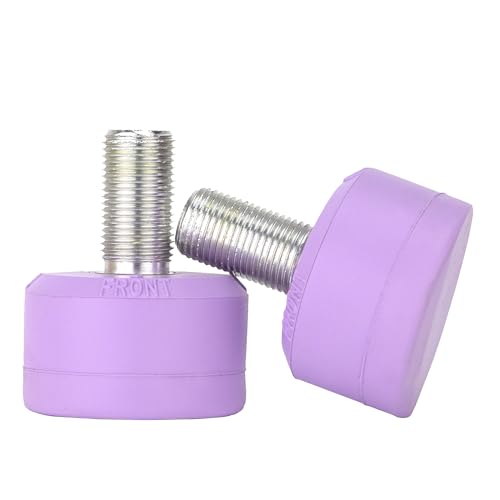
- VERSATILE STOPPER FOR ANY SURFACE - The Gumball toe stopper has rubber that...
- RUBBER DOESN'T LEAVE MARKS - These rubber-based roller skate toe stops will...
- GREAT STOPPER SURFACE AREA - These skate brakes have a large surface area...
Conclusion
The honest truth is that a spacer is rarely the right fix for a bolt that does not fit your plate properly. Go grab your skates right now and count how many turns it takes to tighten your toe stop — that simple check will tell you everything you need to know before you spend another dollar on hardware.
Frequently Asked Questions about Can I Use a Spacer for Longer Bolts on Skate Toe Stops?
Will a spacer make my toe stop feel different when I skate?
Yes, a spacer changes the distance between your toe stop and the floor. Even a thin spacer can make your toe stop feel like it is sticking out further than before.
I noticed this immediately when I tried a 5mm spacer on my own skates. My toe stops felt awkward during crossovers until I adjusted my stance to compensate for the new position.
Can I use a washer instead of a proper spacer?
I do not recommend using a standard washer from a hardware store. Washers are not designed for the pressure and vibration that skate toe stops experience during use.
A proper skate spacer is made from harder metal that will not deform over time. A regular washer can bend or crack, which makes your toe stop suddenly come loose while you are skating.
What is the best toe stop for someone who needs reliable stopping power every session?
If you are tired of toe stops that wear down fast or feel wobbly after a few weeks, you need something built for durability. I have seen too many skaters struggle with soft rubber that shreds on outdoor concrete.
What finally worked for me was switching to a denser compound that holds its shape. What I grabbed for my kids after their third pair wore out has been a major improvement for consistent stopping.

- Color: Mixed Black White; Material: Rubber; Hardness: 82A; Thread Size...
- Advantage: Made of rubber with good abrasion resistance and firmer grip...
- Instruction: Insert the bottom of the screw into the larger diameter of the...
How do I know if my toe stop bolt is actually too long?
Thread your toe stop in by hand until it feels snug. If you can see more than a few millimeters of thread sticking out past the plate, the bolt is probably too long.
Another sign is if your toe stop does not sit flush against the plate even when fully tightened. I always check this before adding any spacer to avoid making the problem worse.
Which toe stop hardware won’t let me down when I am practicing hard stops?
When you are pushing hard into a toe stop, the last thing you want is hardware that strips or bends. I learned this lesson after a bad fall during a practice session.
The ones I sent my sister to buy the ones I sent my sister to buy have held up through months of aggressive stops without any issues. That kind of reliability gives you confidence to focus on your technique instead of worrying about your gear.

- We took the best roller derby skate stoppers on the market as a benchmark...
- This formula is not only long-lasting but it has ultra-high rebound
- To cut the weight down, we hollowed out the aluminum shaft
Can I stack multiple spacers together to fix a very long bolt?
Stacking spacers is risky and I strongly advise against it. Each spacer adds another point where your toe stop can wiggle or come loose.
I tried stacking two spacers once and the toe stop felt unstable during my entire session. The correct fix is always to buy a bolt that matches your plate depth instead of stacking hardware to compensate.